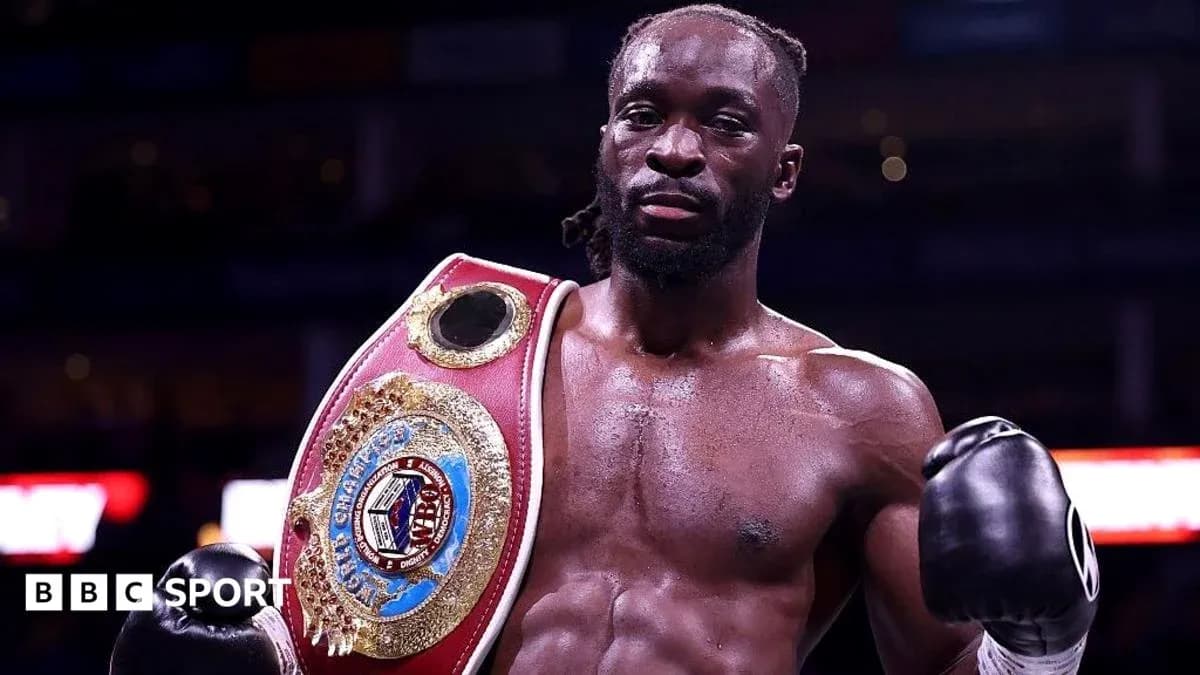
Denzel Bentley's Journey Back to the Top: From Delivery Shifts to World Champion
Denzel Bentley sat at home refreshing an app, not a rankings page.
The former British and European middleweight champion, a man who had spent years clawing his way into world-title contention, was staring at his phone waiting for Amazon delivery shifts to appear. Not opponents. Not contracts. Parcels.
Nothing came.
It was a far cry from how 2024 had ended. Bentley had closed that year with a flourish, reclaiming the British middleweight title for a third time and adding the European belt. At 31, with momentum and hardware, he had every reason to believe the next call would be for a world title shot.
It never did.
Meetings with Queensberry dangled the dream in front of him. Cards were discussed, dates floated, plans hinted at. Then the posters dropped, the shows were announced, and his name wasn’t on them. Promises dissolved into silence. The wilderness closed in.
The bank balance followed.
“I’m not bad with my money,” Bentley told BBC Sport, and the evidence backs him up: he survived a year without fighting. But the numbers started to bite. No fight purse, no TV money, no appearance fees. Just bills.
So he listened when his cousin suggested something that, a few months earlier, would have sounded ridiculous.
Download the Amazon app. Zero-hour contract. Check when there’s delivery work in your area.
Bentley did it. Logged in. Waited.
“I remember always refreshing and checking but there were no jobs in my area – that’s the only reason I didn’t do it,” he said.
A world-level middleweight, one refresh away from dropping parcels instead of opponents.
The ring, though, eventually called him back. After 16 months out, Bentley returned in April 2026 and made the lay-off count. He beat Endry Saavedra to capture the WBO interim middleweight title, a belt that felt like a bridge back to where he always believed he belonged.
Three months later, the bridge became a throne. When Janibek Alimkhanuly moved up to super-middleweight, Bentley was elevated to full WBO world champion. No politics, no eliminators, no more waiting. The goal he had chased since those raw early days was finally his.
And then it was gone.
His reign lasted just 102 days. No defences. No triumphant homecoming. No chance to plant his flag as Britain’s newest world champion. He agreed to face Shane Mosley Jr rather than box his mandatory challenger and the title slipped away before he could wrap his hands for a defence.
Upcoming Fight
On Saturday at London’s Copper Box Arena, Bentley meets Mosley Jr, the American whose name now sits across his path. The frustration still lingers, but the focus has shifted. The Londoner believes Zuffa Boxing, his new promoter, can drag him back into the world-title picture.
“I’ve moved over to Zuffa and everyone thinks it’s a money move,” Bentley said. The accusation doesn’t bother him, but he’s clear about the reality.
He wants to be paid properly for a brutal profession. “It’s a demanding job and we take a lot of punches,” he pointed out. That’s the truth of it. Fighters don’t get pensions. They get rounds.
But the move, he insists, is about more than cheques.
“I want to become world champion again. All of the above can be true, I don’t have to sacrifice one for the other. I’ve asked Zuffa to get me back in position to win another one. They said no problem.”
This isn’t a man discovering ambition late. Bentley’s route into boxing was unorthodox, but never half-hearted. His first “gym” was a fight club his brother ran on their estate. No membership fees, no glossy branding. Just a headguard, a pair of gloves and a mate willing to swing back.
That was enough for a taste.
He thought it was boxing. It wasn’t.
College showed him the difference. He met a friend who boxed properly, in a real gym, under real coaches. Bentley, armed with the bravado of those estate scraps, told him he could box too.
Then reality punched back.
He called the punches the wrong names. “I thought it was left jab, right jab,” he admitted, before learning the language of the sport: jab, right hand, cross. On the bags, his form fell apart. In sparring, he got battered.
“I thought ‘OK, this wasn’t what I was doing’ but I wanted to learn how to do it.”
Most prospects talk about sacrifice. Bentley lived it in the small, unglamorous details. Just getting to the gym became a daily puzzle.
He was short on money. The car had gone. Buses cost more than he wanted to spend. So he turned to the red Santander bikes dotted around London.
“I would put in £2 and pace down the road to make sure I didn’t take more than 30 minutes and then park up and come home,” he said. As long as he docked the bike within half an hour, he avoided extra charges. Time became an opponent to beat, just like the man in front of him in the ring.
Before that, he walked. From Battersea to Bermondsey. Headphones in. Trainers on. No shortcuts.
“People would ask, ‘Oh, you like walking to the gym?’ but I just didn’t have any other choice,” he said. When he found the bikes, “it was a game-changer.”
From those walks and sprints between docking stations, he built a record of 22 wins, three losses and one draw. British titles. European titles. A world title, however brief. Every belt earned the hard way.
Now he stands at another crossroads: no longer the nearly man chasing his first crown, but the ex-champion trying to claw back what slipped through his fingers in just 102 days.
The delivery shifts never came. The fights did.
On Saturday, under the lights at the Copper Box, we find out whether Denzel Bentley is still pedalling towards another world title – or whether that window has already closed.