De Minaur Dominates Guerrieri to Advance in US Open
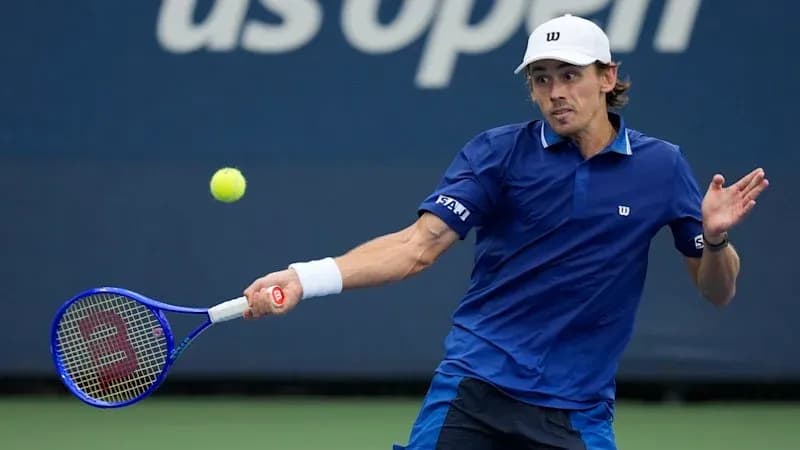
Alex de Minaur spent three days waiting to start his US Open. He needed just 99 minutes to remind the tournament he belongs in its sharp end.
On a damp, stop-start morning pushed out to court 11 in the far reaches of Flushing Meadows, the world No.7 tore through Italian qualifier Andrea Guerrieri 6-2, 6-2, 6-4, brushing aside both the rain and a late wobble to join a healthy Australian contingent in the second round.
A long wait, a fast start
De Minaur was supposed to open his campaign on Wednesday (AEST). New York’s stubborn weather had other ideas. By the time he finally stepped on court on day four, the schedule was fraying and patience was thin.
His tennis wasn’t.
Facing Guerrieri, a 27-year-old left-hander playing his first grand slam main draw match, de Minaur ripped the initiative away almost instantly. He broke in the opening game of each of the first two sets, set the tempo with his return, and never allowed the Italian to settle.
The scoreline told the story early: 6-2, 4-2, de Minaur cruising, the gap in class obvious. Then the clouds rolled in again.
Play was suspended and the players were sent back inside for roughly two hours, another unwanted interruption in a week full of them. When they emerged, de Minaur simply picked up where he left off, his movement sharp, his ball-striking clean, his intent obvious.
“These tournaments, it’s all about adapting – and that’s the name of the game,” he said. “There’s too much to play for to let something like this affect you, so I’m glad [about how] I handled it. I’m glad I got in and out, played a relatively clean match, and now I can focus on the next one.”
A brief detour, then the finish
For two and a half sets, the three-time US Open quarter-finalist looked every bit a top-10 seed in his element on American hard courts. Then, with the finish line in view, he blinked.
Serving at 3-2 in the third and looking to press 4-2 ahead, de Minaur tossed in a loose, error-strewn service game and was broken to love. On his next service game he slipped 0-30 behind, the only time all day his control looked in any real doubt.
The lapse was short-lived. He steadied, reclaimed his patterns and closed the match without further drama, his authority restored. Guerrieri never sniffed a genuine opening again.
Because of the rain backlog, de Minaur had been shunted from the Grandstand, where he was originally scheduled, to the more anonymous surrounds of court 11. No roof. No glamour. Just a job to do.
“Because of the rain, there’s nothing you can do about it,” he said. “You’ve just got to get out there, play your tennis match and, ultimately, if you win enough matches, you’re going to get out on the stadium court. So that’s the mindset.”
He walked off as one of eight Australians to post first-round wins, alongside Dane Sweeny, Tristan Schoolkate, Taylah Preston, Kim Birrell, Maya Joint, Alexei Popyrin and James Duckworth.
Mixed fortunes for the Australians
Not everyone in green and gold found the same rhythm.
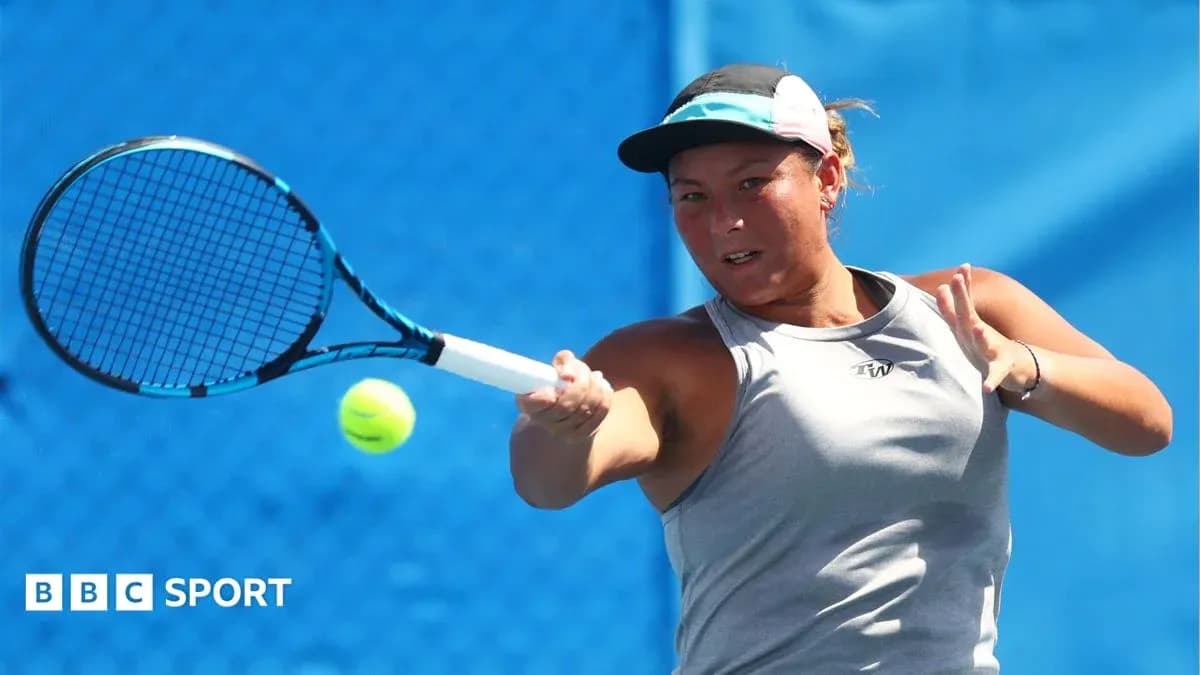
Taylah Preston’s bright start to the tournament hit a brutal wall. The 20-year-old wildcard lasted only 48 minutes in a 6-1, 6-1 second-round hammering at the hands of American Taylor Townsend, finishing with just two winners against 28 unforced errors. It was a harsh reminder of the jump from promise to the elite level.
Kim Birrell, too, saw her campaign stall after a spirited push. Up against No.18 seed Ekaterina Alexandrova, she was overwhelmed 6-1 in the opening set, then clawed back impressively to take the second 6-2 and force a decider. One double fault at the very start of the third set flipped the momentum straight back to the Russian, and Birrell never quite recovered, losing 6-1, 2-6, 6-3.
On the women’s side more broadly, Daria Kasatkina exited in a rain-disrupted first-round clash that stretched over two days. Paula Badosa, once world No.2, had been two points from victory when play was halted. When they resumed, the Spaniard had to fight off two break-back points before finally sealing a 6-1, 5-4 win on her ninth match point. Her reward is a marquee showdown with 2024 champion Coco Gauff.
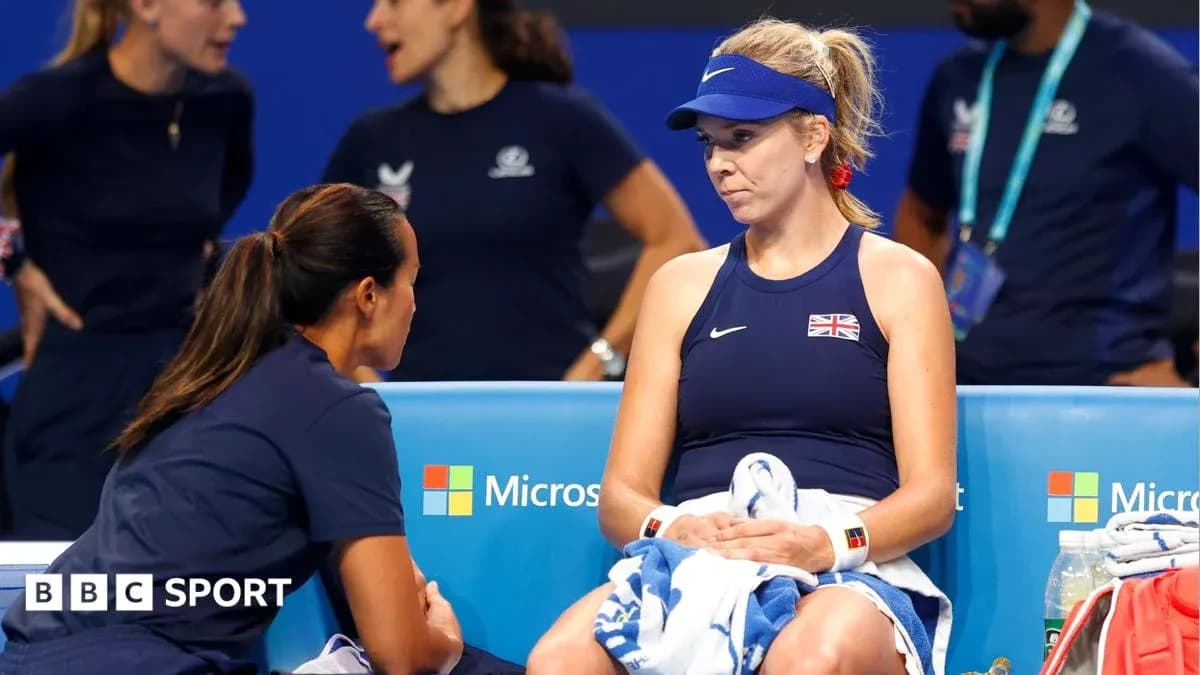
De Minaur’s wife, Katie Boulter, endured an even tougher afternoon. The English player was swept aside 6-1, 6-0 by Wimbledon runner-up Karolina Muchova in the second round.
“Of course, it’s difficult,” de Minaur said of seeing Boulter’s loss. “Ultimately, we’ve got each other’s backs no matter what, and we’ve always got one eye out on each other. Obviously, it was a tough day for Katie, and I had to do my best to just focus on my task ahead and get the job done in the best way possible. I’m glad I was able to achieve that today.”
Maya Joint, who faces No.9 seed Elina Svitolina, and James Duckworth, up against Wu Yibing, are next in line among the Australians with second-round matches scheduled for Thursday (AEST).
A dangerous road ahead
If the first round felt like a tune-up, the tests now come thick and fast for Australia’s standard-bearer.
Next is Botic van de Zandschulp, the dangerous Dutchman who rolled past Jan Choinski in straight sets and carries real New York pedigree. Two years ago, he stunned Carlos Alcaraz in the second round here, proof he can turn a big name’s draw upside down when the mood takes him.
Beyond that, the projected path is rugged. Zizou Bergs, the 31st seed, looms as a likely third-round opponent. At the top of the quarter sits No.1 seed Alexander Zverev, who has already been dragged deep into the trenches, needing almost five hours to fend off Lorenzo Sonego in his opener.
One potential obstacle has, however, been removed. Rafael Jodar, the in-form No.12 seed and a possible fourth-round foe for de Minaur, crashed out in stunning fashion. The Spaniard was destroyed 6-2, 6-1, 6-1 by lucky loser Bu Yunchaokete, who only entered the draw when Thanasi Kokkinakis withdrew with an ankle problem.
The draw has cracked open slightly. The opportunity is obvious.
Back on his favourite stage
De Minaur arrives in New York with a curious season behind him. The headline results are excellent: a second straight Australian Open quarter-final, a title in Rotterdam, a climb into the top 10. By his own standards, though, the past few months have felt more like a grind than a surge, with third-round and fourth-round exits at Roland-Garros and Wimbledon.
This place has often reset him. The US Open has been his most reliable grand slam hunting ground, a tournament where his speed, court coverage and competitiveness seem to grow an extra gear under the bright lights and noisy stands.
He has already reached the last eight here three times. The expectation, internally and externally, is that he can at least match that again.
He knows the next steps will not be played on court 11. Win a couple more matches like this one, and the stadium courts he talks about will call his name soon enough.