Daniil Medvedev Dominates US Open Opener Against Hugo Gaston
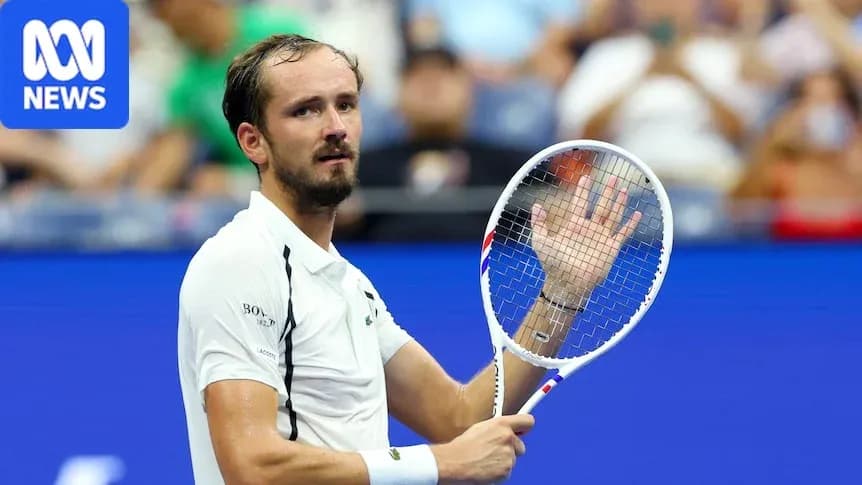
Daniil Medvedev walked back into Arthur Ashe Stadium with a score to settle and left without a scratch. No drama. No wobble. Just a cold, efficient 6-4, 6-2, 6-4 dismantling of Hugo Gaston that felt like a statement to the rest of the field as much as a first-round win.
A year after his campaign at Flushing Meadows imploded in the opening round, the 2021 champion looked like a man intent on deleting that memory. He came out aggressive, took the ball early, and never allowed Gaston’s flair to dictate the tempo. Medvedev finished with 34 winners to the Frenchman’s 11, a gulf that told the story of the night.
"You need to play your game — I knew he was going to do some drop shots, some underarm serves," Medvedev said. "I needed to make some winners, put some pressure on him."
The pressure arrived quickly.
Gaston, usually a disruptive presence with his touch and disguise, found little joy against the six-foot-six Russian, whose movement again defied his frame. The Frenchman blinked first, surrendering the break in the seventh game of the opening set with a loose backhand. Medvedev, once ahead, did not look back.
The second set underlined the gulf. Medvedev tightened his grip, raised his first-strike intensity and watched Gaston crack. A routine forehand from the Frenchman crashed into the net in the third game to hand over another break, and the seventh seed pounced. On break point in the seventh game, Medvedev leapt into the air and carved a backhand that skidded out of Gaston’s reach, a shot that drew a murmur from the Ashe crowd and felt like a flourish of authority.
This is a player who, only days ago, had publicly mused about a future in pickleball after an early loss in Winston-Salem. On this evidence, his tennis ambitions remain very much intact. He opened the third set by snapping up another break, whipping a forehand past Gaston in the first game and slamming the door on any hint of a comeback.
From there, it was a procession. Medvedev protected his serve with ease and closed the match with an unreturnable delivery, sealing a performance that was as controlled as it was cathartic. He now awaits the winner of the clash between American wildcard Sebastian Gorzny and Belgian Raphael Collignon.
For a man often cast as the villain in New York, this was the version of Medvedev that wins titles: sharp, unapologetic, and utterly clear about what he wants from this fortnight.
Injury blows as Cilic and Ruud withdraw
While Medvedev moved on, the tournament lost two of its most familiar names.
Former champion Marin Cilic, who lifted his only major trophy here 12 years ago, withdrew shortly after play began. The 37-year-old Croat, a fixture of the sport’s last decade, was replaced in the draw by lucky loser Otto Virtanen. The Finn now faces 23rd seed Andrey Rublev in the opening round.
Virtanen himself arrives with question marks, having pulled out of his third-round qualifying match against Grigor Dimitrov with an injury. Tournament organisers did not specify Cilic’s issue, only adding his name to an expanding list of absentees that already includes Jannik Sinner, Jack Draper, Joao Fonseca and Holger Rune.
Casper Ruud, the 2022 runner-up to Carlos Alcaraz, had already stepped aside. The 27-year-old Norwegian, who retired during the second set of his Cincinnati Open match against Christopher O’Connell earlier this month, confirmed that his back had not recovered in time.
"Unfortunately, my back hasn't healed as quickly as we had hoped," Ruud said on Instagram. "We've been optimistic that I would recover in time, but my team and I have decided that we need to think long-term and give my body the time it needs. I'm very sad to announce that I have to withdraw from this year's U.S. Open singles event.
"It's never easy to miss a Grand Slam, but I know this is the right decision. I'll take the time I need to recover properly and come back stronger."
His withdrawal opens a gap in the men’s draw and hands an unexpected chance to another lucky loser, Arthur Gea. The Frenchman steps into Ruud’s place and will face Juan Manuel Cerundolo in the opening round. Ruud, meanwhile, departs New York having at least tested his body in the revamped mixed doubles event last week, where he and Diana Shnaider fell in the quarterfinals to Rublev and Mirra Andreeva.
Two familiar contenders gone before the first week has truly started. The men’s field feels lighter on established names, heavier on opportunity.
Pegula steadies, then surges in nervous Ashe opener
Jessica Pegula knows this court, this stage, and the weight that comes with both. Even so, nerves grabbed her by the throat early on Sunday.
Leading off the day session on Arthur Ashe Stadium, the world No. 3 misfired on her first nine break-point chances against Elena-Gabriela Ruse. The tension was obvious, the rhythm elusive. Then it clicked.
Once Pegula settled, the match flipped. She began to control rallies with her first strike, found her spots on serve, and turned a scratchy start into a commanding 6-3, 6-2 victory in 83 minutes. She won a commanding 92% of points behind her first serve, a number that underlined just how dominant she became after riding out those early jitters.
"I was so nervous," Pegula admitted. "I was like sending GIFs of what I felt like. It was GIFs of people freaking out and stuff. … The first round of a slam, there's always a ton of nerves."
This time, the stakes stretch beyond just survival. Pegula leads the women’s tour with 46 wins this season, owns two titles and has reached three other finals. Fresh from a run to the Cincinnati Open final, where she lost to Coco Gauff, she now stands on the brink of something bigger.
If she wins her first major here and No. 2 Elena Rybakina falls before the semifinals, Pegula will rise to No. 1 in the rankings.
On a day when a former men’s champion and a recent finalist limped out of the event, Pegula’s composure after that shaky opening felt significant. Medvedev has already shown what redemption can look like on Ashe. The question now is whether Pegula can turn her own nerves into the fuel for a breakthrough that would reshape the top of the women’s game.