Dane Sweeny’s US Open Journey: Pain and Promise
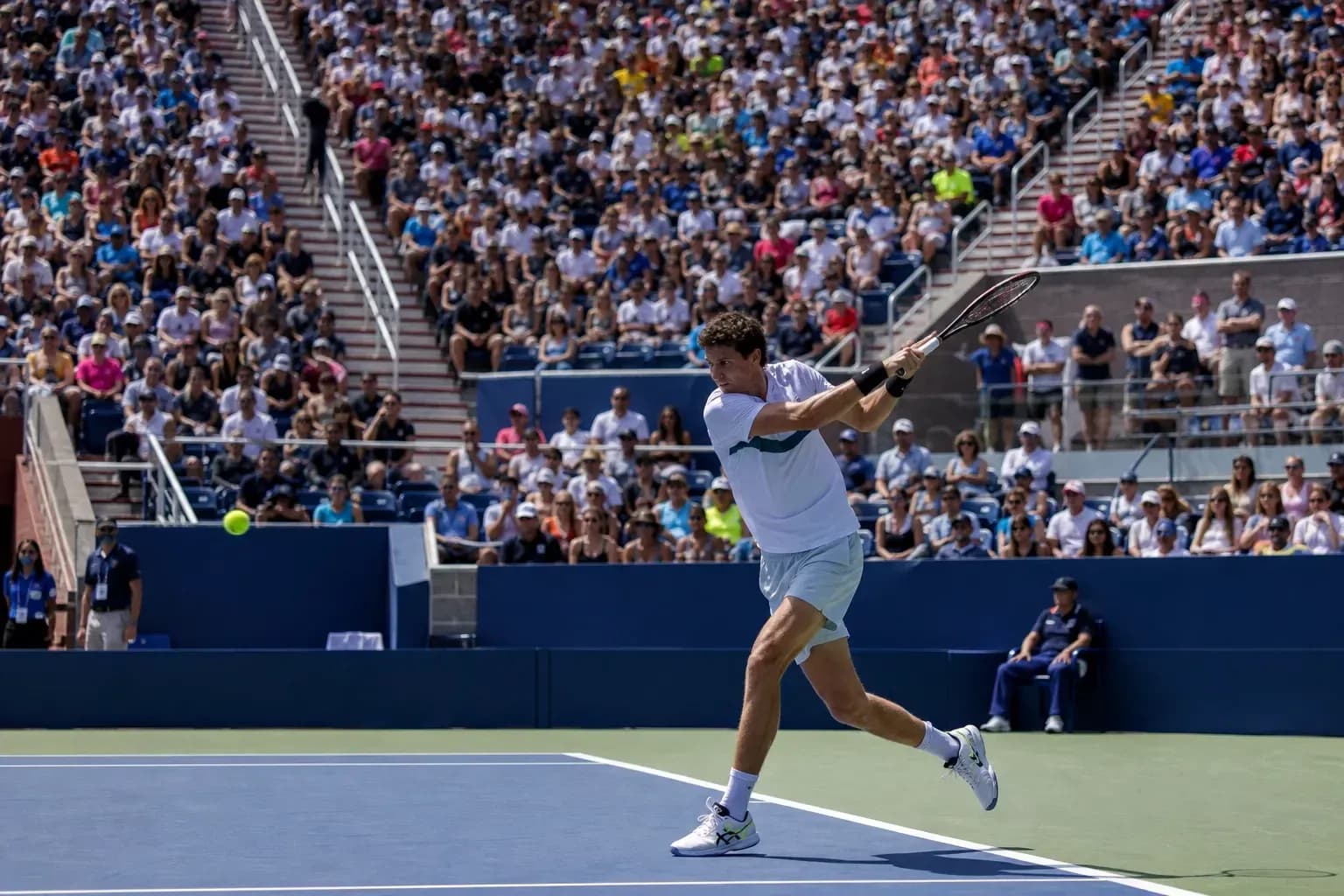
Dane Sweeny walked off Louis Armstrong Court knowing two things at once: his US Open was over, and his career had just changed shape.
The 25-year-old Australian, a late arrival in the main draw and the last of his country’s singles hopes in New York, bowed out in the third round to 21st seed Luciano Darderi, 4-6, 3-6, 3-6. The scoreline was clean. The story behind it was anything but.
A Wild Card, a Hip, and a Career Week
Sweeny began this fortnight as world No.123, not even guaranteed a place in the main draw. Two late withdrawals cracked the door open, and Tennis Australia slid him through it, handing him the reciprocal wild card initially earmarked for Alexei Popyrin.
He grabbed it with both hands.
By the time he faced Darderi, Sweeny had already pushed into the last 32 of a Grand Slam for the first time in his life. The stage was bigger, the lights harsher, the noise constant. His body, though, started to betray him.
During the match, the Australian complained of a hip issue that clearly restricted his movement. The usual snap in his legs wasn’t there. His timing deserted him. The rhythm that had carried him through earlier rounds never truly arrived, and the unforced errors piled up.
Afterward, he called the week “career-changing” but didn’t hide his frustration with how he’d played. He knew he had more than he showed. On this stage, against this opponent, that gap hurt.
Ranking Surge and a Door to Melbourne
The loss still came wrapped in opportunity.
Reaching the third round guarantees Sweeny $402,500 in prize money and, based on early calculations, a rise to around No.109 in the world rankings — the best mark of his career. One more step remains tantalisingly close.
Crack the top 100 before season’s end, and the reward is huge: direct entry into the Australian Open main draw for the first time. No wild cards. No qualifying grind. Just a straight walk into his home Slam as a fully-fledged top-100 player.
New York may have closed the book on this run, but it has almost certainly rewritten the next chapter of his career.
American Hopes Fall in Flushing
While Sweeny was making his breakthrough, some familiar names in American tennis were packing their bags earlier than expected.
Taylor Fritz, last year’s US Open finalist and the ninth seed this time, fell in a five-set swing against Francisco Cerundolo. Fritz led by two sets before the Argentine surged back to win 3-6, 4-6, 6-3, 6-4, 6-4. For Fritz, it marked his earliest exit in New York in four years. For Cerundolo, it delivered a landmark: a first-ever appearance in the fourth round of the US Open.
On the women’s side, Madison Keys suffered a collapse that will sting for a long time. She raced through the opening set against Zheng Qinwen 6-1 and built what should have been an unassailable 5-0 lead in the deciding set. Then the match turned on its head.
Point by point, Zheng clawed her way back. Keys could not land the finishing blow. Zheng stole the tiebreak in the second set 7-6 (7-3), then completed the comeback 7-5 in the third, turning what looked like a routine defeat into one of the most dramatic reversals of the round.
Zheng’s reward is a showdown with world No.1 Iga Swiatek, who edged past Marie Bouzkova in two tight tiebreak sets. The margins were slim, but Swiatek’s nerve held when it mattered.
Tenth seed Amanda Anisimova also exited, beaten 6-2, 7-5 by Anastasia Potapova, a straight-sets loss that underlined the volatility of this year’s draw. Coco Gauff, by contrast, held firm. The American star moved through with a controlled 6-3, 6-4 win over Cristina Bucsa, a performance that carried none of the late-match drama that engulfed her compatriots.
A Tournament Shifting Shape
By the end of the third round, the US Open had shed a 2024 finalist in Fritz, a former finalist in Keys, and a seeded American in Anisimova. Sweeny, the Australian outsider who slipped in through a late-opening door, had also gone.
What remains is a draw stripped of some of its familiar anchors and reshaped by players like Cerundolo and Zheng, who have turned opportunity into momentum.
For Sweeny, the question now moves from New York to the ranking list. Can he turn one breakthrough week into the top-100 finish that would carry him straight into Melbourne as a main-draw regular, not a late addition?