Dane Sweeny's US Open Journey: A Career-Changing Week
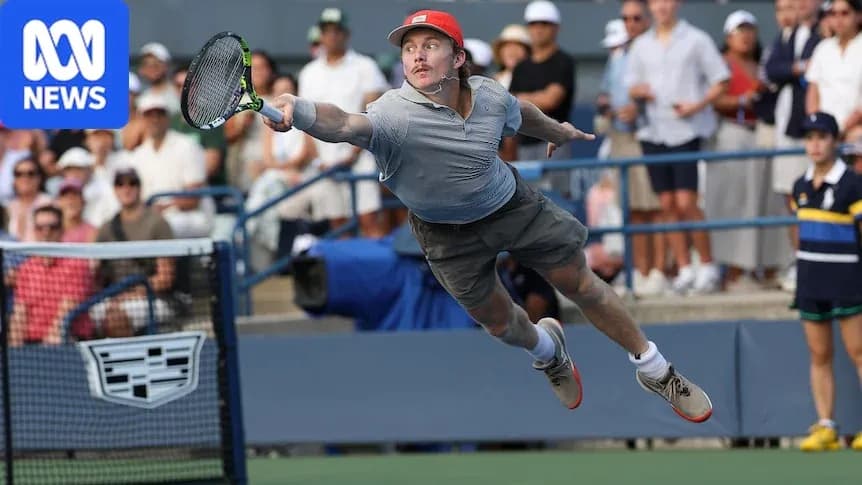
Dane Sweeny’s US Open ride ended with a limp rather than a roar, but it may yet prove the making of him.
The 25-year-old Australian, a late arrival to the main draw and an even later arrival to tennis’s wider consciousness, bowed out in the third round with a 6-4, 6-3, 6-3 loss to Italian 21st seed Luciano Darderi, hampered by a hip complaint and haunted by the feeling he never quite turned up.
On a hot New York afternoon, the world number 123 kept reaching for the timing and rhythm that had carried him through the first week. It never came. The errors piled up, the body barked back, and with Alex de Minaur already gone after a shock defeat to Botic van de Zandschulp, Australia’s last singles hope disappeared before the second week for the first time in five years.
Sweeny did not hide from his frustration.
He spoke of a “career-changing week” yet admitted he “wasn't really feeling it,” lamenting the “cheap errors” and, more than anything, the inability to drag Darderi into the kind of dogfight he had imagined. He was prepared to lose. He just wanted to make the Italian earn every inch. On this day, he could not.
The irony is that Sweeny almost wasn’t here at all. Only two late withdrawals opened the door for Tennis Australia to redirect its reciprocal wildcard, first awarded to Alexei Popyrin, into Sweeny’s hands. He grabbed it and ran.
In his first US Open main-draw appearance, the Queenslander punched through to the last 32 of a major for the first time, a breakthrough that changes the shape of a career in an instant. He leaves New York with a cheque for $402,500 and a projected jump to a career-high ranking of around 109 in the world.
That number matters. So does the next target.
Crack the top 100 by season’s end and direct entry to the Australian Open awaits, no more wildcards, no more waiting on the whims of others. Sweeny knows it, admits players are “indoctrinated” to chase that low number next to their name, but is trying to train his mind elsewhere: into hard work, improvement, and a little more kindness to himself as the stakes rise.
The money, he said, will go straight back into the grind — coaching, support staff, travel. The tools required to turn one fairytale week into a habit.
For now, though, Australia’s singles campaign in New York is over. And the locals are hurting too.
American charge cut down
The home crowd’s hopes took a heavy hit as three past US Open finalists all fell on the same bruising day.
Taylor Fritz, the ninth seed and 2024 runner-up, looked in cruise control. He hadn’t dropped a set all tournament and surged to a two-set lead over Francisco Cerundolo. Then the match turned.
The Argentine found his range, his forehand started to spit fire, and the American’s comfort zone evaporated. Cerundolo stormed back 3-6, 4-6, 6-3, 6-4, 6-4, handing Fritz his earliest exit in four years and booking his own place in the fourth round for the first time.
On the women’s side, the collapse was even more brutal.
Madison Keys, the 2017 runner-up, raced to a 5-0 lead in the deciding set against Zheng Qinwen and seemed to have the match locked away. Then the Chinese star produced one of the comebacks of the tournament.
Point by point, game by game, Zheng clawed her way back, refusing to accept the script. She reeled off seven straight games to steal it 1-6, 7-6 (7/3), 7-5, then crumpled to the court in disbelief and joy, a player fighting her way out of a career slump in the most dramatic fashion possible.
Waiting for her next is no soft landing: 2022 champion and former world number one Iga Świątek, who edged past Marie Bouzková in twin tiebreaks, 7-6 (7/3), 7-6 (7/3). Świątek did not dazzle, but she did what champions do in tight matches at majors — she found just enough.
Amanda Anisimova, the 10th seed and last year’s runner-up, could not find that extra gear. Her difficult season at the majors continued with a straight-sets defeat to Anastasia Potapova, 6-2, 7-5, another American contender stripped from the draw.
Only Coco Gauff held the line.
The defending champion delivered a composed 6-3, 6-4 win over Spain’s Cristina Bucșa, a rare moment of calm amid a day of American turbulence. In a tournament suddenly short on home storylines, Gauff now carries a nation’s expectations into the second week.
Sweeny heads home with a sore hip, a heavier wallet, and a ranking on the rise. Gauff marches on under the New York lights. The question now is who can turn this chaotic first week into something lasting when the pressure, and the noise, only get louder.