Coco Gauff's Transformation: From Doubts to Dominance at US Open
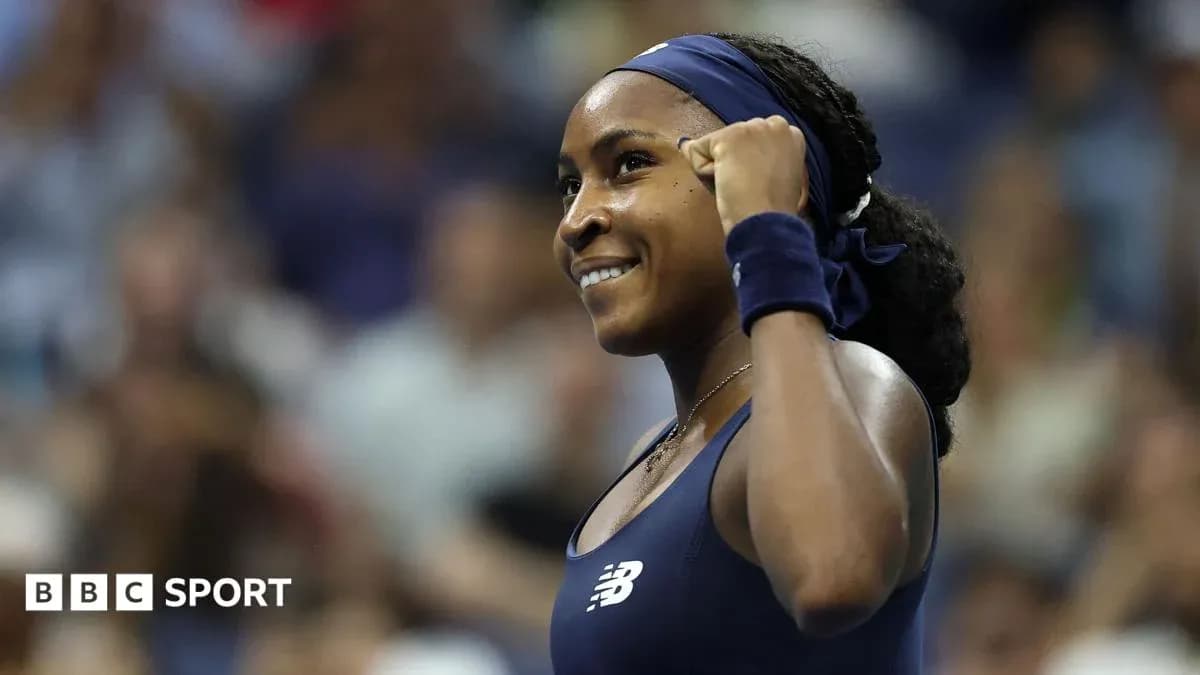
Twelve months ago, Coco Gauff stood alone in the rain on the US Open practice courts, firing serves into the gloom as if trying to exorcise a demon. The ball tossed too far in front, the wrist snapping awkwardly, the double faults piling up. The image summed up a young star wrestling with a shot that threatened to drag her career backwards.
On Tuesday in New York, the contrast could not have been sharper.
Gauff walked into Arthur Ashe Stadium with a rebuilt delivery and walked out with a routine-looking 6-3 6-4 win over Turkey’s Zeynep Sonmez in the first round. Routine on the scoreboard, but underpinned by the very weapon that once betrayed her.
A swift hold to love in the opening game set the tone. One minute, 30 seconds. A 112mph ace down the middle. Another first serve that never came back. A second ace. The kind of start that tells an opponent, and the stadium, exactly who is in charge.
“It’s a big difference,” Gauff said, reflecting on the past year. “It feels good to come into a tournament feeling confident on that shot finally.”
That confidence has been hard-earned. On the eve of last year’s US Open, Gauff ripped up her coaching structure and brought in biomechanics specialist Gavin MacMillan, the same expert who helped Aryna Sabalenka tame her own serving chaos. It was a bold call on the brink of a home Slam, with scrutiny at its loudest and every double fault amplified.
She went ahead anyway. The numbers in Cincinnati last summer had left her no choice. Too many doubles, too many free points handed over. The serve had become a liability.
The gamble did not pay off immediately. Gauff stumbled to a fraught fourth-round exit in New York last year, often looking tight and tearful on court, fully aware that every eye in the building was tracking her toss and contact point.
“Obviously last year I knew all the eyes were going to be on the serve,” she said. “Gavin is so great at what he does, I felt a lot of pressure to kind of prove that. It didn’t really show within the first two weeks, which is normal.”
The work has taken time, but it is now clearly visible. MacMillan’s checklist is simple enough to recite, far harder to execute under pressure: a steadier toss, no longer chasing the ball too far in front; a straighter wrist through contact; a more repeatable motion that holds up in big moments.
The impact has been measurable. In Cincinnati this month, where she surged to the title, analysis showed Gauff landing serves closer to the lines without sacrificing pace, a rare blend of aggression and accuracy. The serve has shifted from conversation piece to cornerstone.
Against Sonmez, it looked like a weapon again from the first ball. When Gauff landed a first serve in the opening set, the world number four won 93% of those points. Sonmez simply could not get enough balls back into play to create any real tension.
Gauff broke once to take control of the first set, then again early in the second to lead 1-0. At that stage, it seemed the match might race away from the Turkish player.
Instead, Sonmez dug in. Gauff’s first-serve percentage dipped, the rallies lengthened, and suddenly the underdog had a foothold. She broke back, levelled at 2-2 and then pushed Gauff to the brink, carving out three break points for a 4-2 lead.
This was the kind of game that had haunted Gauff a year ago: scoreboard pressure, doubts creeping in, the serve under the microscope. This time, she didn’t blink.
A precise ace out wide. A 115mph first serve that never came back. The hold was gritty, not glamorous, but it kept her level and felt like a turning point. The sort of game, as many around her would quietly admit, she might have lost 12 months earlier.
The pressure flipped. In the very next game, Gauff broke for 4-3, then tightened her grip on the match with a closing display that underlined just how far her serve has come.
Serving for it, she uncorked three more unreturned first serves, all hovering just under 120mph, to bring up triple match point. Sonmez finally cracked on the first of them after a short rally, the contest ending with the American in full command of the shot that once made her wince.
“Psychologically, I’m now going to go for the ace, or I know I can hit the serve and the return is probably not going to come back,” Gauff said. “Last year I literally was like I hope I make it in. It’s such a big difference knowing almost every serve I’m trying to basically hit 110, 115, 120mph if I can.”
There are still double faults. The motion is not flawless, and the radar gun will not always rescue her. But the fear has gone. In its place stands a 22-year-old who now trusts her biggest shot enough to swing freely at it on the sport’s biggest stage.
Seeded fourth at Flushing Meadows, Gauff will face either Paula Badosa or Daria Kastakina in the second round. The draw will stiffen, the questions will get harder, and the pressure will rise.
The difference this year? She no longer looks like a player serving in the rain, searching for answers. She looks like someone ready to let the ball fly.