Carlos Alcaraz Returns to U.S. Open with Strong Victory
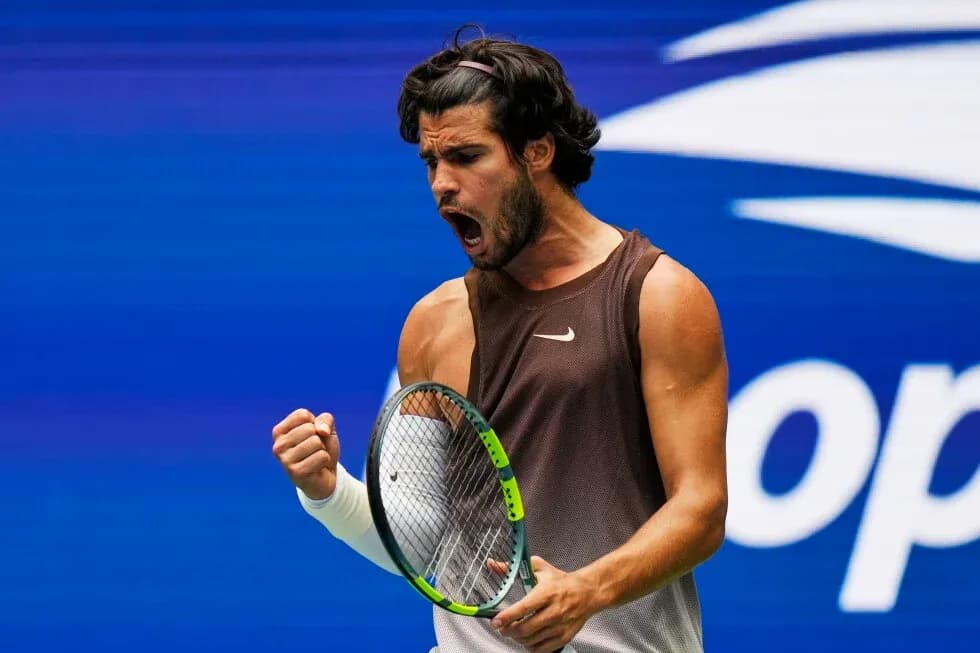
NEW YORK — Carlos Alcaraz walked back into Arthur Ashe Stadium with nerves in his stomach, a grin on his face and, crucially, no pain in his right wrist. Ninety-three minutes later, he walked off with a straight-sets win and the sense that this U.S. Open, rocked 24 hours earlier, might quickly become his stage again.
The defending champion dismissed Roman Safiullin 6-4, 6-4, 6-4 on Monday, striking freely off both wings and showing no trace of the injury that had kept him out since April.
“I was playing pretty normal, playing my style, and yeah, the arm, the wrist, everything felt great,” Alcaraz said. From the inside, it felt routine. From the outside, it looked like a warning.
He hadn’t played a single warmup event. He skipped Roland Garros. He missed Wimbledon. He arrived in New York with questions and admitted the nerves were heavier than usual. But once he settled, the familiar swagger returned. He cupped his hand to his ear to draw more noise from Ashe, then punctuated the night with a delicate volley winner in the final game, fist pumping as if to confirm to himself as much as anyone else: he’s back.
“I don’t know how far I’m going to go in the tournament,” he said. “My goal here is to compete, to enjoy, and let’s see how my body’s going to react after the matches.”
He might not know, but the draw has already started to tilt in his direction.
A field suddenly wide open
No man has defended the U.S. Open title since Roger Federer’s five-in-a-row run from 2004 to 2008. The task is brutal, the conditions unforgiving, the pressure relentless. Yet as long as Alcaraz’s wrist holds up, the path looks clearer than it did a week ago.
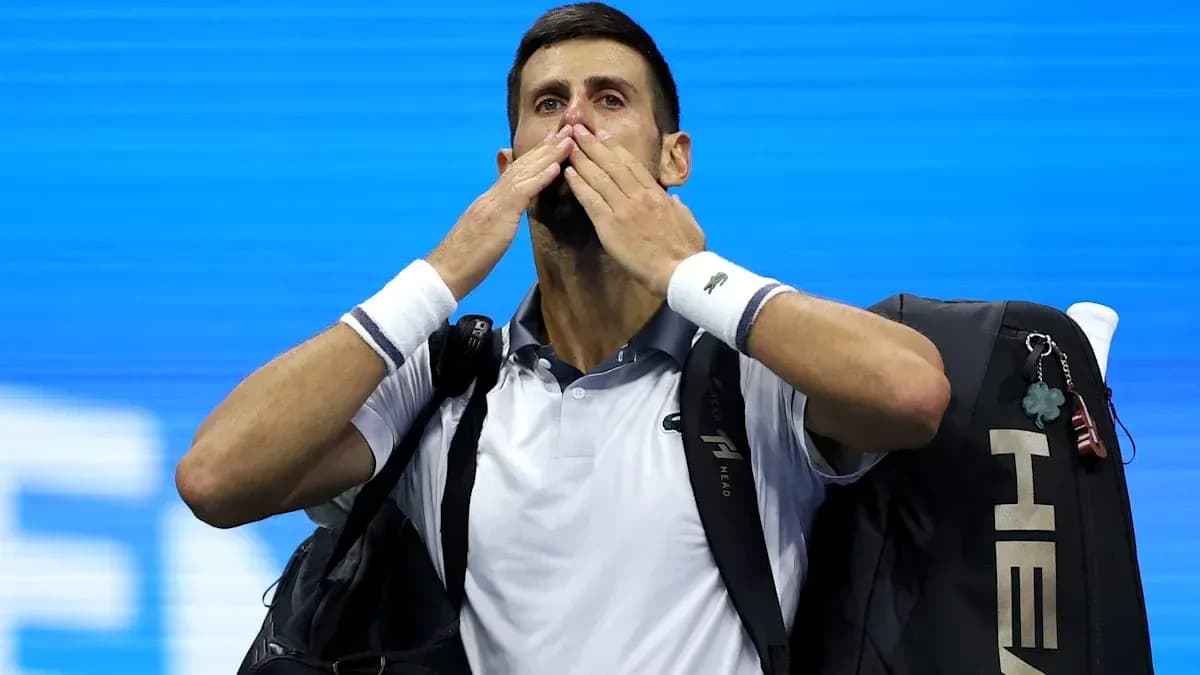
Top-ranked Jannik Sinner is out with a knee injury. No. 4 Novak Djokovic, a four-time champion at Flushing Meadows and owner of 24 majors, crashed out in the first round on Sunday — his first opening-round loss in New York after a 19-0 start across his career here. The shock of that defeat still hung over the grounds on Monday.
Into that uncertainty stepped Alcaraz, the seven-time Grand Slam champion, playing like a man unburdened by the mathematics of the draw. “I didn’t know if I was going to lose this one, if I’m going to make the second round, final,” he said. For now, he’s content to ride the energy of Ashe and see how far his body and instincts can take him.
On a day when the men’s field tried to make sense of Djokovic’s early exit, the women’s defending champion offered something more familiar.
Sabalenka settles the stage — and changes the dress
Aryna Sabalenka, chasing history of her own, restored a measure of order with a 6-4, 6-4 win over Camila Osorio. She’s bidding to become the first woman to win three straight U.S. Open titles since Serena Williams from 2012 to 2014 and has now reached at least the final here three years running.
“This is one of my favorite stadiums,” she told the Ashe crowd. “I really experienced the best emotions here in this stadium.”
The record backs that up: finalist in 2023, champion in 2024, champion again last year over Amanda Anisimova.
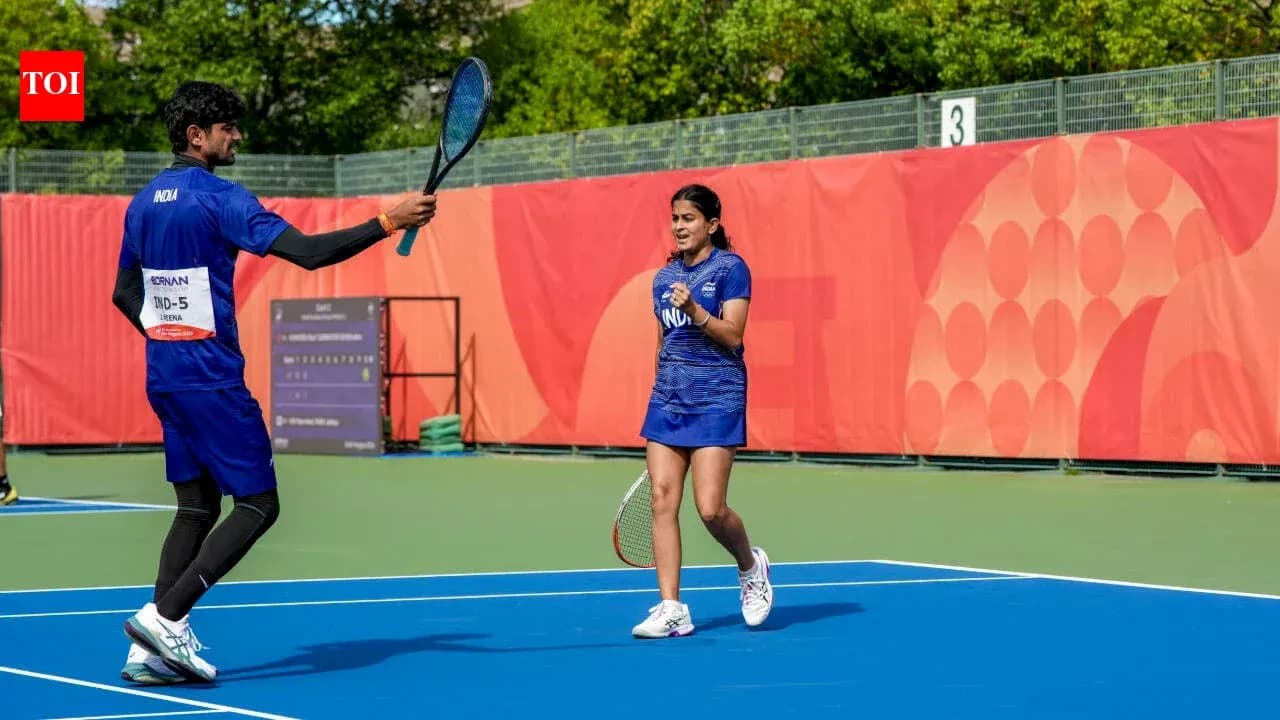
On Monday, it wasn’t just her power that drew attention. Sabalenka traded the black mesh outfit that sparked social-media chatter during her mixed doubles appearance with Djokovic last week for an orange Nike dress covered in orange mesh. The explanation was as straightforward as her forehand.
“To be honest, I didn’t know that I have a day dress,” she said. She thought she had only the black dress with orange underneath until a visit to Nike clarified she had separate looks for day and night. The criticism? She brushed it aside. The only opinion that mattered, she said, was her own.
What will have pleased her more than the wardrobe was the level. Sabalenka had stumbled into New York after fourth-round exits in Toronto, Cincinnati and Wimbledon. Those results have left her ranking vulnerable: even if she wins the title again, she needs help to stay No. 1. No. 2 Elena Rybakina will overtake her by simply reaching the semifinals — and could do it without winning a match if Sabalenka fails to lift the trophy.
That pressure didn’t show against Osorio. The serve was solid, the groundstrokes heavy, the intent clear. The defending champion looked like herself again.
Farewell to Wawrinka, a spark from Tsitsipas
The day carried a sense of transition. Some stories were closing, some threatening to reopen.
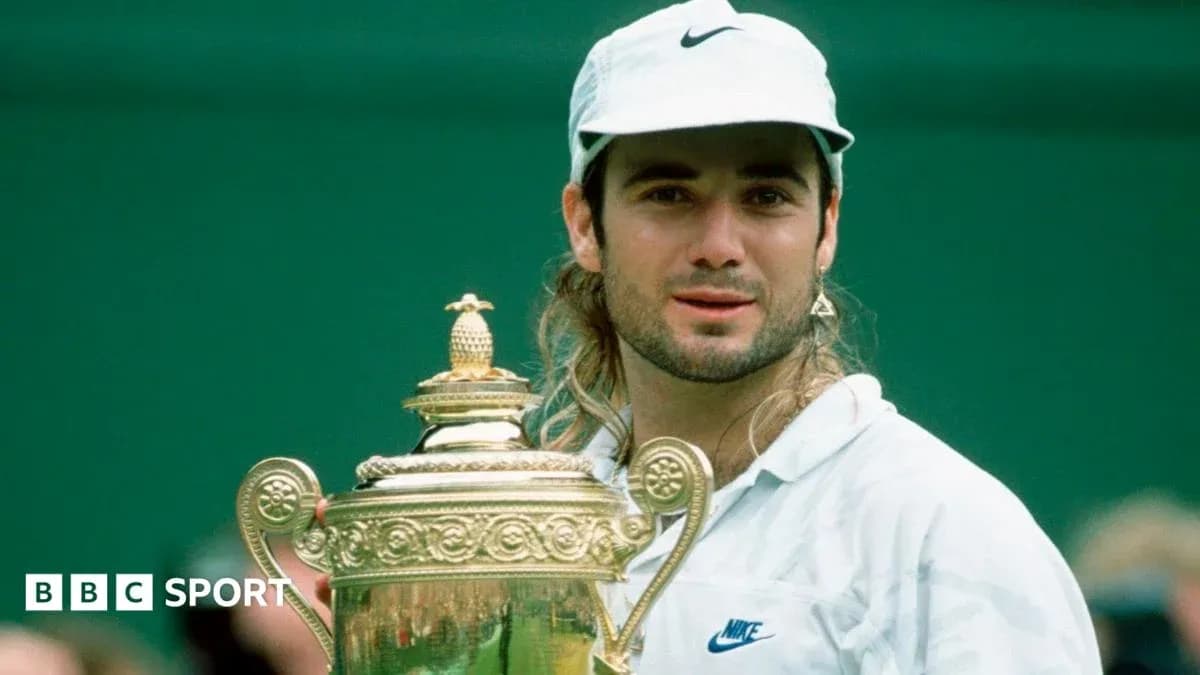
Stan Wawrinka, the 2016 U.S. Open champion and one of the few men of his era who could blast Djokovic, Rafael Nadal and Federer off the court on his best days, played his final Grand Slam match. The 41-year-old Swiss lost to Matteo Berrettini, then confirmed what many had expected: this was the end of his major journey.
“I’m going to miss it for sure. I’m going to miss it big time,” Wawrinka said. A three-time major champion, he leaves with a legacy of thunderous backhands and big-match courage, especially in New York, where he lifted the trophy eight years ago.
On another court, Stefanos Tsitsipas hinted that his own story at the top level might not be finished. Unseeded at the U.S. Open for the first time, the former world No. 3 knocked out No. 10 seed Arthur Fils 4-6, 7-6 (3), 6-1, 6-4. Fils had arrived as one of the hottest players on tour after winning the title in Cincinnati, but Tsitsipas wrestled control of the match in the second-set tiebreak and never let it go.
Asked if he could find again the level that once took him to two Grand Slam finals — both losses to Djokovic — Tsitsipas didn’t hesitate. “Why not?” he replied. On a day when Djokovic exited and Wawrinka bowed out of the majors, that sounded less like bravado and more like an invitation to watch closely.
No. 8 seed Ben Shelton also provided a reminder of how quickly a match can flip in New York. Broken three times and routed 6-1 in a 28-minute opening set by Tallon Griekspoor, the American roared back to win 1-6, 6-1, 7-6 (3), 6-2, feeding off the home crowd and his own booming lefty serve.
Champions through, and a Czech shuffle
Elsewhere in the draw, the roll call of past and present champions largely went to script. No. 8 seed Iga Swiatek, a former U.S. Open winner, advanced, as did 2017 champion Sloane Stephens. Two-time champion Naomi Osaka was slated for the night session, another familiar name trying to rebuild on a court where she has known both brilliance and turbulence.
On the women’s side, Wimbledon champion Linda Noskova, seeded No. 6, moved through, as did No. 7 Karolina Muchova, the player she beat in that All England Club final in an all-Czech showdown. No. 10 seed Amanda Anisimova, last year’s runner-up here, also began her campaign with a victory.
Not every Czech had a smooth day. No. 28 seed Sara Bejlek, who stunned Sabalenka in Cincinnati, could not repeat that level and went out in three sets to Cristina Bucsa.
Navarro holds her nerve as Boisson boils over
One of the most striking images of the opening round came not from a marquee name but from a rain-delayed scrap that spilled over two days.
No. 26 seed Emma Navarro finally subdued Lois Boisson 7-6 (6), 6-7 (1), 6-3 in a match that began Sunday and finished Monday. The margins were thin, the tension obvious. When it ended, an ESPN camera caught the sport’s emotional extremes in a single frame: Navarro turned to the crowd, pumping her fist in relief and joy, while behind her Boisson repeatedly smashed her racket into the court.
It was the U.S. Open in miniature — joy and frustration, breakthrough and heartbreak, all crammed into one shot.
And somewhere above it all, on the biggest stage in the sport, a 23-year-old Spaniard with a healed wrist and a familiar smile walked off Ashe to a roar that sounded a lot like expectation.