Carlos Alcaraz Fights Back to Keep US Open Title Defense Alive
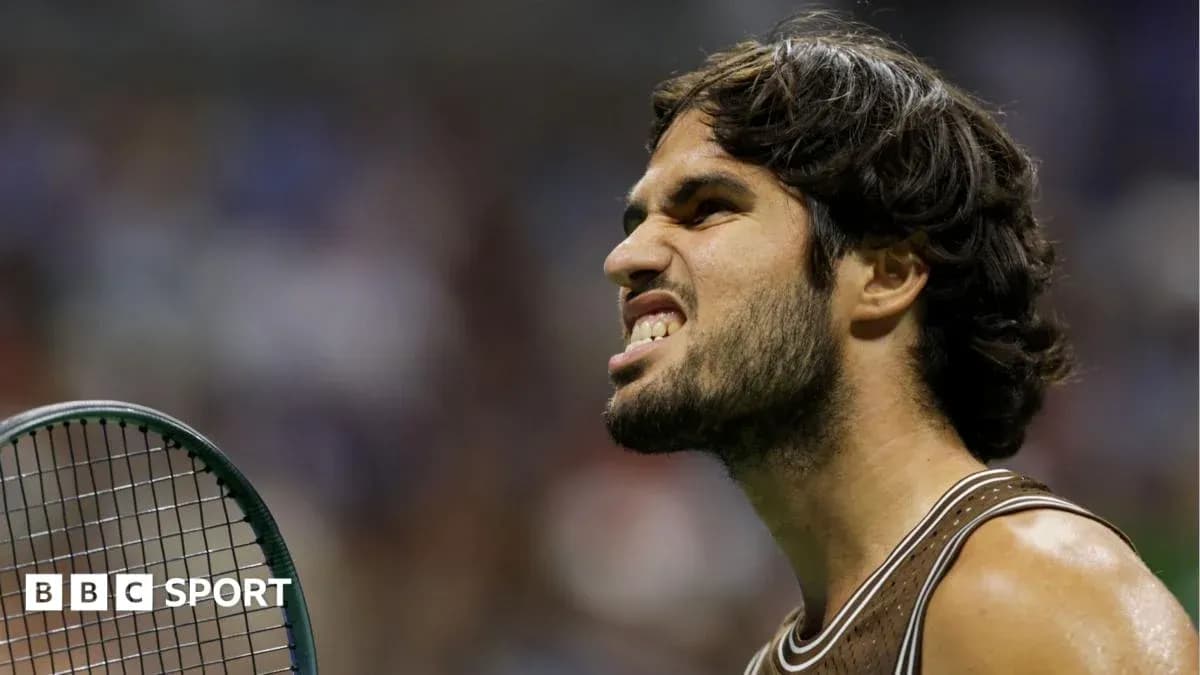
Carlos Alcaraz flirted with trouble under the New York lights, then slammed the door on it.
The defending US Open champion dropped the opening set to Portugal’s Jaime Faria, looked short of rhythm, and briefly invited the kind of upset that sends a jolt through a night session. Then he reset. Hard. The second seed tore through the rest of the match to win 4-6 6-0 6-3 6-2 and book his place in the last 32.
It was not smooth. It was convincing.
A slow start, a sharp response
Back at Flushing Meadows after a long lay-off with a right wrist injury, Alcaraz needed time to feel his way into the contest. Faria, ranked 72 in the world and playing with nothing to lose, took advantage of that early hesitation, jumping on short balls and stealing the first set.
Alcaraz admitted he misjudged the tempo.
“It was a tough match for me. I felt great in the first set, but I didn't take time and that cost me,” he said. “After that I tried to be focused, stay calm and think the good things will happen.”
The match turned almost immediately in the second set. Serving at 0-0, 15-40, Alcaraz faced two break points that threatened to deepen the hole. He saved both, held, and from there the dynamic flipped.
The pressure finally told — on Faria.
Alcaraz ripped through the second set 6-0, the forehand suddenly unleashed, the movement sharper, the patterns cleaner. The defending champion began to look like himself again.
Testing the wrist, and the body
This fortnight is as much a physical audit as a title defence for the 23-year-old. New York is his first tournament since mid-April, and every match offers new data on that right wrist and on his ability to handle best-of-five tennis after months out.
He had described his level as “normal” after a straight-sets win over Roman Safiullin in the first round. Against Faria, he doubled down on the idea that he cannot play within himself.
“I know once I step on the court, I've just got to go for it every time. I've got to feel normal,” he said. “I have to hit like I was hitting before the injury. I'm feeling great. There is no reason to be afraid and not hitting normal.”
The scoreline from the second set onward backed that up. The forehand, often the barometer of his confidence, came through without hesitation. He dictated rallies, broke Faria’s resistance, and closed out the match with authority.
Interestingly, Alcaraz welcomed the extra mileage.
“At the end, I realised that playing four sets was really good for me to test everything physically, to test my body, how I feel, and how I'm going to feel tomorrow after this match,” he said.
For a player who cruised in round one, the added strain was a different kind of win.
A draw blown wide open
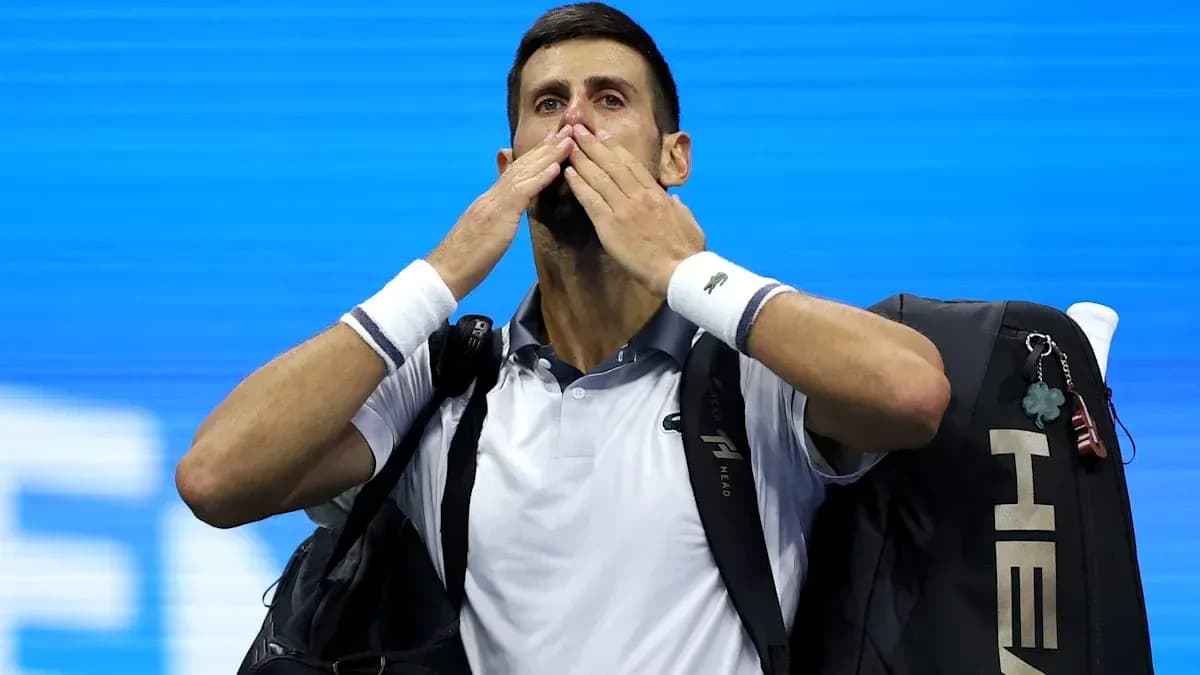
The context around him is changing fast. Jannik Sinner is not in New York. Novak Djokovic is already out. The gravitational pull at the top of the men’s draw has shifted, and the two-time US Open champion suddenly stands as an even more imposing presence in a field that looks wide open.
Of course, the level will climb from here. Faria and Safiullin sit outside the game’s elite, and the real examination will come when Alcaraz faces hardened top-20 opposition over four hours, not two and a half. The question is how his body will respond to a string of long matches in quick succession after that long absence.
Next up is China’s Wu Yibing, ranked 113 in the world, in the third round. On paper, it is another match Alcaraz should control. On court, it is another chance to push the wrist, test the legs, and sharpen the instincts that made him a two-time champion here.
American hopes surge on home soil
While Alcaraz quietly builds momentum, the American charge gathered noise and energy on day four.
Twentieth seed Tommy Paul kept his own campaign on track with a 6-2 6-3 5-7 6-4 win over Croatia’s Dino Prizmic. Paul looked in command for most of the night, briefly wobbled in the third, then steadied to close in four. His reward is a meeting with 15th seed Alexander Bublik, who dismantled French veteran Adrian Mannarino 6-3 6-1 6-1.
On the bigger stages, Ben Shelton and Frances Tiafoe both delivered.
Shelton, the eighth seed, continued his bid to become the first American men’s champion since Andy Roddick in 2003 with a gritty 6-3 5-7 7-6 (7-3) 7-5 victory over Hubert Hurkacz. It was the sort of match that tests nerve as much as shot-making, and Shelton held firm in the key moments, especially in the third-set tie-break.
Tiafoe, a two-time semi-finalist in New York and one of the crowd’s clear favourites, produced a clean, confident performance in a 6-3 7-6 (7-2) 7-5 win against Japan’s Rei Sakamoto. His blend of flair and intensity again played perfectly to the home audience.
Not everyone survived the night. Spanish 12th seed Rafael Jodar suffered a heavy defeat, crushed 6-2 6-1 6-1 by China’s Bu Yunchaokete, the world number 124. It was the standout upset of the men’s draw on day four and another reminder that the hierarchy is wobbling in this tournament.
Amid all that movement, Alcaraz stands where he needs to be: still in the draw, still building, still swinging freely at that forehand.
The field around him is thinning. The question now is whether this US Open becomes his stage again — or someone else’s breakthrough.