Carlos Alcaraz triumphs in US Open comeback match
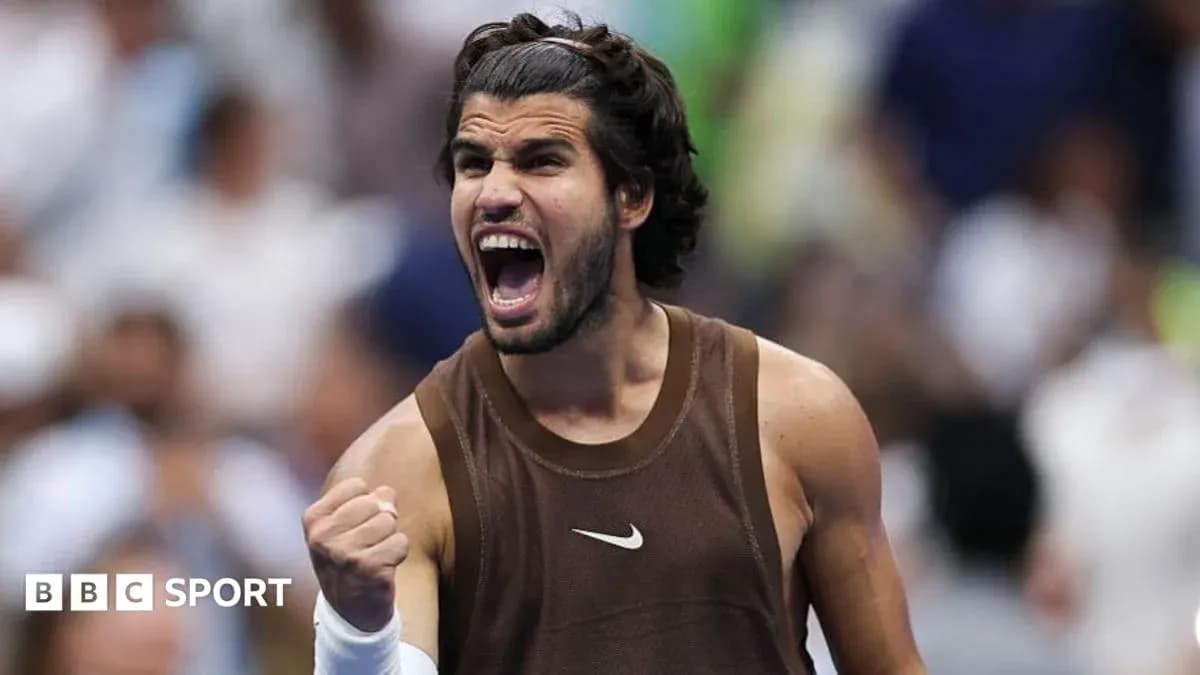
Carlos Alcaraz walks back into the noise, the lights and the expectation as if he never left.
One hundred and thirty-nine days after his last singles win, the seven-time major champion strode onto Arthur Ashe Stadium on Monday night to begin his US Open title defence. A compression sleeve hugged his right arm, the wrist that cost him the clay and grass seasons, but the body language screamed something else entirely.
He was back. And he was going to enjoy every second of it.
Across the net, Russia’s Roman Safiullin did what he could. It wasn’t enough. Alcaraz rolled 6-4 6-4 6-4, a straight-sets win built on ferocious forehands, feathered drop shots and that familiar, infectious roar that seems to bounce off the Ashe roof and rattle around New York.
“I missed the crowd, the energy, the competition – I missed everything,” Alcaraz said on court, smiling as if someone had just handed him tennis itself all over again. “I’m just really, really happy that I was able to compete again.”
The show returns to Ashe
From the first game, the theatre was back. Every winner came with a clenched fist and a “vamos” hurled at his team. He grinned after long rallies. At one changeover he casually sang along to Michael Jackson, a 23-year-old defending champion treating the biggest tennis stadium in the world like his living room.
The forehand, wrapped in tape and question marks for four months, answered loudly. That whippy, elastic stroke produced the bulk of his 28 winners, the ball leaping off the strings with the same violence that carried him to last year’s title.
“I felt great. I don’t know how it looked from outside, but from inside, my feeling was that I was hitting normal,” he said. “I was playing pretty normal, playing my style, and everything felt great.”
The crowd fed off him, and he fed off them. When he finished a bruising rally in his final service game with a teasing drop shot that died just over the net, he froze for a heartbeat, then punched the air, pointed to his ear and waved his arms, demanding more noise. Arthur Ashe obliged.
On BBC Radio 5 Sports Extra, former Wimbledon champion Pat Cash noted that it looked like “every little win” meant something to Alcaraz. It did. This was a player who had spent the summer watching others lift the trophies he wanted: Alexander Zverev at Roland Garros, Jannik Sinner at Wimbledon. Now it was his turn again.
“What I really want to do is enjoy every time that I’m going to walk into the court, feeling the energy from the people,” Alcaraz said. “That’s what I’m going to do this tournament. The results, it’s going to come after all. That’s why I enjoyed so much today, and it wasn’t a surprise for me, because I came here to enjoy.”
Rust, risk and the serve that isn’t there yet
For all the joy, this was still a comeback match. And it showed in one key area.
The serve, usually a weapon, arrived as a work in progress. Just two aces, five double faults. The numbers behind it were solid enough – 68% of first serves in, 66% of those points won – but the raw pace and free points that normally ease his path were largely missing.
“The serve is the shot I was struggling [with] the most,” he admitted. He also revealed that some of the change was deliberate, a tactical tweak to unsettle Safiullin. A slower serve, different looks, less rhythm for the returner.
“I’m going try to serve better. The point is going to try to serve normal, but it’s a shot that I just always struggle [with]. But it will be back, for sure.”
What didn’t look rusty was his movement or his appetite for long exchanges. Yet even there, the mind had wandered into darker places before the match.
“There were some doubts in the match, I’m not going to lie,” he said. “I’ve been thinking about ‘am I going to last the best of five, am I going to last playing four sets, five sets?’”
He lasted just fine. No visible drop in intensity, no crisis in the legs. Still, he knows one night against the world number 99 is not the same as a fortnight in New York.
“I need more matches under the belt to get again into the rhythm of the tournament,” he said. “I’m pretty sure I’m going to get better and better every day.”
A draw that suddenly looks different
The win itself was routine. The context around it is anything but.
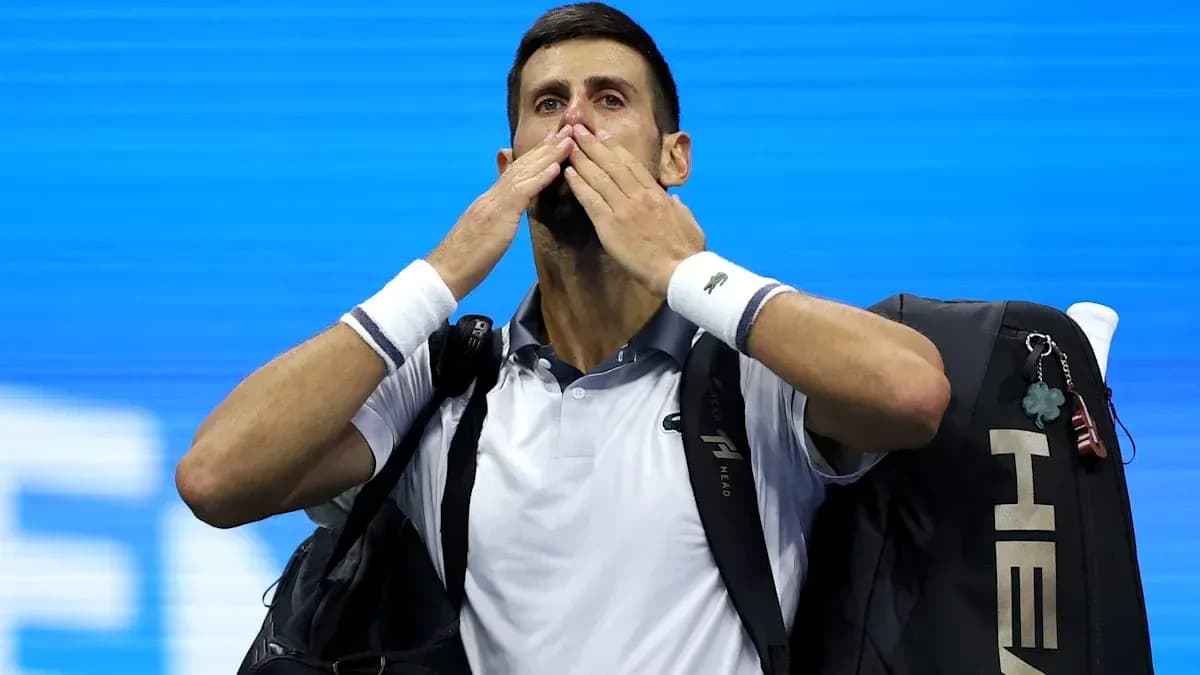
Sinner, the world number one and Wimbledon champion, is out of the event entirely with a knee issue. Novak Djokovic, the 24-time Grand Slam winner whose shadow usually stretches over every major draw, is gone too, stunned in the first round by Argentina’s Mariano Navone on Sunday.
On Monday, another threat disappeared. French 10th seed Arthur Fils, fresh from his Cincinnati Masters triumph and widely tipped as a serious contender here, fell to Stefanos Tsitsipas.
The pressure finally told on the draw. It has opened up.
As second seed, Alcaraz sits on the opposite side from top seed and French Open champion Zverev, so the earliest they can collide is the final. Before the semi-finals, the only top-10 opponent he can even face is American Ben Shelton, a possible quarter-final blockbuster under the Ashe lights.
Next up, though, is Portugal’s Jaime Faria, ranked 72 in the world. On paper, it’s another gentle step. In reality, every match is another test for the wrist, the serve, the stamina – and for a player trying to rediscover the ruthless edge beneath all that joy.
Alcaraz spent the summer watching others take their chances. In New York, with the path shifting under everyone’s feet, the stage is his again.