Carlos Alcaraz Reclaims Arthur Ashe Stadium with a Dominant Return
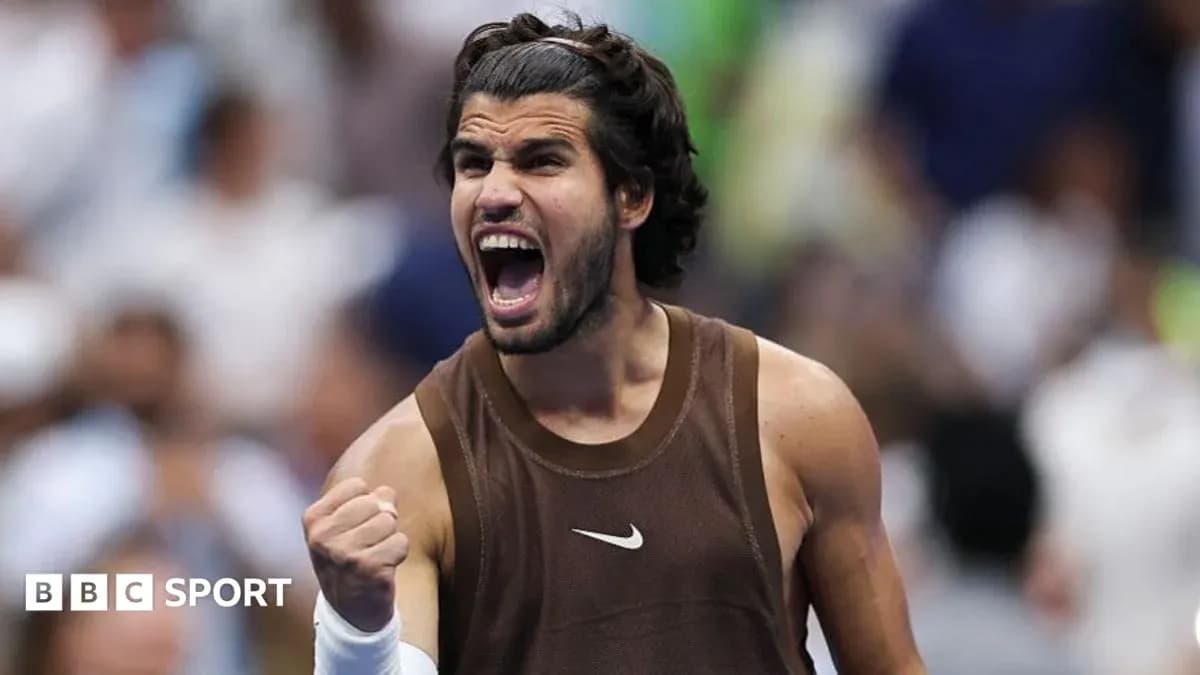
Carlos Alcaraz did not so much return to Arthur Ashe Stadium as reclaim it.
After 139 days of frustration, rehab and watching others lift the trophies he craves, the seven-time major champion walked into the arena on Monday night to begin his US Open title defence – and played as if he had never been away. Wrist strapped in a compression sleeve, energy turned all the way up, he swept past Russia’s Roman Safiullin 6-4 6-4 6-4.
The scoreline was tidy. The performance was anything but cautious.
The show is back
From the first game, Alcaraz made it clear this was not going to be a tentative feel-your-way-in return. He uncorked his trademark forehand with the same violent whip that has terrorised the tour, that shot alone driving the bulk of his 28 winners. Each clean strike came with a clenched fist and a roar of “vamos” in the direction of his box.
He had missed this. All of it.
“I missed the crowd, the energy, the competition – I missed everything,” he said on court, grinning as if he might never stop. “I’m just really, really happy that I was able to compete again.”
For four months, he had been forced into the role of spectator as Alexander Zverev took Roland Garros and Jannik Sinner claimed Wimbledon. Two majors, two chances gone while his right wrist healed. On Monday, the balance of power felt as if it had shifted back towards the man who made New York his playground last year.
He didn’t just compete. He entertained.
At one changeover he casually sang along to a Michael Jackson track, smiling his way through the pause as if this were a backyard hit rather than the opening defence of a Grand Slam title. Between points he bounced on his toes, feeding off the Ashe noise. During his final service game, he capped a gruelling rally with a feathered drop shot, then lifted his fist to the sky, cupped his ear and waved his arms, demanding more volume from an already raucous crowd.
Pat Cash, watching on BBC Radio 5 Sports Extra, noted how “every little win” seemed to be celebrated. That was the point. Alcaraz has decided this comeback will be built on joy.
“What I really want to do is enjoy every time that I’m going to walk into the court, feeling the energy from the people,” he said. “That’s what I’m going do this tournament. The results, it’s going to come after all. That’s why I enjoyed so much today, and it wasn’t a surprise for me, because I came here to enjoy.”
Rust, but only in one place
For all the swagger from the baseline, this was not a flawless performance. The forehand crackled, the drop shots were as cruel as ever, the movement looked reassuringly elastic. The serve, though, lagged behind.
Alcaraz finished with just two aces and five double faults. Those numbers jar for a player who has turned his delivery into a genuine weapon over the past two seasons. He did land 68% of first serves and won 66% of those points, but the usual free points were scarce and the rhythm patchy.
“The serve is the shot I was struggling [with] the most,” he admitted. Some of that, he insisted, was by design, a deliberate change of pace to disrupt Safiullin. “I’m going try to serve better. The point is going to try to serve normal, but it’s a shot that I just always struggle [with]. But it will be back, for sure.”
The rest of his game suggested he is right. The footwork was sharp, the improvisation intact. He defended with depth, then flipped rallies in an instant with that forehand, repeatedly pushing the world number 99 into the corners and onto the stretch. If there were doubts about his conditioning, they did not show in his legs.
Inside his head, it was different.
“There were some doubts in the match, I’m not going to lie,” he said. “I’ve been thinking about ‘am I going to last the best of five, am I going to last playing four sets, five sets?’”
He did not need to answer those questions fully on Monday night. Three straight sets, handled with authority, were enough for a first step. But he knows this is only the start.
“I need more matches under the belt to get again into the rhythm of the tournament. I’m pretty sure I’m going to get better and better every day.”
A draw blown wide open
The context around him has changed dramatically since he last played a major. The US Open draw has thinned at the top in a way that makes his return all the more intriguing.
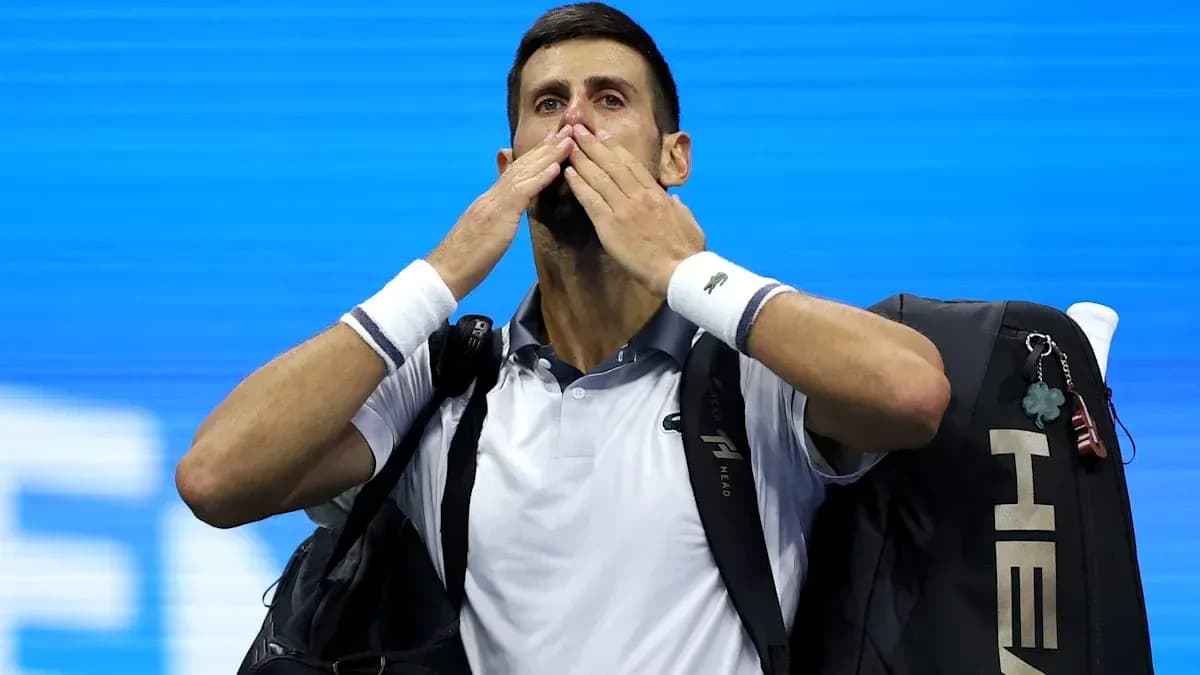
World number one Jannik Sinner is not in New York, sidelined by a knee issue. Novak Djokovic, the 24-time Grand Slam champion and the man whose shadow usually looms over any hard-court Slam, is already gone after a stunning first-round defeat to Argentina’s Mariano Navone.
On Monday, another supposed threat fell. French 10th seed Arthur Fils, fresh from his Cincinnati Masters title and widely tipped as a dark horse in New York, went out to Stefanos Tsitsipas. Just like that, one more potential obstacle vanished from Alcaraz’s half of the bracket.
As the second seed, he sits on the opposite side of the draw to top seed and French Open champion Zverev. They cannot meet before the final. Between now and the semi-finals, the only top-10 player he can face is American Ben Shelton, a possible quarter-final opponent and a man who knows how to light up Ashe with his own brand of power and theatre.
First, though, comes Portugal’s Jaime Faria, ranked 72 in the world. On paper, it is another gentle step in. On court, Alcaraz will treat it as another chance to test that wrist, sharpen that serve and ride the noise.
He has already made one thing clear: he is not here to tiptoe his way back into relevance. He is here to feel everything again – the pressure, the joy, the roar – and to see whether, in a suddenly wide-open New York, that is enough to carry him all the way to the second Sunday once more.