Carlos Alcaraz's Journey from US Open Loss to Paris Masters Triumph
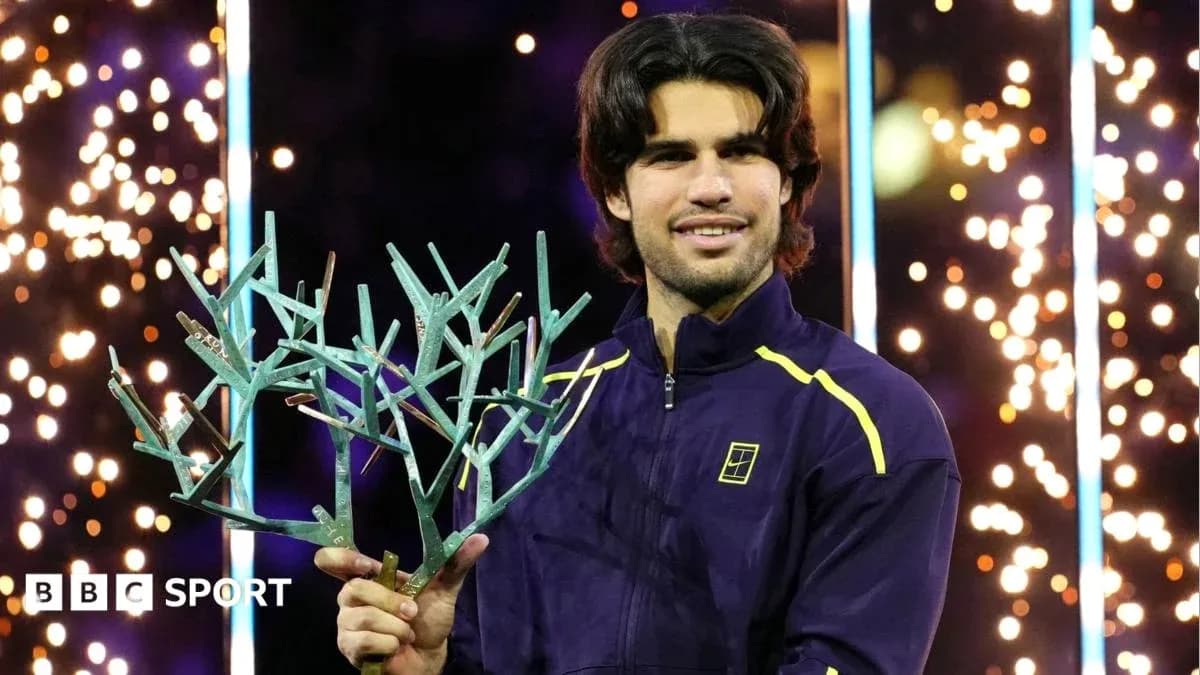
Carlos Alcaraz needed only 60 days to turn a gut punch in New York into a statement in Paris.
Two months after Ben Shelton sent him out of the US Open in a late-night epic, the Spaniard walked into another big stage, another hard court, and this time walked away with the trophy. Revenge taken, message delivered.
From wrist doubts to Paris glory
Back in September, Alcaraz was still a question mark. Four months out with a wrist injury, rust expected, rhythm uncertain. Instead he played his way into the US Open quarter-finals and then into a five-set firefight with Shelton that felt like a changing-of-the-guard moment for American tennis.
Shelton won that night. Alcaraz walked off with the loss but also with a clear target.
Since then, he has barely missed. Three titles, 17 matches, one defeat. The latest win, a 7-6 (7-5) 7-5 victory over world number four Shelton on Sunday, brought him his first Paris Masters 1000 crown and pushed his Masters haul to nine.
He has now won seven of the nine ATP Masters 1000 events on the calendar. Only Canada and Shanghai are missing from his collection, the last pieces he needs to join Novak Djokovic and Jannik Sinner as the only men to sweep all nine.
This one meant more than just another trophy. It confirmed that the fully-fit, fully-charged Alcaraz is back on the front line of the sport, ready to chase down the biggest prizes again in 2027.
“It’s something I’ve been chasing for a long time. I had some of the toughest losses of my career here,” he said on court, emotion just under the surface. “I’m just really happy that I finally got it. This tournament is really special.”
A final played on a knife-edge
Shelton came in with his own momentum. Four titles this year, a first major final, a top-four ranking, and that booming lefty game that had rattled Alcaraz in New York. He played like a man who believed he could do it again.
The opening set was tense, edgy, and brutally tight. Alcaraz faced six break points. He stared down every one. The Spaniard’s refusal to yield under pressure has already become one of his calling cards; in Paris it bordered on defiance.
Shelton matched him for poise. He snuffed out two break points himself, dragged the set into a tie-break and looked ready to lean again on his serve and swagger. At 4-3 up in the breaker, the American had the momentum.
Then Alcaraz snapped it.
He reeled off four of the last five points, took the tie-break 7-5 and roared. The margins were thin, but the intent was clear. He was not going to be dragged into another five-set war. Not this time.
Shelton finally broke through in the second set when Alcaraz faltered in a ragged third service game. Errors crept in, the door opened, and Shelton walked through to lead and then serve for 5-3. The match seemed to be stretching out, the memory of New York creeping back into view.
Alcaraz slammed it shut.
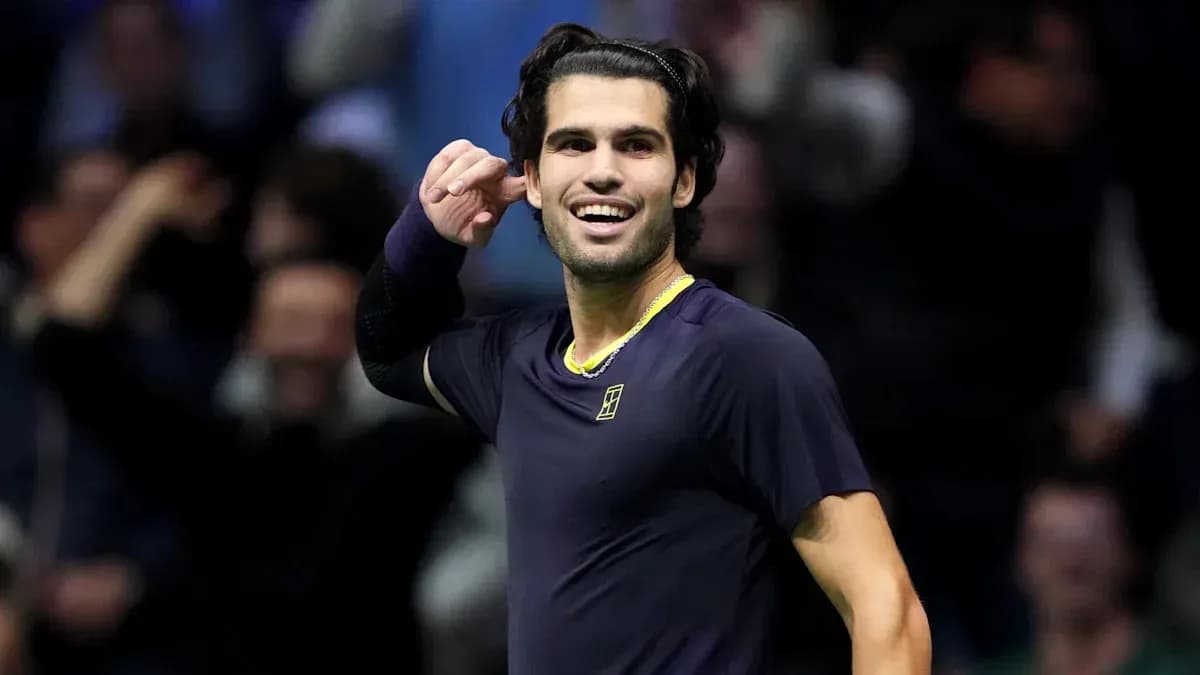
He broke back with the kind of furious, elastic defence that turns rallies into tests of will, then held for 5-4 after a breathless exchange that had the crowd on its feet. He pointed to his ear, demanding more noise, feeding off the chaos. At the changeover he danced to the music, loose, smiling, completely alive in the moment.
Shelton’s resistance cracked in the closing games. Alcaraz won five of the last six, clinched the title on his second match point and threw his arms wide before heading straight for his team. No wild collapse, no epic decider, just a controlled, ruthless close.
For the fourth time in his career, he had lifted a trophy at a tournament where he had stared down match points earlier in the week. Two days before the final, Taylor Fritz had stood two points from knocking him out in the quarter-finals. Alcaraz escaped, reset, and then ran the table.
That is not form. That is a habit.
A season to finish with a flourish
This year began with history. In January, Alcaraz became the youngest man ever to complete the career Grand Slam when he won the Australian Open, his seventh major. The middle of the year brought injury, frustration and questions. The end of it might yet bring a thunderous answer.
He will arrive at the ATP Finals in Turin on a nine-match winning streak after back-to-back titles in Vienna and Paris, armed with rhythm, confidence and the feeling that his game is once again fully synced to his ambition.
The men’s game has never been more crowded at the top. Sinner, Shelton, and the old standard Djokovic all stand in his way. But on the evidence of Paris, Alcaraz is not easing himself back into that fight.
He is sprinting towards it.
Patten and Heliovaara rise to the summit
On the doubles side, another storyline quietly hit its peak in Paris.
Great Britain’s Henry Patten and his partner Harri Heliovaara will finish the year as the world’s top-ranked men’s doubles team for the first time, their run to the semi-finals at the Paris Masters sealing the year-end number one spot and a ticket to the ATP Finals.
They only teamed up in 2024. Two years later, they sit on top of the sport.
Patten and Heliovaara reclaimed their Wimbledon title this summer and stacked up trophies in Adelaide, Doha, Dubai and Madrid, a schedule that speaks of consistency as much as quality.
“It’s an incredible achievement, one that goes to the very top of my list of best achievements as a tennis player,” Patten said, reflecting on the climb from a ranking of around 60 for him and 40 for Heliovaara when they started together. “In two years we’ve worked incredibly hard and to go from where we started to where we are now, on top of the world, is beautiful.”
Heliovaara called it “one of the crazy dreams” come true, the kind of line that sounds like cliché until you remember where they began.
In Paris, singles and doubles told the same story in different ways: players who refused to accept their ceiling, who treated setbacks as fuel. Alcaraz now chases Turin and, beyond that, another tilt at domination. Patten and Heliovaara head into the Finals as the team everyone else is trying to catch.
The question, as the season closes, is no longer whether they belong at the top.
It is how long they plan on staying there.