Carlos Alcaraz Dominates Wu Yibing at US Open
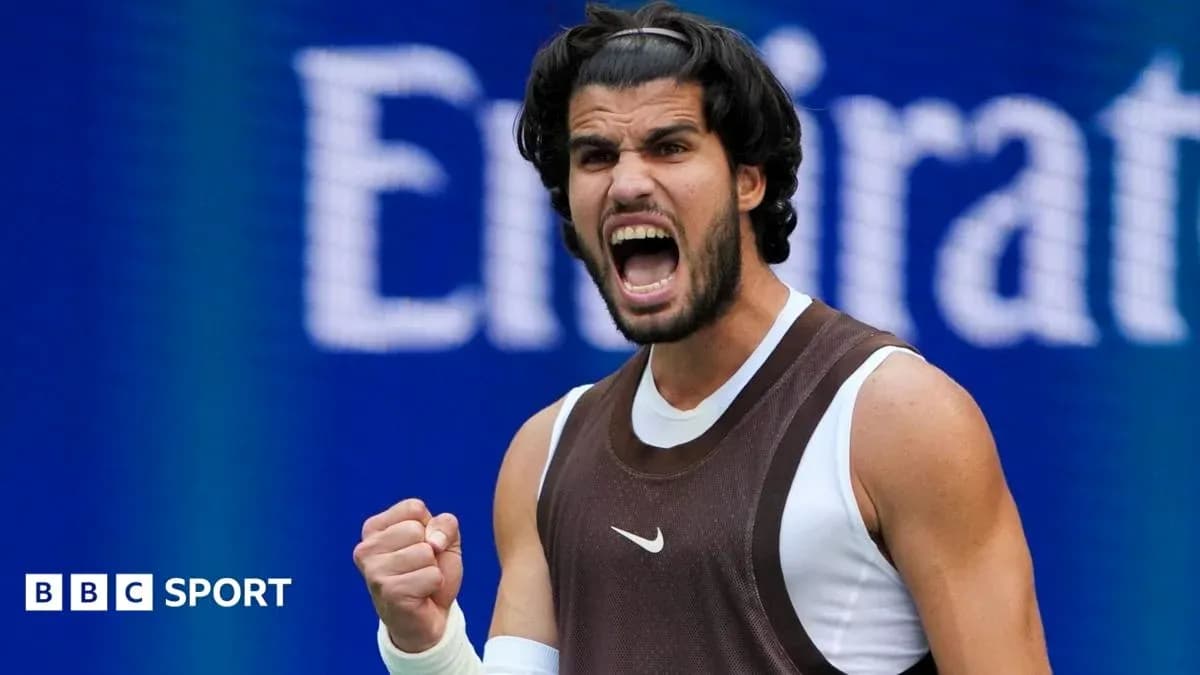
Carlos Alcaraz barely broke stride.
Under the lights at Flushing Meadows, the defending US Open champion brushed aside Wu Yibing 6-3 6-4 6-1, a straight-sets win that looked less like a player feeling his way back from injury and more like a man reasserting his authority on hard courts he knows intimately.
This was supposed to be a test of where his body stood after four and a half months out with a wrist problem. Instead, it felt like a statement.
From doubt to dominance
Alcaraz arrived in New York with questions hanging over him. His opening-round match was his first singles outing in 139 days. The rust showed only in theory, not in the scoreline: he won that one in straight sets, then had to dig deep to turn around a second-round scrap against Jaime Faria after dropping the first set.
Against Wu, there was no such drama. Just control.
The 23-year-old took early command of the baseline exchanges, bullied the Chinese player with heavy forehands and elastic defence, and tightened the screws as the match wore on. The longer it went, the clearer the gap in class and confidence became.
By the third set, Wu was chasing shadows. Alcaraz was chasing rhythm.
“To be honest, I'm better than I thought,” he admitted afterwards, an assessment that matched the evidence on court. He had expected the physical toll to bite after that first match back. It hasn’t. “Physically I thought I was going to be bad after the first match, but I am recovering really well. I am doing great things off the court to be in a good state.”
The numbers backed him up: two hours and 20 minutes of sharp, relentless tennis, with no sign of a player protecting a wrist or doubting a movement.
“Right now, I think my level is really good. I think I have caught the rhythm of the competition,” he said. “Every time that I step on the court I give it all. I'm just trying to improve, be better every match and I think I'm getting there.”
On this evidence, he already is.
A draw that keeps opening
The win sends Alcaraz into the fourth round, where American 20th seed Tommy Paul awaits. On paper, it’s a tricky assignment: a clever, athletic opponent, comfortable on hard courts, buoyed by a home crowd.
On court, history leans heavily one way. Alcaraz has beaten Paul six times in a row. The familiarity, and the dominance, matter.
What really changes the picture in New York, though, is everything happening around him in the men’s draw.
Jannik Sinner, the world number one and the man many saw as his most dangerous rival here, is out injured. That leaves French Open champion and Wimbledon runner-up Alexander Zverev as the top seed in the field. As the second seed, Alcaraz cannot face the German until the final.
And Zverev is working hard for every inch. Both his matches so far have gone to five sets, both have dragged on until 2am. He’s still standing, but he’s burning energy.
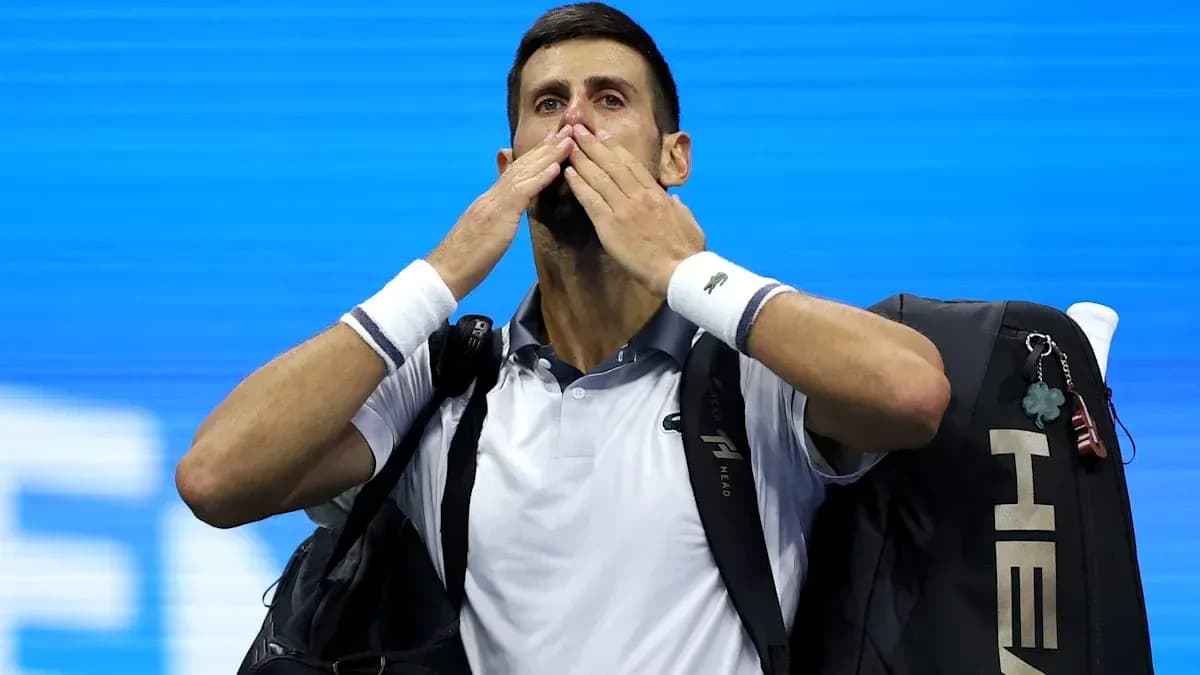
Elsewhere, the chaos has come early. Novak Djokovic, a name that usually looms over this event, has already gone, stunned in the first round by Mariano Navone. Canadian third seed Felix Auger-Aliassime followed him out in the second round, undone by Karen Khachanov.
The effect is stark. As things stand, only one other top-10 seed, American Ben Shelton, can cross Alcaraz’s path before the semi-finals. The Spaniard owns a 3-0 record against Shelton, a player whose explosive lefty game has yet to crack him.
Should he reach the last four, Daniil Medvedev could be waiting. The Russian sits 7th in the seedings and knows how to win in New York, but Alcaraz holds a 6-3 edge in their head-to-head. Medvedev did beat him at Indian Wells in March, a reminder that this rivalry can still tilt either way when the margins tighten.
On the other half of the draw, Zverev’s potential road is far less forgiving. Home favourite Taylor Fritz lurks, as does Flavio Cobolli, this year’s French Open runner-up from Italy. There are no easy nights coming for the German.
The champion’s posture
Strip away the rankings, the seedings, the injury doubts. What remains is the posture of a defending champion who looks increasingly like himself again.
Alcaraz is not easing into this tournament. He is accelerating through it. The wrist that kept him out since April has not dulled his instincts or his aggression. If anything, the time away seems to have sharpened his hunger.
His words match his body language. His game is catching up fast.
The road to an eighth major is never simple, not in New York, not with this field. But as the draw thins and the big names fall, one question grows louder around Flushing Meadows.
If this is Alcaraz still “getting there,” what happens when he arrives?