Carlos Alcaraz Dominates Tommy Paul to Reach US Open Quarter-Finals
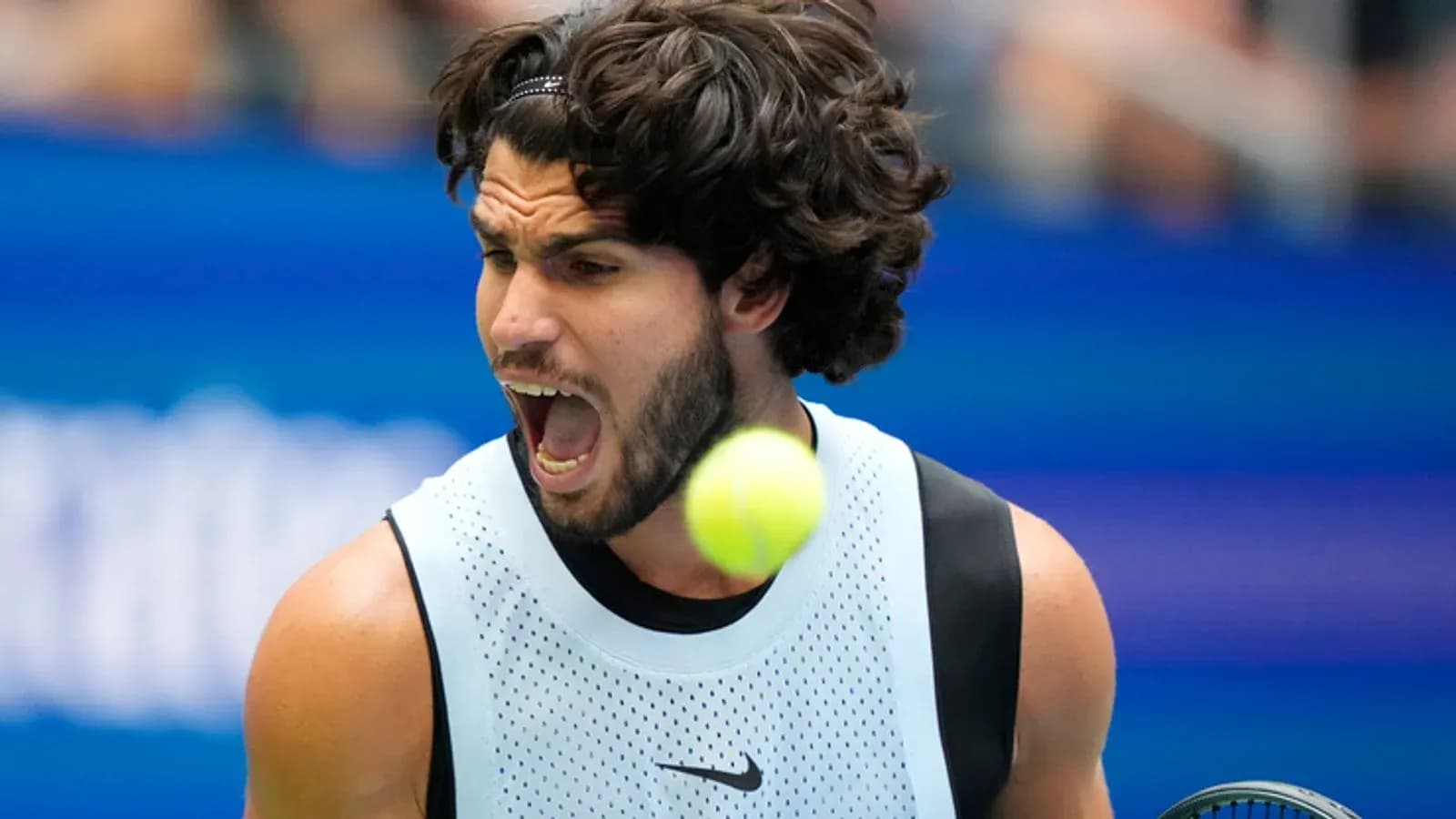
Carlos Alcaraz is not just back. He’s hunting history again.
On a warm New York night, the Spaniard brushed aside Tommy Paul with a cold, ruthless edge that left Arthur Ashe Stadium in little doubt: the wrist that stole four and a half months of his season has no say here. The defending champion rolled 6-4 6-3 6-4, into the US Open quarter-finals in two hours and 21 minutes, and barely looked like he’d broken sweat.
Alcaraz turns the screw
Paul had talked bravely in the build-up. The 20th seed said he always believes he can beat the very best, and against most players his blend of athleticism and touch would give that belief some weight.
Against this version of Alcaraz, it never truly felt enough.
The world No 1’s intent was obvious from the start. He stepped inside the baseline, took the ball early and hammered away at Paul’s defences with that ferocious forehand Tim Henman now openly calls the best he’s seen. Time and again Alcaraz ripped the ball cross-court, then flattened it down the line, the kind of shot that doesn’t just win points, it drains resistance.
Paul hung on, scrapping for every rally, but the pattern set in quickly. Alcaraz’s return game suffocated him. The American’s serve, usually a platform, became a problem he couldn’t solve. When Alcaraz spoke afterwards about “putting so much pressure on the return game”, this was what he meant: constant heat, no cheap holds, no rhythm.
The numbers tell their own story. This was a sixth straight win for Alcaraz over Paul, and he has now taken the last 14 sets between them. The match tightened late in the third when Paul finally carved out two set points. For a moment, the contest threatened to stretch.
Alcaraz simply swatted the danger aside.
Both set points disappeared under the weight of brutal, line-licking forehand winners, struck with a swagger that screamed confidence. Two blows, no hesitation. Within minutes, the handshake came at the net.
“I played my game. I tried to put my style on today’s match,” he said afterwards, almost understating the control he’d just exerted. He spoke of being ready to run, ready for the battle, but the truth is he dictated most of it on his own terms.
History in his sights
This run in New York is about more than another deep Slam week. It’s about legacy, and he knows it.
Alcaraz is already the youngest man ever to complete the career Grand Slam. He has conquered Wimbledon’s grass in 2023 and 2024, and the French Open clay in 2023 and 2024. If he can defend his US Open title next Sunday, he will become the only man in the Open Era to successfully defend major titles on all three surfaces.
That’s not a line you stumble into. That’s all-time territory.
What makes it even more striking is the context. Four and a half months out with a wrist injury is the kind of layoff that usually demands patience, a slow build, a few nervous matches as timing and confidence return. Alcaraz has skipped that chapter entirely.
“It doesn’t matter I was out for four-and-a-half months; every time I come here I play my best,” he said. Asked if he was back to full power, he barely blinked: “I think so.”
From the commentary box, the assessment was even more emphatic. Henman called it “a pleasure” to watch him “go through the gears”, while Martina Navratilova, who has seen every great of the last half-century up close, sounded almost bemused by the speed of his rise.
“It’s really crazy he got this good this fast,” she said. With most players, a game this varied takes years to knit together. With Alcaraz, it looks instinctive. “He’s just in another stratosphere.”
Right now, New York is his launchpad.
Sabalenka survives a wild one
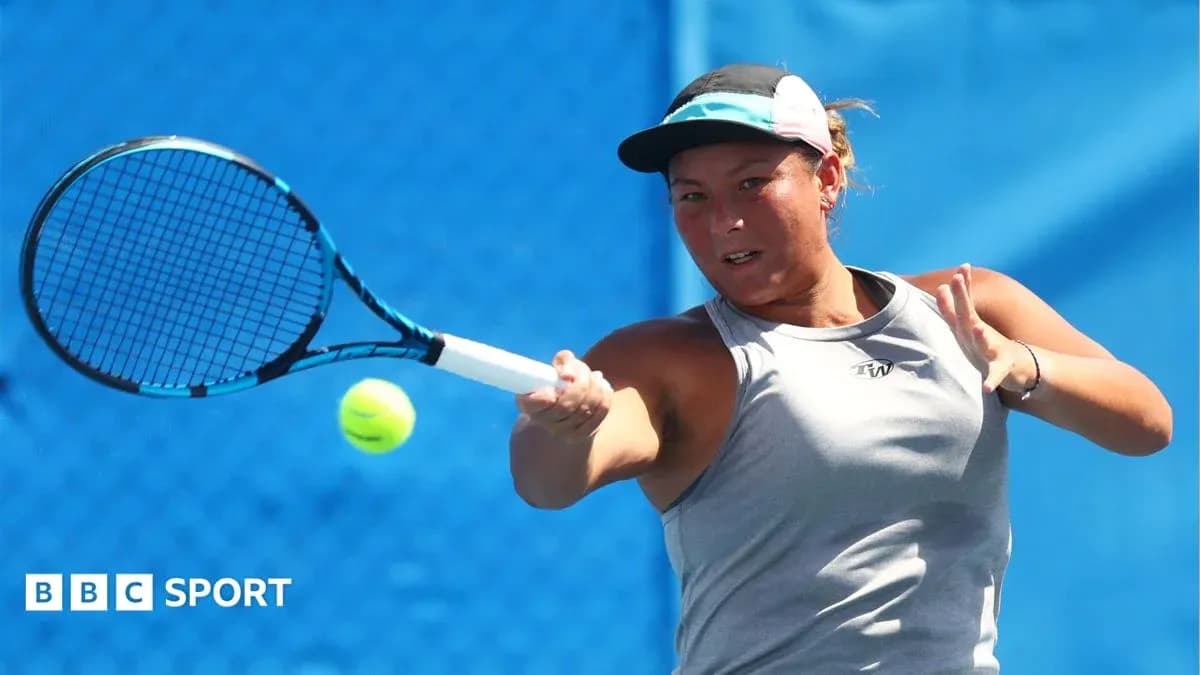
On the women’s side, Aryna Sabalenka is clinging onto two prizes at once: her US Open crown and the No 1 ranking. Against Taylor Townsend, she kept both alive, but this was no cruise.
A 6-4 6-3 scoreline suggests control. The reality was chaos. Eleven breaks of serve in 19 games turned Arthur Ashe into a rollercoaster, with momentum swinging almost every other game.
Sabalenka has spent 99 weeks at the top of the rankings. To make it a century, she must win a third straight title in New York and hope Elena Rybakina falls before the semi-finals. That pressure seemed to seep into her serve at times, but when the match tightened, the champion’s steel surfaced.
She fell a break behind in the second set, the crowd lifting Townsend, who fed off the stage and tried to storm the net at every opportunity. That was the moment Sabalenka snapped into something harder, louder, more ruthless. She broke back, roared so loudly it echoed up into the upper tiers, and from there she never looked like letting go.
“I was just trying to stay focused on myself, not only point by point but ball by ball,” she explained. That narrow focus turned the second set around and, as she said, “I think it was a key moment.”
Navratilova graded the performance as “good enough” rather than spectacular. Townsend actually finished with more winners, but Sabalenka’s returning and passing shots repeatedly crushed the American’s forays forward. Too often, Townsend arrived at the net only to watch another heavy, flat drive whistle past.
“Overall, I would give Sabalenka a ‘B’ because she lost her serve so many times, but she played really well when it mattered,” Navratilova said. On nights like this, that’s often what separates champions from challengers.
Annabel Croft focused on the theatre of it all. She talked about the “ferocious intensity” Sabalenka brought, the shriek when she clawed back that second-set break, the sense that the Belarusian understands she is not just playing tennis, she is putting on a show. The aura, the body language, the refusal to look vulnerable – it all feeds into the feeling that she remains the woman to beat here.
She has yet to drop a set. She looks physically strong. The ranking watch rumbles on in the background, but on court, Sabalenka still moves like a player who expects to own this arena.
Noskova holds her nerve
Waiting for Sabalenka in the quarter-finals is Wimbledon champion Linda Noskova, fresh from a draining, nerve-shredding win over Marta Kostyuk.
This was a rerun of their semi-final at SW19, and it carried the same knife-edge drama. Noskova finally edged it 7-5 5-7 6-4, but only after Kostyuk saved five match points – two at the end of the second set, three in the decider. Each time, the Ukrainian found one more brave swing, one more line, to keep herself alive.
Eventually, the Czech’s composure held. She steadied her arm, closed the door, and booked a date with the defending champion.
Sabalenka brings the power, the roar, the history of winning here. Noskova brings the grass-court confidence of a Wimbledon title and the belief that she can live with anyone in the biggest moments.
Alcaraz is chasing a slice of history that belongs only to him. Sabalenka is fighting to keep a grip on an empire she’s built over nearly 100 weeks at the top. New York has its storylines. Now it’s down to the players to decide how far they can push them.