Carlos Alcaraz Aims for ATP Finals Glory in Turin
The lights go up in Turin this weekend for the final act of the 2026 ATP season, but one of the tournament’s defining figures will be missing from the stage.
Two-time defending champion Jannik Sinner, the man who turned this event into his personal showcase over the past two years, has been ruled out with the knee injury that has troubled him since the Wimbledon final. The Italian’s absence rips a sizeable hole in the draw and in the atmosphere of a tournament he helped re-energise.
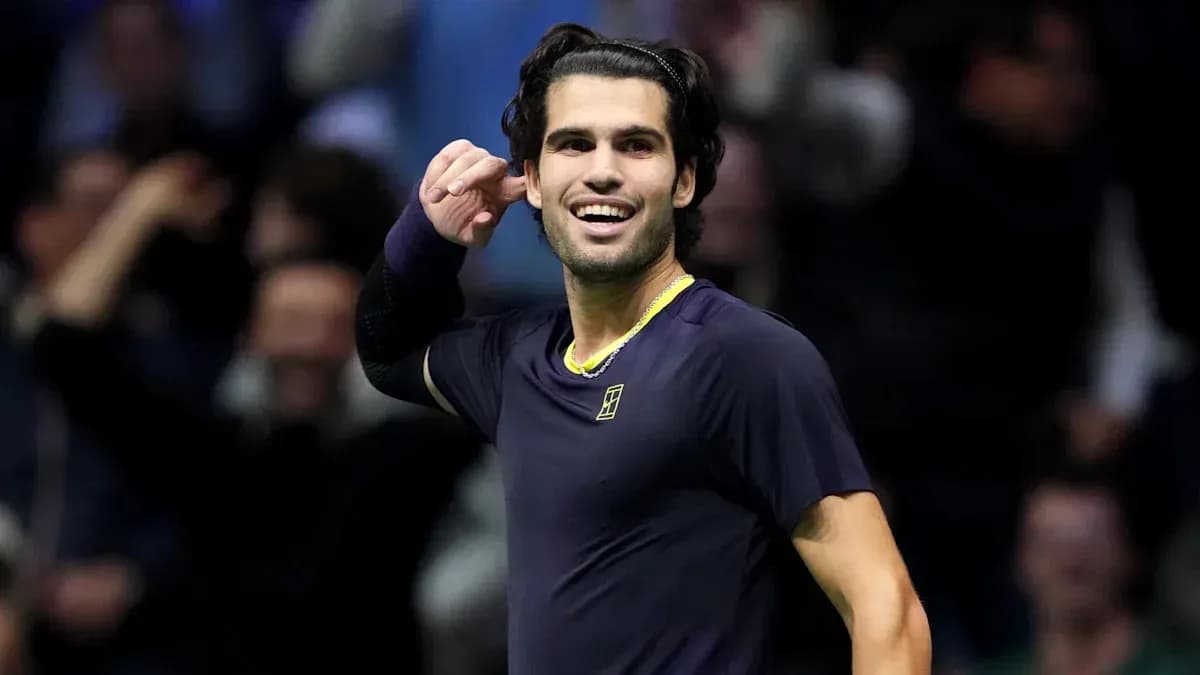
Into that space steps Carlos Alcaraz.
Beaten by Sinner in last year’s final, the Spaniard returns with unfinished business and a clear target: lift the ATP Finals trophy for the first time. He has already conquered Grand Slams and Masters events, already carried the burden of expectation at a young age. What he has not done is solve the unique puzzle of this elite, end-of-year shootout.
History hangs heavy over this event. Novak Djokovic sits alone at the top of the honours list with seven titles, a monument to longevity and ruthless indoor dominance. Just behind him is Roger Federer with six, the Swiss once treating this tournament as his personal indoor kingdom.
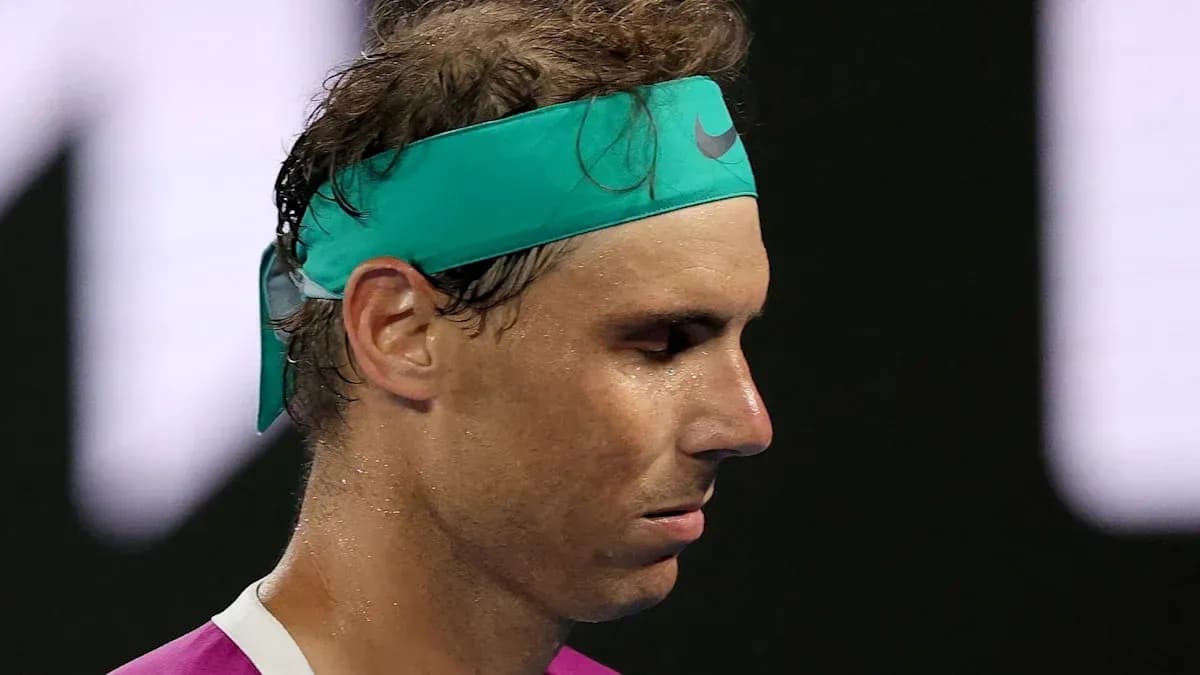
Then there is Rafael Nadal, the outlier in that golden trio.
The great clay-court champion, the man with 22 Grand Slam singles titles, never won the ATP Finals. Not once. For all his success, for all the seasons he bent to his will, this tournament remained stubbornly out of reach.
Nadal did have his chances. His first final came in 2010, when he pushed Federer to a deciding set in a high-quality showdown that seemed destined to become the prelude to future triumphs. Nadal fought, as he always did, dragged the match into a third set, but the Swiss found the extra gear indoors and closed the door.
Three years later, Nadal was back in the title match. This time Djokovic stood across the net in 2013, and the Serbian did not offer him a way in. Straight sets, clinical, and another ATP Finals trophy slipped from Nadal’s grasp.
He kept coming back. Five more appearances followed, two of them ending in the semifinals, but never again did he cross the line into the final Sunday night. For a player who owned Paris in June and New York in September, London and Turin in November remained a different story.
Nadal himself often pointed to the brutal demands of the event: the surface, the timing, the level of opposition from the very first ball. His 2019 campaign captured that reality perfectly.
That year he arrived in London bruised, literally and figuratively. An injury at the Paris Masters (Bercy) left him short of matches and rhythm. In his opening round-robin match, Alexander Zverev tore through him, handing Nadal a heavy defeat that underlined just how unforgiving this tournament can be when preparation is compromised.
He responded as he usually did — by fighting. Nadal edged Stefanos Tsitsipas in the round robin, but even after that win his fate still hung on other results. Qualification for the semifinals was out of his hands.
In the press room, he cut through the usual clichés. He spoke openly about how he had arrived with minimal preparation, about how this was “the worst tournament possible to arrive at without the best preparation,” because there are no soft landings, no early rounds to play your way in. From day one, you face one of the best players in the world on a fast indoor court. If the body or the timing is off, the tournament can be gone in a heartbeat.
He admitted that the first match against Zverev had been “a tough day,” that he had only managed to play one proper set of practice before the event began. But he also stressed what mattered most to him: leaving London with the feeling that he had done everything he could, that his level had climbed with each match, that he could fly to Madrid for the Davis Cup with confidence restored.
That is exactly what happened. Nadal’s 2019 season, taken as a whole, was one of the finest of his career. He claimed Roland Garros and the US Open, added the Italian Open and Canadian Open, and then finished the year by leading Spain at the Davis Cup, winning all his singles matches in straight sets. The ATP Finals remained the missing piece, but the season itself stood as a towering achievement.
As Turin prepares for a new chapter without Sinner and with Alcaraz chasing his first title at this event, the contrast is striking. Djokovic’s seven, Federer’s six, and Nadal’s none tell a story of styles, surfaces and timing as much as talent.
The stage is set again. The trophy is the same. The cast keeps changing. Who will bend this unforgiving tournament to their will next?