Katie Boulter's US Open Defeat to Karolina Muchova
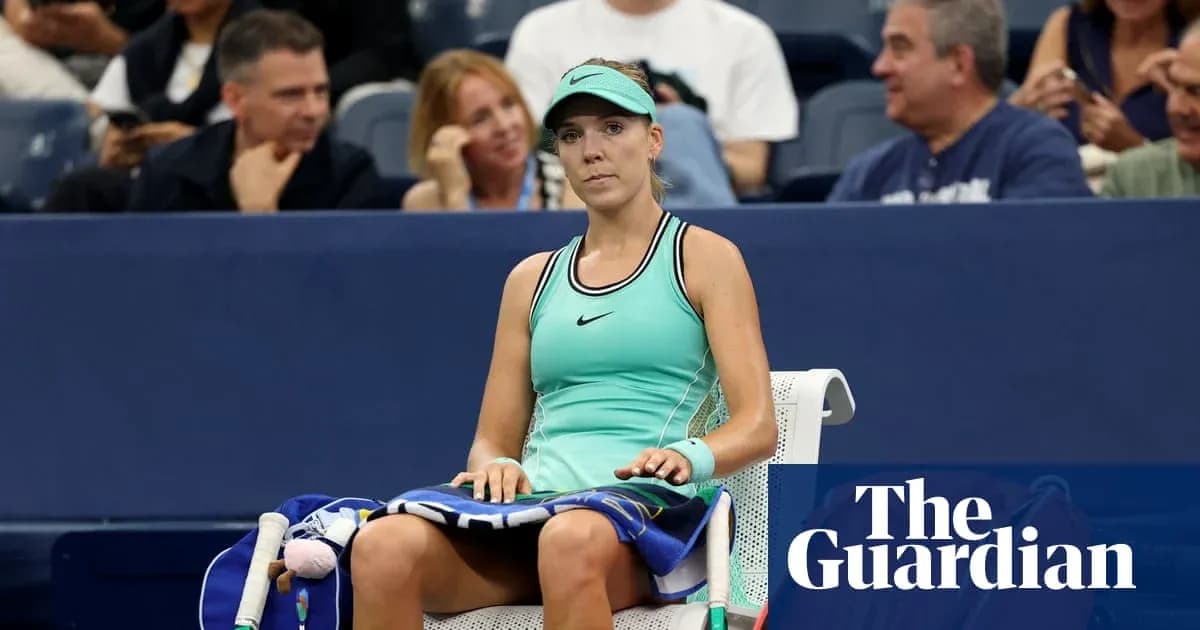
The rain lashed down on Flushing Meadows, driving thousands of fans under cover and freezing play across the outside courts. Under the roof of Louis Armstrong Stadium, though, there was no escape for Katie Boulter.
Her grand slam season ended not with a tight, gallant scrap, but with a brutal 6-1, 6-0 dismantling at the hands of the seventh seed, Karolina Muchova, in the second round of the US Open. It was over in a blur, a mismatch under the lights.
Boulter had been due to play on the more modest Court 17 after the men’s first-round clash between Rafael Jodar and Yunchaokete Bu. The storm tore up that plan. With the rain hammering down and the schedule collapsing, organisers shifted Boulter and Muchova into Armstrong, one of only two courts with a roof. It was a promotion in name only.
Muchova, a French Open finalist this year and one of the most complete players on tour, glided through the match. She mixed spins and angles, pulled Boulter around with her trademark all-court game, and never let the Briton settle. Every short ball was punished, every hesitant step exposed.
Boulter, by contrast, looked as if she had been dropped into someone else’s nightmare. The cavernous stadium, the constant hum and chatter from a restless New York crowd, the echo of the closed roof – it all jarred. This was her first match on a show court at the US Open, and she had trained on Armstrong only once.
She admitted afterwards that the setting got to her.
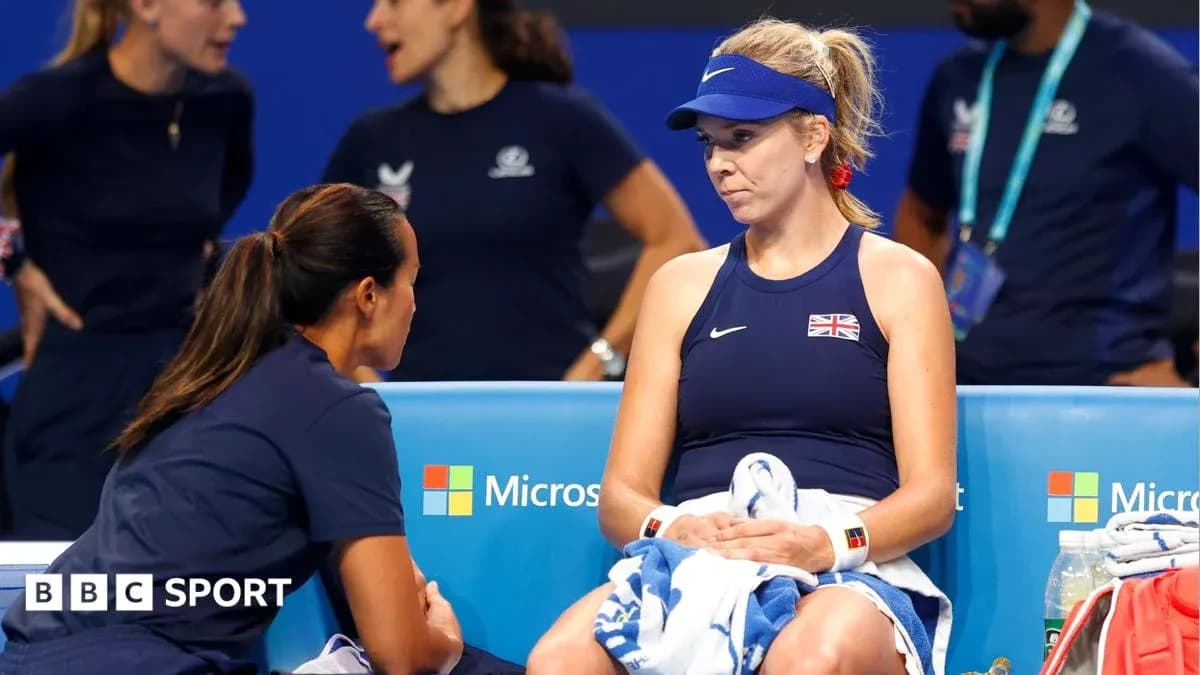
“She was better than me today for sure,” Boulter said. “I think I’m probably struggling to be kind to myself, but I’m going to be right now. I struggled with the conditions. I struggled with the roof, I struggled with the noise. I kind of let these little things distract me a little bit. But ultimately, at the end of the day, it was a bad day at the office.”
In New York, the noise never really stops. Boulter expected the volume to drop once the first ball was struck. It didn’t.
“I actually expected it to kind of die down a little bit, but it didn’t,” she said. “I think from the first point of the match I was expecting the crowd to go silent, which is normally how it works. But it never changed.
“So I think in my mind I was like, ‘Okay, so you need to adjust here. You need to be ready. You need to work it out as we go along.’ And I think that was my plan.
“I always want to have an atmosphere. I always want to have noise. I love that. I normally relish that feeling. So for me today it’s a very different feeling to feel slightly distracted from that. It was a little abnormal for me.”
The context makes the defeat sting even more. This has been a transformative summer for Boulter off the court – she married ATP player Alex de Minaur in July – and for a while her tennis seemed to be tracking the same upward curve. She started the year strongly, lifting her fourth WTA title in Ostrava and climbing back into the top 60. The signature win came on grass at Queen’s, where she stunned world No 2 Elena Rybakina with a fearless performance that hinted at a new ceiling.
Then the momentum stalled.
Before her opening win in Cincinnati last month, Boulter had lost five matches in a row. Wimbledon brought a straight-sets exit in the first round, a bitter blow on home soil. Confidence, that fragile currency at the top of the sport, has been draining away ever since.
Here, against a player of Muchova’s class, there was no margin for any of that. The Czech seized the initiative early, raced through the first set, and never loosened her grip. Boulter’s timing deserted her, her serve offered no protection, and the match became an exercise in damage limitation that never quite succeeded.
While Boulter began the long process of dissecting a heavy defeat, another British player was busy salvaging the day for the travelling contingent.
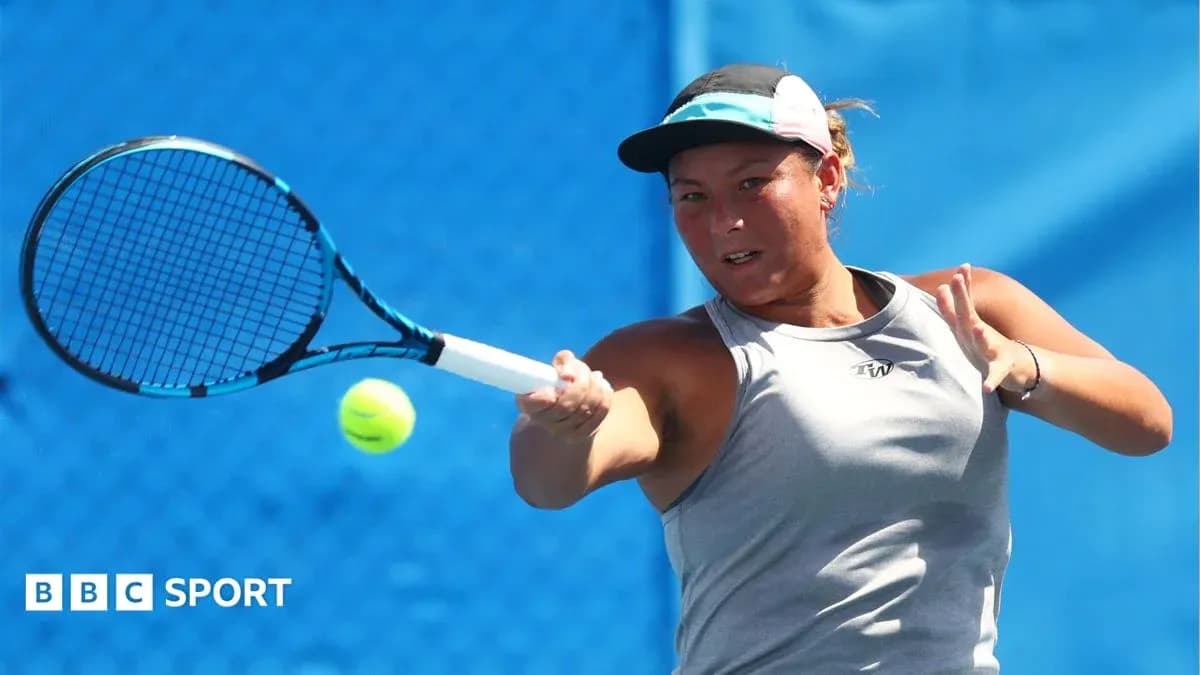
On an outside court, away from the drama of the roofs and the rain delays, Francesca Jones ground out one of the most important wins of her career. The qualifier beat former top-20 player Magda Linette 6-4, 1-6, 6-3 to reach the second round of the US Open for the first time.
It was a victory built on resilience rather than rhythm. Jones had surged through the opening set on Tuesday, only for the weather to intervene and halt play for the night. When they resumed on Wednesday, the skies interrupted again, sending the players back to the locker room just after the warmup.
Linette came out sharper after the second restart, tearing through the early games of the second set. Jones had to hang on.
“It was incredible how she was playing until about 4-0 and then started to equal out,” Jones said. “But, you know, in that situation, hats off if they can maintain that. I just tried to show my northern grit, stick in there and do what I can.”
That grit has been tested all year. After breaking into the top 100 last season, Jones spent much of this one battling injuries and even a freak concussion. Only in July did she finally string together a proper training block. The work quickly paid off: back-to-back WTA 125 titles on clay restored her belief and her ranking, and she arrived in New York with a base of form and fitness.
Three rounds of qualifying later, she walked into the main draw with momentum. Beating Linette, a seasoned campaigner at this level, now stands as one of the defining wins of her journey so far.
Elsewhere, the British men could not join her. Jan Choinski fell 6-3, 6-1, 7-6(5) to Botic van de Zandschulp, while lucky loser Jacob Fearnley lost 6-3, 6-3, 3-6, 6-3 to the 27th seed, Tomas Etcheverry.
The biggest jolt of the day, though, came back on Court 17. Rafael Jodar, the 19-year-old widely tipped as one of the breakout names of the tournament, was routed 6-2, 6-1, 6-1 by Yunchaokete Bu. Hype met hard reality in less than two hours.
For Boulter, the reality is just as stark. A season that promised a genuine step forward at the slams has ended with a lopsided scoreline under a closed roof, and a long list of questions about where her game goes next.