Boris Becker Confirms No Coaching Reunion with Alexander Zverev
Alexander Zverev has finally walked through the door that seemed to slam on him so many times. Two Grand Slam titles in a single season, a Wimbledon final in between, and the world No. 1 ranking to cap it all. For German tennis, 2026 now has a clear headline act.
Roland Garros first. New York later. Grass heartbreak in the middle. It was the year Zverev stopped being the nearly man and started being the benchmark.
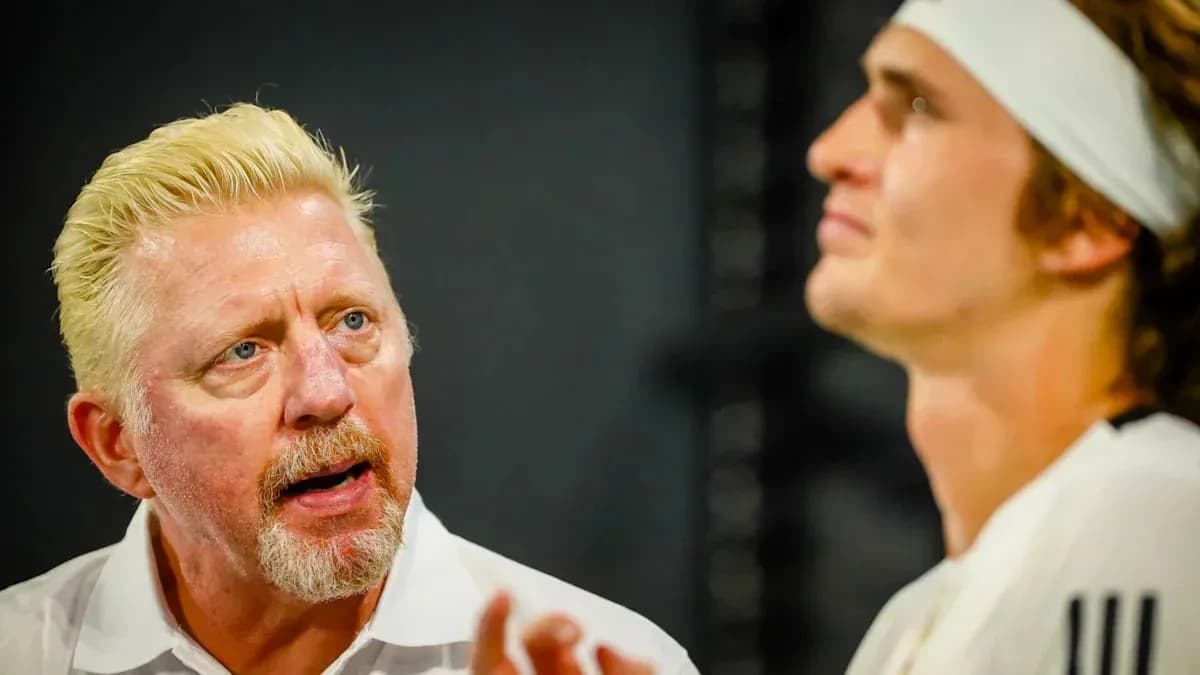
In the cold numbers of history, only Boris Becker still stands above him in the pantheon of German men’s tennis. The pair have worked together on and off, a fascinating generational bridge between the country’s past and present. But that bridge, Becker made clear, will not be rebuilt.
“I have to be the boss in the ring”
Speaking to Der Spiegel, Becker was asked whether he would ever consider coaching Zverev again. His reply left no room for doubt.
"I have to be the boss in the ring. If a family member then has a different opinion, in a language I don't understand, in this case Russian, then it's unacceptable."
That one line pulls back the curtain. Becker wasn’t just a figurehead in Zverev’s box; he was on the practice court, in the trenches, trying to impose structure and authority on a camp that clearly had its own internal dynamics and voices.
"I was in his box at many matches, I was on the practice court, and I actively supported him," Becker said, before hinting at the inevitable frictions that come when a 29‑year‑old star and a 30‑years‑older legend share space and ego.
"We've had our ups and downs. I'm 30 years older than him; I have children his age. You have to tell these young people what they don't like to hear sometimes.
"That might motivate them even more; they think, 'What's he talking about? I'll show that old guy.' That's okay. The main thing is that he wins. And he did this year."
The respect is obvious. So is the distance. Zverev has delivered the season of his life, and Becker, even while praising him, is drawing a hard line on any reunion.
Zverev’s breakthrough, Becker’s stance
Zverev’s 2026 campaign has forced a recalibration of his place in German tennis history. For years he collected Masters titles, ATP Finals trophies, and Olympic gold, yet the majors eluded him. This season rewrote that story in bold ink.
The Roland Garros title in Paris broke the dam. The US Open confirmed it was no one‑off. A Wimbledon final in between underlined that this wasn’t a purple patch on one surface, but a complete player finally cashing in on his talent.
His surge to world No. 1 has not come without debate. Some have questioned the timing and circumstances of his rise, but the ledger is clear: in terms of achievements, only Becker can claim a richer résumé among German men.
Becker knows exactly what that status means. He also knows the cost of trying to steer a modern star and his entourage.
His comments about the language barrier and family involvement hint at a coaching environment where he felt undermined or shut out. For a man who once ruled Centre Court with a teenager’s swagger, taking a back seat was never going to be an option.
A legend still in demand
If the door to Zverev’s camp is shut, Becker is not turning his back on the tour.
"There have been several inquiries; of course I won't mention any names! Let's see what happens next year," he revealed, teasing the possibility of a return to the ATP circuit in a different role.
The interest is no surprise. Becker remains one of the game’s sharpest tactical minds and a magnetic presence around any locker room. His stint with Novak Djokovic proved how much impact he can have when his authority is clear and uncontested.
Zverev, for his part, has already received lavish praise from Becker this year, especially after that first Grand Slam triumph in Paris. Yet beneath the compliments, the relationship still feels slightly out of sync, shaped by old tensions and competing visions of control.
One man has finally conquered the Slams. The other has nothing left to prove, yet still wants a voice in the sport’s future. They may no longer share a box, but their stories remain tightly intertwined in the broader narrative of German tennis.
The question now is not whether Becker will coach again, but whose corner he will step into as the next generation lines up to chase Zverev’s new standard.