Aryna Sabalenka's Pursuit of a Historic Three-Peat at US Open
Aryna Sabalenka is back in New York chasing history and clinging to power at the same time.
Two straight US Open titles already sit on her résumé. A third would put her alongside Serena Williams as the only woman this century to complete a Flushing Meadows three‑peat, matching Serena’s run from 2012 to 2014. But while Serena used those years to tighten her grip on the sport, Sabalenka arrives with her hold on the No. 1 ranking loosening.
Her season has lagged behind her own brutal standards. No Grand Slam titles so far, and the chasing pack has closed in. Elena Rybakina, at No. 2, can take the top spot by simply reaching the semifinals. Jessica Pegula and Coco Gauff lurk just behind, both with the form and the draw to turn pressure into a full‑blown rankings shake-up.
The women’s storylines are loaded. The men’s field is something else entirely.
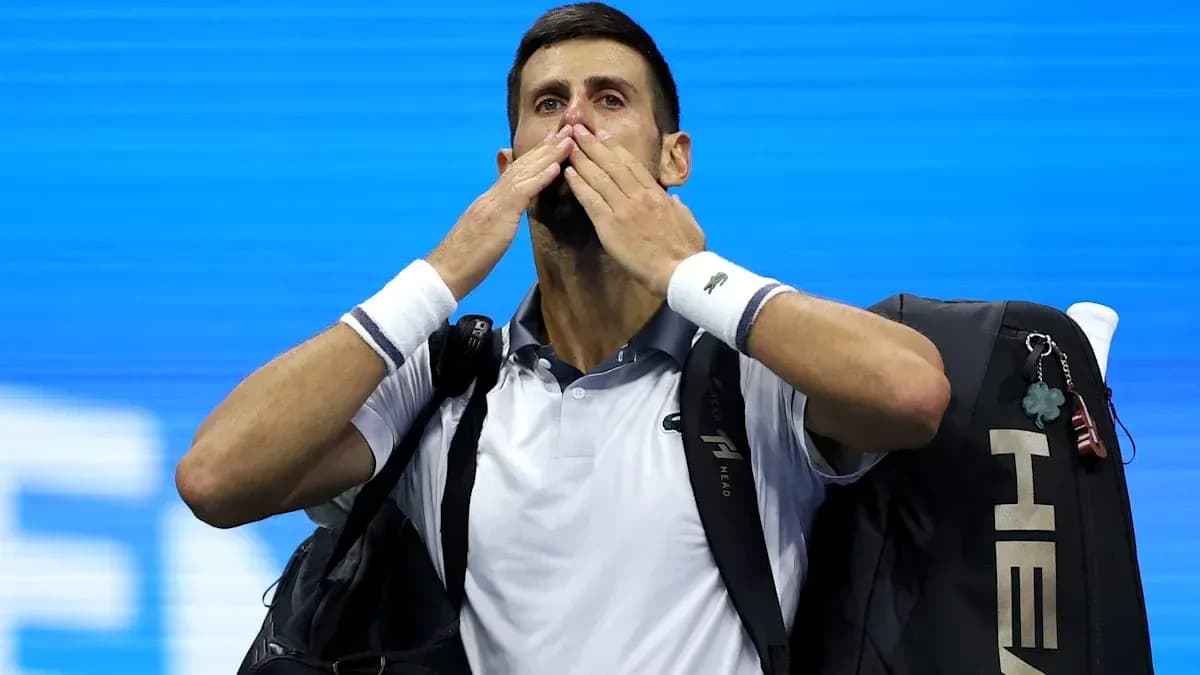
With Jannik Sinner out injured and Carlos Alcaraz only just returning to singles after nearly four months away, the men’s draw feels as open as it has been in years. Sinner and Alcaraz have combined to win three of the last four US Open titles. Take away one and weaken the other, and the vacuum is obvious. Into that space steps Novak Djokovic, still chasing a record‑breaking 25th Grand Slam title at 39, but facing a route that looks more like a gauntlet than a coronation.
The main draw, released on Thursday, set the stage. Some players walked away with opportunity. Others drew the short straw.
Rybakina’s shot at No. 1 comes with a warning label
On paper, Elena Rybakina has exactly what every contender wants in New York: a clear path and a simple equation. Make the semifinals, and she becomes world No. 1 for the first time.
The problem is her own body.
Achilles soreness flared in Cincinnati, and the scare left her status for the US Open uncertain. She hasn’t confirmed she’ll play. If she does, the early rounds offer a kind of live test. She opens against Thea Frodin, with a potential second-round meeting against Darja Vidmanova. Both are manageable, the sort of matches where a player of Rybakina’s class can feel out an injury without immediately being forced into a sprint.
Then the temperature rises.
Maria Sakkari looms as a possible third-round opponent, the kind of physical, grinding match Rybakina’s Achilles would not appreciate. The fourth round could bring a showdown with two-time US Open champion Naomi Osaka, who knows this court, this crowd, and this stage better than almost anyone in the draw.
Survive that, and the quarterfinals might deliver Iga Swiatek. The former world No. 1 beat Rybakina in the Canadian Open final earlier this month and has the kind of relentless baseline game that punishes any hesitation in movement.
Rybakina has never been beyond the fourth round in New York. This time, the door to the top ranking is wide open. So is the risk.
American men sense an opening
Every late summer, the same question hangs over the US Open: can an American man finally win this thing again?
Not since Andy Roddick in 2003 has a home player lifted the trophy. That drought has outlasted careers, eras, even entire generations of fans. But this year, the numbers and the context whisper something different.
Six American men sit inside the world’s Top 25: Ben Shelton (No. 9), Taylor Fritz (No. 10), Frances Tiafoe (No. 12), Learner Tien (No. 15), Brandon Nakashima (No. 17) and Tommy Paul (No. 21). They are not just ranking-fillers. They are winning.
Fritz took a hard-court title in Washington, D.C. Shelton did the same in Montreal. Nakashima reached the final in Montreal, Tiafoe in Cincinnati. With Sinner absent and Alcaraz still rediscovering his rhythm, the usual roadblocks look less immovable.
The question is no longer whether the opportunity exists. It’s whether any of them can handle New York when the second week arrives and the noise turns into something closer to expectation.
Pegula’s clean runway
Jessica Pegula didn’t hide her ambition. She told USA TODAY Sports her goal is simple: “win the tournament.”
The draw did its part.
Pegula opens against Elena-Gabriela Ruse, then faces the winner of a marquee first-round clash between Venus Williams and Sofia Kenin. From there, the path remains navigable. A possible third-round meeting with No. 31 Leylah Fernandez, then likely No. 16 Sorana Cirstea, against whom Pegula holds a 3–1 record.
The real tests line up later. The quarterfinals could bring No. 7 seed Karolina Muchova or No. 9 Elina Svitolina, both hardened big-stage operators. And waiting in the projected semifinals? Aryna Sabalenka.
Pegula has felt that weight before. Sabalenka beat her in straight sets in last year’s US Open final, the only Grand Slam final of Pegula’s career, and knocked her out in the semifinals the year before. If Pegula wants to change her status from consistent contender to major champion, she may have to go through the same obstacle again.
First-round fireworks
The schedule-makers didn’t ease anyone into this tournament.
On the men’s side, the standout early clash pits No. 10 Arthur Fils against Stefanos Tsitsipas. Fils arrives with fresh confidence after claiming his first ATP Masters 1000 title in Cincinnati, where he outlasted Frances Tiafoe in three sets. Tsitsipas has not made it past the second round at any major this year, yet he remains a two-time Grand Slam finalist (2021 French Open, 2023 Australian Open) and a threat in any best-of-five match.
The women’s draw offers its own early theatre. No. 20 seed Maja Chwalińska, the 2026 French Open finalist, faces American Taylor Townsend in a clash of styles and temperaments. Townsend has a special connection with New York; she’s twice reached the fourth round here, including last year, and tends to play her most fearless tennis in front of this crowd.
It won’t take long for the tournament to find its edge.
Djokovic draws the gauntlet
Novak Djokovic’s chase for Grand Slam No. 25 has the weight of history. The draw added weight of a different kind.
He opens against Mariano Navone in their first career meeting, a match he will expect to control. After that, the names get heavier. Matteo Berrettini, a Wimbledon finalist in 2021, or three-time major champion Stan Wawrinka could await in the second round. Either man has the weapons to drag Djokovic into a physical fight early in the fortnight.
The third round could bring No. 27 Tomas Etcheverry. The fourth? Possibly No. 16 Brandon Nakashima or No. 23 Andrey Rublev, both dangerous on hard courts and both capable of taking big swings at a favorite.
If Djokovic reaches the last eight, No. 7 Daniil Medvedev looms as a likely opponent, a player who knows how to beat him in New York. The semifinals could feature No. 2 Carlos Alcaraz, No. 8 Ben Shelton or No. 10 Arthur Fils. And if the 39-year-old makes it to Sunday, the projected final would be against world No. 1 Alexander Zverev.
For a man chasing an unprecedented 25th major, there is no soft landing anywhere.
Sabalenka’s uneasy throne
Aryna Sabalenka has been here before, chasing a three‑peat with the tennis world watching. At the 2025 Australian Open, she stood one title away from three straight in Melbourne. Rybakina stopped her.
Now New York offers a second shot at that rare territory, but Sabalenka’s season has lacked its usual bite. No Slam titles yet, and the math at the top of the rankings is unforgiving. A stumble here could end her near-100-week reign at No. 1.
Her draw offers little comfort. No. 27 Barbora Krejcikova, a former Grand Slam champion with a complete game, is a possible third-round opponent. No. 15 Diana Shnaider could follow in the fourth round, a rising force with nothing to lose. The quarterfinals might bring No. 6 Linda Noskova, the 2026 Wimbledon champion, who already knows what it takes to win on the sport’s biggest stages.
History beckons. So does danger from every corner of her half.
Gauff’s brutal road
Coco Gauff arrives as the newly crowned Cincinnati Open champion, but the reward for that form is a draw that reads like a stress test.
In the second round, she could face either Paula Badosa or Daria Kasatkina. Neither is seeded. Both are far better than their current rankings suggest. Both have lived in the Top 10. Badosa beat Gauff on grass in Berlin in June and carries the kind of flat power that can rush anyone on a quick hard court.
The third round could bring No. 28 Sara Bejlek in a rematch of their Cincinnati semifinal, which Gauff won 6–4, 6–1 before going on to beat Pegula in the final.
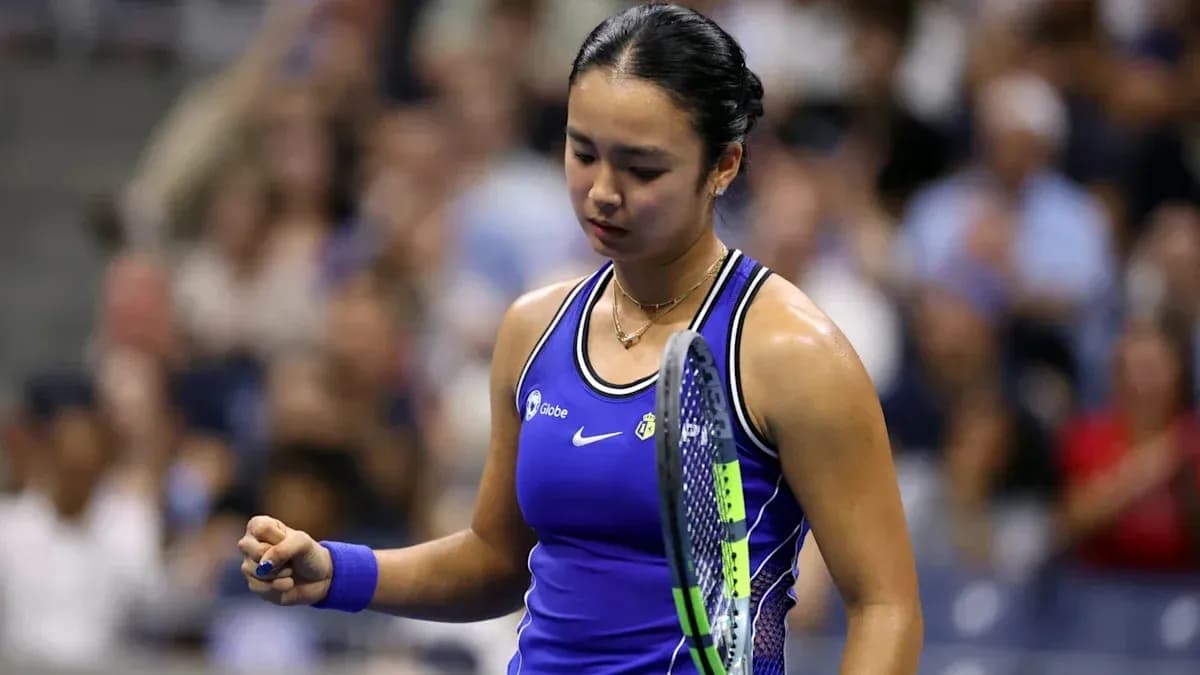
Reach the fourth round and the options don’t get kinder: No. 14 Iva Jovic or No. 17 Alexandra Eala are the most likely obstacles. If Gauff makes a third career US Open quarterfinal, the bracket points her toward No. 5 Mirra Andreeva, the reigning French Open champion.
Gauff has dominated that head-to-head so far, winning all five of their meetings, including their Italian Open quarterfinal on clay in May. Their only previous hard-court clash came at the 2023 US Open, where Gauff won 6–3, 6–2. But Andreeva is now a major champion, hardened by Paris and no longer playing with the innocence of an outsider.
There’s another twist. Fellow American Amanda Anisimova, the No. 10 seed and last year’s US Open finalist, could also be Gauff’s quarterfinal opponent. Anisimova leads their rivalry 2–1.
Get through all that, and the semifinals likely bring either No. 2 Elena Rybakina, the reigning Australian Open champion and 2022 Wimbledon winner, or No. 8 Iga Swiatek, a six-time Grand Slam champion and former world No. 1 who owned the top spot for 125 weeks.
For Gauff, this is not a draw to manage. It’s a mountain to climb.
Tiafoe’s body vs. his best stage
Frances Tiafoe has built some of the best moments of his career in New York. Two Grand Slam semifinal runs, in 2022 and 2024, both came here. The crowd loves him, and he feeds on that energy.
This time, his own body might be the biggest opponent.
Earlier this month he underwent surgery to remove a cyst on his right hand, then ignored medical advice to play Cincinnati days later. He reached the final, beating Arthur Fils in the semifinals before losing 6–3, 1–6, 6–0 to the Frenchman in the title match. During that final, Tiafoe took a medical timeout and later withdrew from the US Open mixed doubles event, raising real questions about how fit he will be when the singles event starts.
The draw offers him a soft start. He opens against fellow American Martin Damm Jr., then could face Aleksandar Vukic in the second round. He owns the head-to-head against both, and those matches should give him time to feel out his hand.
Then the wall appears. No. 7 Daniil Medvedev is a possible fourth-round opponent. No. 4 Novak Djokovic could await in the quarterfinals. No. 2 Carlos Alcaraz could stand in the way in the semifinals.
If Tiafoe wants to finally turn his New York story into something more than a beloved run, he’ll have to do it with a compromised preparation and one of the toughest projected routes in the tournament.
Venus Williams, one more time
Serena Williams lit up this summer’s mixed doubles draw with Carlos Alcaraz, rolling all the way to the quarterfinals and reminding everyone how electric her presence still is in New York.
Now the spotlight swings back to Venus.
At 46, she returns for her 26th US Open after receiving a wild card into the main draw. The reward is brutal: a first-round meeting with Sofia Kenin, the 2020 Australian Open champion and a proven force on hard courts.
Recent history offers little comfort. Venus played singles here last year and at the Australian Open this season, losing in the first round both times. The legs are older, the margins thinner, and the field younger and more relentless.
But she walks into Arthur Ashe Stadium as a seven-time major champion, playing what could be one of her last main-draw appearances at Flushing Meadows. The draw is harsh. The occasion is not. New York will let her know exactly what she still means to the sport.
Sabalenka chasing Serena’s shadow. Rybakina limping toward No. 1. Djokovic hunting 25 through a minefield. American men staring at a rare opening. Gauff and Pegula trying to turn promise into a title.
The brackets are set. Now the question hangs over Queens: who will still be standing when this chaos finally sorts itself out under the New York lights?