Aryna Sabalenka's Journey: From Dominance to Vulnerability
NEW YORK — Scroll Aryna Sabalenka’s Instagram and you see a life in full color. Designer dresses and sharp tailoring in one post, sun-soaked beaches and bikinis in the next. Greece with her fiancé. Photo shoots. Smiles.
It looks effortless.
Step onto a hard court with her right now and the contrast is jarring.
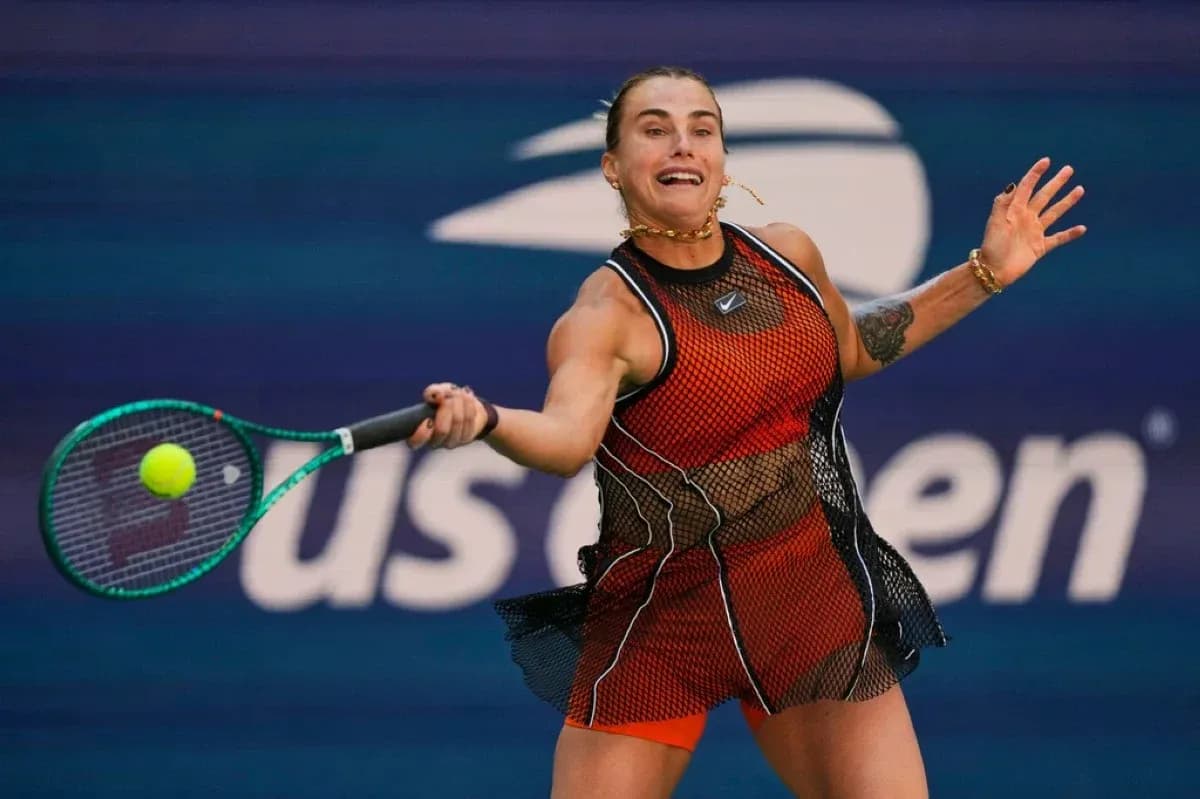
The world No. 1 has not gone beyond the fourth round in her last few events. On the surface that built her reputation as the game’s most fearsome front‑foot hitter, she suddenly looks vulnerable, searching. The player chasing a slice of history at the U.S. Open — three straight titles, a feat last achieved by Serena Williams from 2012-14 — has arrived in New York short on form, but not on fire.
Asked what’s wrong with her game, Sabalenka didn’t flinch.
“Maybe there’s something wrong with people,” she shot back.
The same goes for the black, mesh-covered outfit she’s chosen for this fortnight in Queens. Some don’t like it. Sabalenka’s verdict is blunt.
“Who cares about people, right? All matters for me is that I love it.”
This is Sabalenka in 2026: bruised by results, unshaken in attitude.
From dominant start to summer slide
The season began with the familiar thud of her power game echoing across hard courts. She reached the Australian Open final, falling to Elena Rybakina, then steamrolled the North American swing with back-to-back titles at Indian Wells and Miami. The No. 1 ranking looked nailed down. The rest of the tour, again, looked a step behind.
Even a fourth-round exit to Naomi Osaka at Wimbledon didn’t ring alarm bells. Grass can be fickle. The assumption was simple: get Sabalenka back on hard courts and the damage would resume.
It didn’t.
In Toronto, Ekaterina Alexandrova sent her packing in the fourth round. In Cincinnati, Sabalenka led both sets against Sara Bejlek and still lost, unraveling in familiar fashion, flashes of the old frustration creeping back into her body language and shot selection.
She won’t say exactly what was going on, but she doesn’t pretend all was normal.
“It wasn’t the best period. I don’t want to defend myself, but obviously I just don’t want to talk about that period. I’ve been dealing with several things,” she said.
There was no attempt to sugarcoat the dip.
“Yeah, I didn’t perform my best. These tough lessons are definitely going to make me way, way stronger and working even harder. I work on my mental side of the game. I was trying to reset my mind and to come back stronger, so it’s only going to make me stronger. It’s only a matter of time for me to come back.”
Those are not the words of a player in denial. They’re the words of someone who believes the storm is temporary.
New York, again, as a proving ground
If there is a place for Sabalenka to drag her season back into line, it is here.
She claimed her first U.S. Open title in 2024, beating Jessica Pegula in the final. She backed it up a year later, taking down Amanda Anisimova to defend the crown and cementing her status as the sport’s dominant hard-court force.
The numbers say this is her territory. The memory bank agrees.
Now, though, the context is different. The No. 1 ranking, once a cushion, has become a target. With Rybakina, Pegula and others closing in, Sabalenka’s “summer swoon” has opened the door. A short stay in New York and that top line on the rankings sheet could belong to someone else.
Yet for Sabalenka, life at the summit has never been just about the tennis.
Endorsement deals have multiplied. Photo shoots dot the calendar. There are mid-season escapes to Greece with her fiancé. She shares it all — or most of it — with millions of followers, a curated window into a life that, to some, looks too glamorous to coexist with the grind of a tour professional.
The criticism is predictable. Too much fun, not enough work. Too many TikToks, not enough time on the practice court.
Paula Badosa, one of Sabalenka’s closest friends on tour and a regular presence in those social media snapshots, doesn’t buy a word of it.
“She’s still No. 1 in the world. So I think the results are there,” Badosa said.
“Of course, everyone is going to expect for her to win every tournament. That’s very, very difficult. And at the moment, that one player is not winning what they expected. Of course, they’re saying that it’s because of the photo shoots or the TikToks and all this stuff, and I’m not going to lie, she’s been doing that since she was maybe out of the top 100. And when she was winning, nobody says anything, you know? And when she loses a couple of matches, it’s because of that. I think it’s none of it.”
The narrative is easy. The reality, as Badosa points out, is more complicated. Sabalenka has always balanced the public persona with the private grind. The only thing that has changed is the spotlight.
Defiance in the dip
Sabalenka admits the last stretch has hurt. She also insists it will harden her.
“These tough lessons are definitely going to make me way, way stronger,” she said. “I work on my mental side of the game. I was trying to reset my mind and to come back stronger.”
She repeats the word “stronger” like a promise to herself as much as to anyone listening.
The ranking might slip. The form might fluctuate. The social media noise will only grow louder if she stumbles early in New York. Sabalenka hears it all, but she refuses to let it define her.
“Well, that’s the beauty of the sport,” she said. “Throw tough challenges at me, I will come back only stronger.”
The draw is set. The questions are waiting. Is this just a blip for the game’s most explosive No. 1, or the start of a longer fight to stay at the top?