Aryna Sabalenka Faces Elena Rybakina in US Open Final
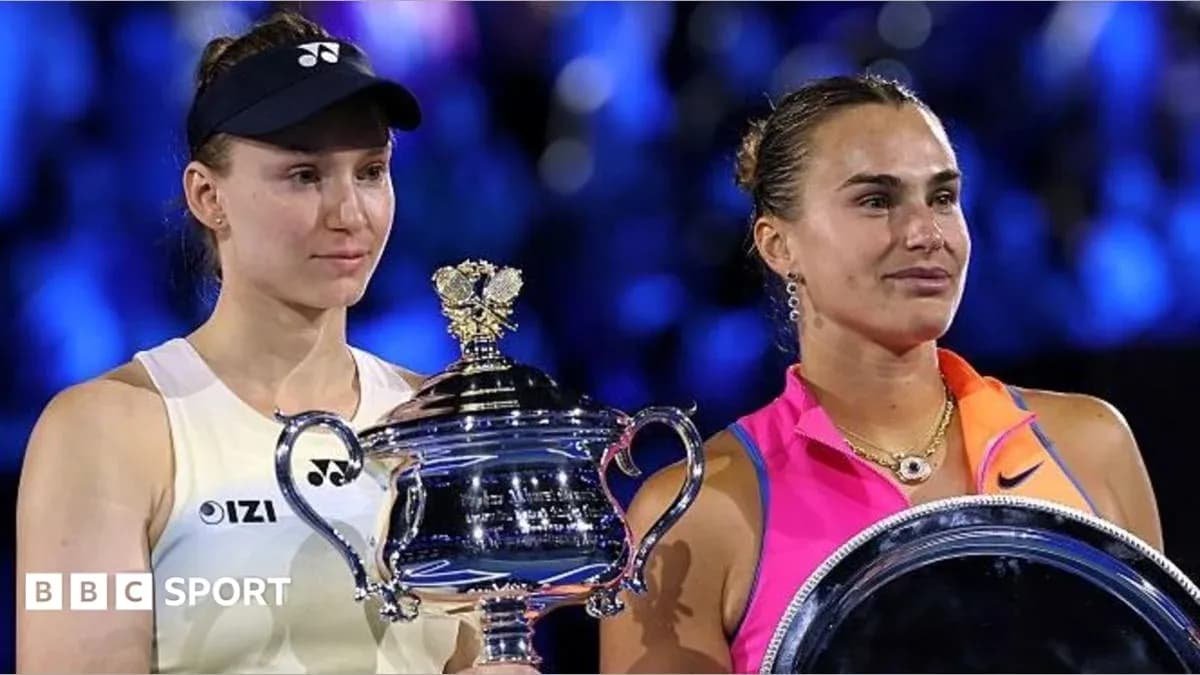
Aryna Sabalenka knew the maths before she hit a ball in New York. Win the US Open, keep a faint hope alive. Lose early, and the world number one spot would slip away to Elena Rybakina without a fight.
In the end, even perfection in Flushing Meadows was never really going to save her. Rybakina did her part, marching to the semi-finals and locking in her ascent to the top. The rankings are settled. The rivalry is anything but.
On Saturday, the two collide in the US Open final with a twist of cruelty for the Belarusian: she walks on court as the outgoing number one, facing the woman who has just taken her crown.
A new number one, an old score
Rybakina, representing Kazakhstan, guaranteed the change at the summit by reaching the last four. That alone was enough to end Sabalenka’s 99-week stay as the WTA’s leading player. She has already bloodied Sabalenka’s season once, beating her in the Australian Open final to claim the year’s first major.
Now she stands one win away from adding another scar.
For Sabalenka, that threat doesn’t weaken her resolve. It hardens it.
“It is going to be red rag to a bull for her – she is not going to be happy,” former British number one Annabel Croft said on BBC Radio 5 Live. “Now she has the opportunity to end this year on a high.”
That opportunity is not just about revenge. It is about legacy.
Chasing history in New York
Sabalenka arrives at this final with history in reach. Already a four-time Grand Slam champion, she is trying to become only the third woman in the Open era to win the US Open singles title three years in a row.
Her semi-final performance suggested she is ready for that kind of company. Against American third seed Jessica Pegula, Sabalenka produced her sharpest tennis in months: heavy, fearless hitting, but with a looseness and clarity that had deserted her during a turbulent stretch of the season.
The scoreline told one story. The body language told another. The tension that had clung to her through the clay and grass months seemed to lift.
Afterwards, Sabalenka brushed off questions about the lost ranking, joking that she did not care. The smile was easy; the truth, less so.
Her coach Anton Dubrov did not pretend otherwise.
“I actually like this [losing the ranking] happened. It’s ended and it’s extra fuel,” Dubrov said. “There is no more extra draining [of mental energy] or thinking about it.
“There’s a next chapter right now. You have to chase again. It’s extra motivation for you. Just go and get it.”
The target is clear. It just happens to be standing on the other side of the net.
Cracks, collapses and a fragile summer
Sabalenka’s status as two-time defending champion in New York masked a difficult five months. The results sheet is littered with matches that got away from her, encounters she controlled before unravelling.
The most brutal came in Paris. In the French Open quarter-finals, she led 25th seed Diana Shnaider by a set and a double break. From there, her game disintegrated. Shnaider stormed back to win 3-6 7-5 6-0, a collapse that left Sabalenka staring at the clay in disbelief.
The warning signs had already been flashing. Earlier in the clay swing, she squandered six match points against Hailey Baptiste in Madrid. In Rome, she took the first set from Sorana Cirstea, then let the match slip again, her concentration fraying at key moments.
The pattern followed her to North America. In Cincinnati, she built a clear advantage over 20-year-old Czech Sara Bejlek, only to lose in straight sets. The aura of inevitability that once surrounded her in tight moments had thinned. Opponents sensed it.
The vulnerability was obvious to everyone watching. Inside Team Sabalenka, there was no rush to tear everything up.
Space, freedom and one last fight
Jason Stacy, her high performance coach, describes a group that chose patience over panic.
“We all understand that this is just part of the thing,” Stacy said. “We just give her space to be herself, help her figure out what might work for her right now.
“Giving her that freedom, but also knowing that she has the guidance of all of us, I think that just gives her a power that few are lucky enough to have.”
That mix of freedom and structure has resurfaced in New York. The wild errors have been trimmed. The shoulders are looser. The roar after big points sounds less like frustration, more like belief.
Rybakina has already taken the ranking. She has already taken a Slam final from Sabalenka this year. On Saturday, she tries to take her title too.
For Sabalenka, it is simpler. One match to defend a dynasty in New York, to answer a season of doubts, and to remind the new number one that the chase works both ways.