Aryna Sabalenka Dominates Polina Iatcenko at US Open
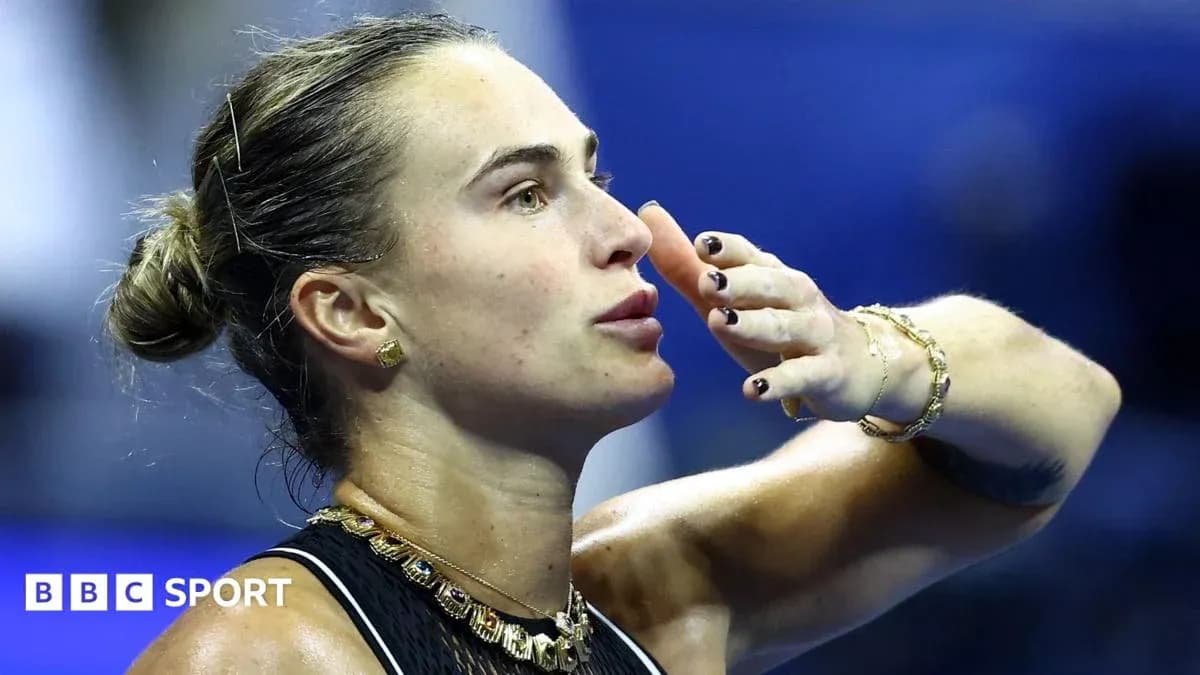
Aryna Sabalenka needed just 53 minutes to remind New York how ruthless she can be. She walked off Arthur Ashe Stadium with a 6-1 6-1 win, a place in the third round, and a face that suggested this was business, not pleasure.
Her victim, 22-year-old qualifier Polina Iatcenko, was playing her first-ever main-draw match at the US Open. It showed. The world number 160 never settled under the lights, never truly escaped the grip of the top seed’s pace and power, and finished with three winners to Sabalenka’s 24.
This was a mismatch from the opening game. Sabalenka ripped through the first set in 24 minutes, bullying returns, stepping inside the baseline, and dictating off both wings. Iatcenko finally got on the board at 5-0, breaking the shutout and allowing herself a brief, relieved smile. It was a small victory on the biggest court in tennis.
Sabalenka’s response was brutal. She held to love in under 90 seconds to seal the set, then watched as Iatcenko took a bathroom break, officially to change kit but clearly searching for some kind of reset.
There was none coming.
Sabalenka stayed loose on court, firing practice serves into the empty half, and picked up exactly where she left off. Two quick breaks carried her to 3-0 in the second set, the ball exploding off her strings, the match slipping away from the debutant almost as soon as she re-emerged.
It was not flawless. A sloppy fourth game cost Sabalenka her serve and briefly punctured the sense of inevitability. But the correction was immediate. She broke again. And again. The contest ended as it had begun: Iatcenko on the back foot, Sabalenka hammering through the court and closing out a lesson as much as a match.
For the Russian, there is consolation in context. She leaves New York with experience against the world number one on Arthur Ashe and a significant boost to her bank balance. Having earned $300,000 in her career before this tournament, she adds another $190,000 to that total, money that can reshape a season, even a career.
For Sabalenka, the stakes sit on a very different level.
She is chasing a third straight US Open crown, a rare three-peat in New York, and trying to rescue a season that began like a statement and has since frayed at the edges. The 28-year-old tore through the early months of 2026, reaching the Australian Open final and sweeping the Sunshine Double with titles at Indian Wells and Miami. At that point, she had lost just once in 27 matches – to Elena Rybakina in Melbourne.
Since then, the numbers have told a harsher story. Her record after Miami slumped to 17-7 heading into the US Open, with only one WTA semi-final in the last five months. Before arriving in New York, she admitted she had been “dealing with several things” and knew her level had dipped far below her own standards.
That is why this fortnight carries more than the usual weight. Sabalenka not only wants the trophy; she may need it to stay at the top of the rankings.
The equation is unforgiving. To have any chance of preventing Rybakina from taking the number one spot, Sabalenka must lift the title again in New York. Even then, it might not be enough. If Rybakina reaches the semi-finals, she will rise to number one regardless of what Sabalenka does.
So every match, even a 53-minute stroll, feeds into a larger tension.
Some of that surfaced off the court. In her post-match press conference, Sabalenka bristled at a question she interpreted as suggesting she had been at “lots of parties” in the build-up to the tournament.
“What kind of question is that? Just because I posted some activities with brands, you think that I've been partying [and] not training?” she snapped back.
When asked if she was “getting serious” now that the tournament had started, the sarcasm sharpened.
“Oh yeah, I wasn't serious before that. Next question.”
There was no such ambiguity about her focus on court. This was the Sabalenka who overwhelms opponents, who compresses time and space, who can make a second-round match at a major look like a first-week warm-up on the practice courts. She finished with 24 winners, barely gave Iatcenko a look on serve, and strode into the third round with minimal physical or emotional expenditure.
Next up is Kamilla Rakhimova of Uzbekistan, a step up in experience and shot tolerance, but still a player Sabalenka will expect to beat if she wants to stay on track for that third straight title.
Around her, the women’s draw continues to hold its shape. Third seed Jessica Pegula, also chasing a first Grand Slam singles title and an outside shot at number one, eased past fellow American Sofia Kenin 6-3 6-1. Fourth seed Coco Gauff remains in the same conversation: if she wins the title, she too could replace Sabalenka at the top.
Karolina Muchova, this year’s Wimbledon runner-up, moved through in straight sets. So did two-time major semi-finalist Marta Kostyuk and teenage American Iva Jovic, whose rapid rise has added another surge of energy to the home charge. The early rounds have offered few shocks; the heavyweights are still standing.
That suits Sabalenka. She has never shied away from a fight at the top end of a draw. The question now is whether the player who started 2026 like a force of nature can reappear when the pressure tightens and the opposition stiffens.
On this evidence, the power is still there. The edge is still there. Now the tournament will reveal if the dominance can last long enough to keep her crown – and her throne.