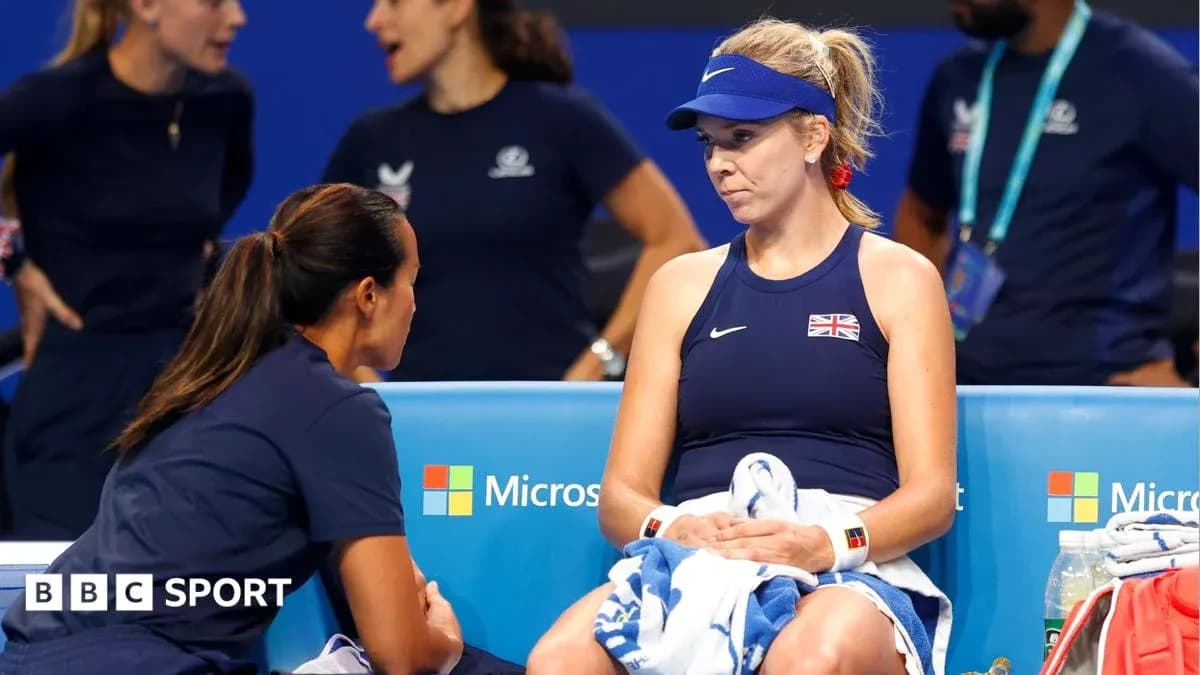
Amanda Anisimova Advances After Tough Match Against Lilli Tagger
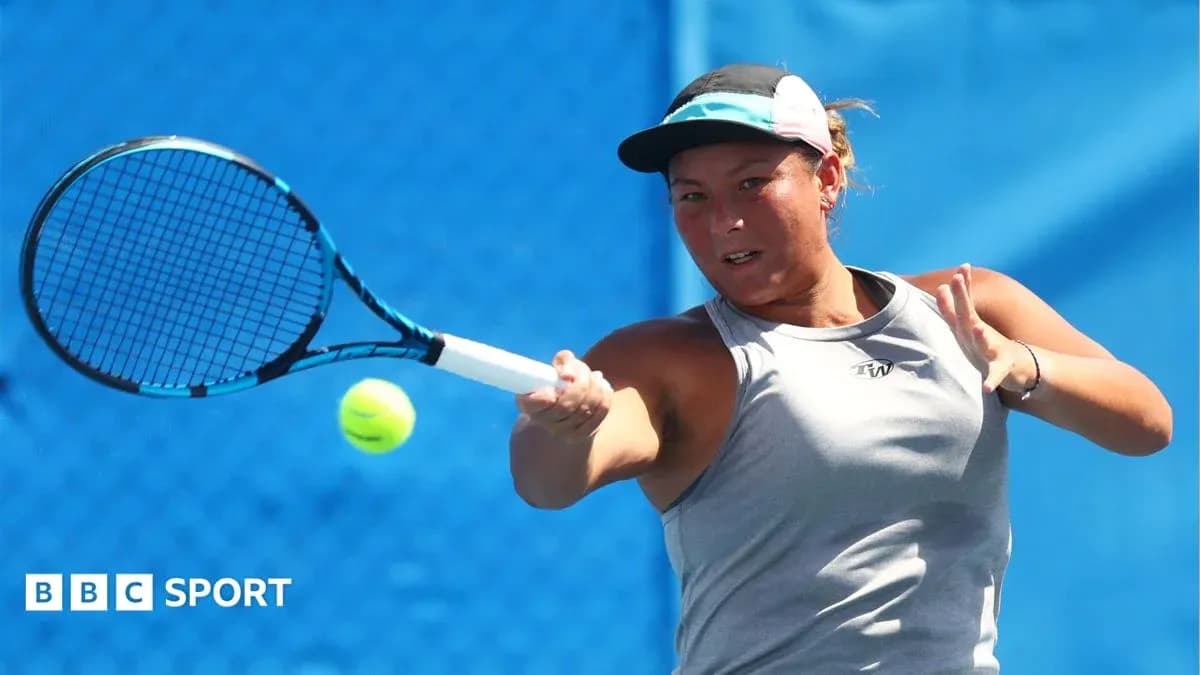
Amanda Anisimova walked off Grandstand with the kind of win that can shape a fortnight. Stretched, jolted, briefly rattled, she still found a higher gear when it mattered to beat the 18‑year‑old Austrian Lilli Tagger 6-3, 3-6, 6-1 and return to the US Open third round.
Last year’s beaten finalist is still in the draw. More importantly, she looks ready for a fight.
Anisimova bends, then bites back
For a set, this looked routine. Anisimova, tipped by some as a dark‑horse for the title, took the opener 6-3 and appeared to have the match on her strings. Her weight of shot pushed Tagger back, the rallies stayed on her terms, and the teenager’s debut on this stage seemed destined to end with a respectable but predictable scoreline.
Tagger had other ideas.
The Austrian broke Anisimova in the opening game of the second set and never really loosened her grip. She played with the freedom of someone with nothing to lose, taking the ball early, forcing errors, and dragging the 10th seed into longer, more physical exchanges. Anisimova’s rhythm wobbled. The scoreboard followed. Tagger levelled the match 6-3 and suddenly Grandstand had a contest.
By the start of the third, Anisimova was in a place title contenders have to know well: under pressure, out of sync, and staring at a teenager who refused to go away.
She responded.
She broke for 2-0 to steady herself, then dug into the pivotal game at 3-0. Tagger fought through nine brutal minutes, saving break point after break point, refusing to let the match slip. Anisimova kept coming. On a sixth chance, she finally cracked it open, confiscating Tagger’s advantage with a savage forehand return and breaking for 4-0. That was the hinge of the afternoon; the back of the match snapped with it.
From there, the American surged. The scoreline raced to 5-0. Like Naomi Osaka and Madison Keys earlier in the day, Anisimova’s tennis sharpened as the tension rose. The shots grew cleaner, the feet lighter, the decisions braver. Tagger, still fighting, did manage one final hold for 1-5, but by then Anisimova was in full command and served out the decider 6-1.
She had been pushed. She looked stronger for it.
Tagger leaves with just the one line on the results sheet, but the impression she made will linger. At 18, in her first US Open main draw, she went toe‑to‑toe with last year’s runner‑up, stole a set, and forced an established contender to find something extra. She will be back.
Anisimova will now face Anastasia Potapova or Leolia Jeanjean in round three. Win that, and she is seeded to meet Mirra Andreeva in a round‑four clash that already feels like one to ring in red. If it happens, it should be an absolute jazzer.
Khachanov crushes a subdued Auger‑Aliassime
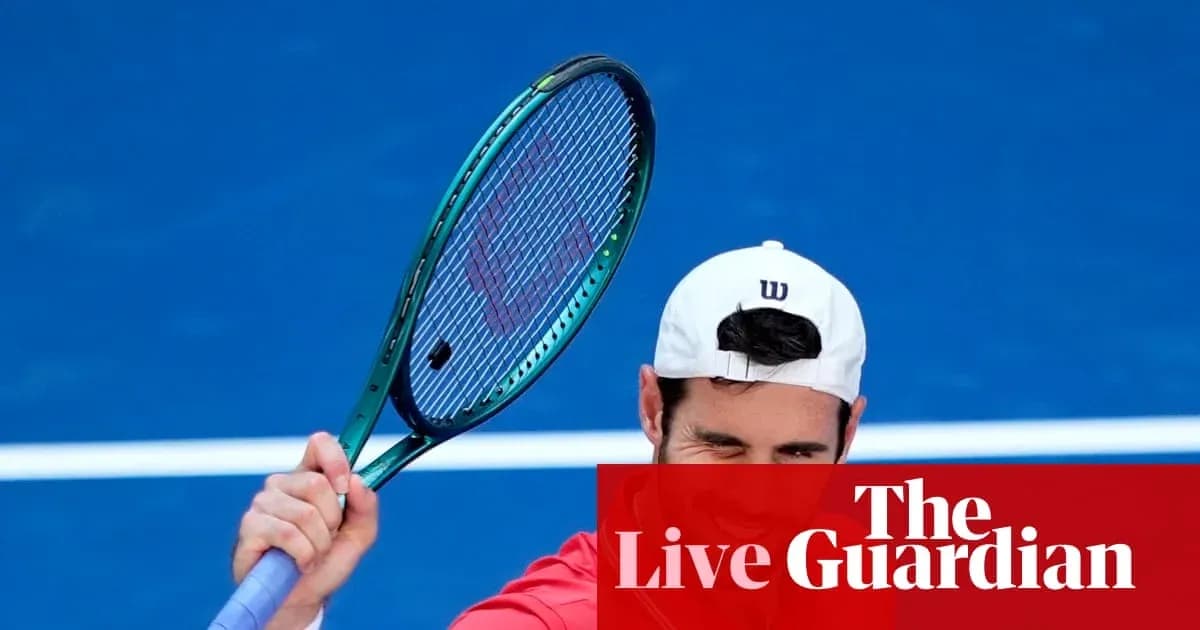
On Louis Armstrong, the story was harsher. Karen Khachanov beat Felix Auger‑Aliassime 6-7(3), 6-3, 6-2, 6-2, a scoreline that only hints at how one‑sided the final two sets became.
Auger‑Aliassime, the No 3 seed and twice a semi‑finalist here, started as if ready to justify his ranking. He held to love in the opening game, broke early, and sprinted to a 3-0 lead. The Canadian’s forehand dictated, his serve flowed, and he edged a tight first set in a tiebreak, finishing with a huge cross‑court forehand and an overhead that wouldn’t have looked out of place in a Pete Sampras highlight reel.
Then the match turned – and never really turned back.
Khachanov, a former US Open semi‑finalist himself, raised his level at the start of the second set and never let it drop. He broke for 3-0, backed it up, and took the set 6-3. The Russian wasn’t flashing winners; he was grinding, stretching rallies, forcing Felix to hit one more ball, then another. The pressure mounted. Auger‑Aliassime’s footwork slowed, his second serve sagged, his backhand leaked errors.
By the third set, the gap looked physical as much as tactical. Auger‑Aliassime appeared to be struggling with a foot problem – nothing obvious, but enough that he “wasn’t able to compete properly” as the match wore on. He managed a hold for 2-5 in the third, but Khachanov was in full control, securing a double break and closing the set 6-2 without needing to redline his game.
The fourth followed the same pattern. An early break, then another. Khachanov kept the ball deep and heavy, content to let Felix’s level fall. The Canadian got on the board but never threatened a comeback. Khachanov held comfortably for 5-1, then finished the job 6-2, sending the No 3 seed out with a whimper rather than a roar.
For Auger‑Aliassime, this stings. This was supposed to be the slam that confirmed his status at the very top of the game, on his best surface, at his best major. Instead, it underlined the doubts: the second serve that still breaks under stress, the backhand that hasn’t kicked on, the sense that he is not much better now than he was five years ago.
For Khachanov, it is a quietly significant win. He stayed present when the first set slipped, stayed disciplined when his opponent’s level dipped, and walked away with a four‑set victory over a top‑three seed. Next up: Benjamin Bonzi or Ignacio Buse. A different kind of test, but a real opening.
Keys walks the tightrope, Osaka survives, Swiatek cruises
On Stadium 17, Madison Keys produced the day’s most dramatic escape. The 22nd seed beat Anna Bondar 5-7, 6-4, 7-6(5), saving five match points and turning a match that seemed gone into one of those chaotic, cathartic wins that can light up a campaign.
Bondar twice served for the match in the third set. Twice she failed to close. At 5-2, Keys broke back; at 5-4, she stared down two match points on her own serve and survived by doing the thing that has always defined her – hitting through the fear. Forehand after forehand, inside‑out, down the line, off the frame and still in. Bondar tightened, double‑faulted, and the match slid into a deciding tiebreak.
There, Keys’ power finally told. A “mahoosive” forehand down the backhand line gave her a mini‑break at 6-5, another winner on serve sealed it 7-5, and she sprinted away to 9-5 in the race‑to‑10 breaker, flipping the narrative entirely. From five match points down to four of her own, she closed on the first and left Bondar with a defeat she will struggle to forget.
Keys moves on to face Qinwen Zheng or Yulia Putintseva. If her forehand keeps igniting on command, that section of the draw could catch fire.
On Arthur Ashe, Naomi Osaka’s return to the big stage remains a work in progress, but the results are coming. The two‑time US Open champion beat Katerina Siniakova 6-2, 5-7, 6-1, a score that tells only part of a messy, jagged story.
Osaka flew through the first set 6-2 and led 5-3 in the second, serving for the match. Then the familiar tension crept in. Her ball toss wobbled, the second serve slowed to the high 70s, and Siniakova, the doubles world No 1, pounced. The Czech broke back, held, and broke again, snatching the set 7-5 and dragging Osaka into a decider she had no business facing.
That shock seemed to wake Osaka up. She left the court between sets, came back hitting cleanly, and tore through the third 6-1. A brilliant point at 30-all in one early game – scrambling defence, then a low volley winner, the kind of shot rarely associated with her – underlined that she still has more than raw power to draw on. She broke twice, held firm on serve, and closed the match with a level of assurance missing from the second set.
She will face Elise Mertens next. A sterner test, and another checkpoint in this long, uneven comeback from maternity leave.
On Grandstand, Iga Swiatek barely broke stride. The 2022 champion beat Nadia Podoroska 6-3, 6-2, never dropped serve, and has now lost just five games in two rounds. After a scratchy 2026 season, her Toronto title last month seems to have restored the familiar steel. She spoke of feeling “better” here than at any other major this year; her tennis backs that up.
Next for her: Marie Bouzkova, who dismissed Harriet Dart 6-2, 6-2 on Court 11 to book the kind of third‑round date that usually ends in a long, bruising baseline battle.
A day that hinted at the fortnight to come
Elsewhere, Taylor Fritz raced out on Ashe, Alex de Minaur, Lorenzo Musetti and a cluster of seeds and prospects threaded their way through the day session, while Mirra Andreeva, Alexandra Eala and a string of teenagers reminded everyone that the sport’s next wave is not coming; it’s here.
But the day belonged to the players who had to suffer for their wins.
Anisimova, forced to wrestle a fearless 18‑year‑old and dig herself out of a second‑set slump. Keys, dancing on the edge of defeat and swinging her way back. Osaka, stumbling, tightening, then reasserting her authority. Khachanov, calmly taking advantage when a top‑three seed faltered.
They all move on. Some with a spring in the step, some with a limp, all with questions still to answer.
Who will be the one still standing when the questions stop and the trophies come out?