Alfie Hewett Denies Tokito Oda Grand Slam Sweep
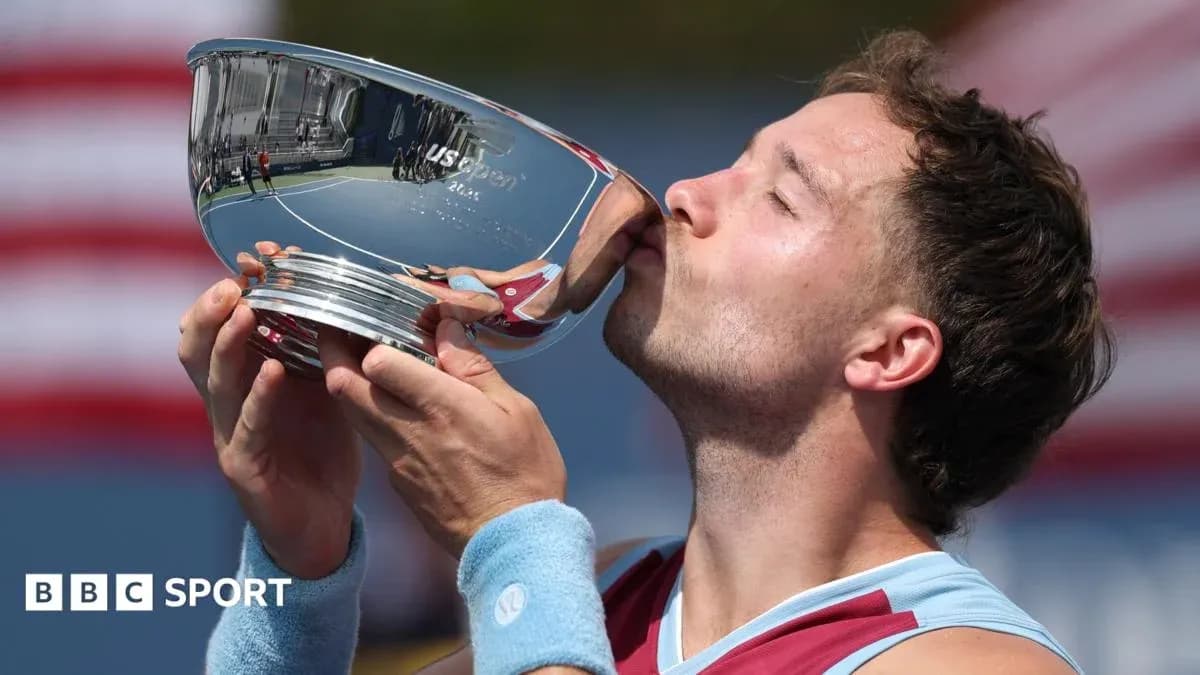
Alfie Hewett did not just win a tennis match in New York. He tore down a narrative that had been building all year and rebuilt his own.
The Briton, bruised by heavy defeats to Tokito Oda on the sport’s biggest stages this season, produced a ferocious performance to beat the Japanese world number one 6-0 7-6 (7-5) and claim a fifth US Open men’s wheelchair singles title.
In doing so, he stopped Oda from completing a calendar Grand Slam in 2026 and added the singles crown to the doubles title he lifted on Friday with long-time partner Gordon Reid.
From humiliation to “possessed”
This was not the version of Hewett that walked off Centre Court at Wimbledon in July, having won just two games in a 6-1 6-1 defeat to the same opponent. Nor the one beaten by Oda in the French Open final. That summer stretch had cut deep.
He admitted to BBC Sport that the Wimbledon loss forced him to “look in the mirror”, a period of reflection that pushed him back towards what he called being “a little bit more like me” as he chased an 11th Grand Slam singles title.
“I’m known for being just as fearless, brave and courageous in big moments and I felt I was everything but that in Wimbledon,” he said. “I was quiet, I was timid, I was a shell of myself.”
Those six weeks after SW19 simmered inside him. “I think I have had six weeks of champing at the bit to come out and prove to myself that I can be more like that person,” he said. In New York, that pent-up energy exploded.
Hewett described his first set as “possessed”, and it felt exactly that. After saving a break point in the opening game, he seized control and never let Oda breathe. The rallies were sharp, the intent obvious. He bullied the top seed around the court, mixing depth with angle, and hammered winners with a conviction that had been missing in London.
The 6-0 scoreline was not a reflection of Oda’s season, but of Hewett’s fury and focus. He closed the set with a superb backhand return winner, a shot that carried more than just a point – it carried months of frustration and a clear message that this final would not follow the recent script.
Oda pushed back. Hewett refused to fold.
The second set belonged to the world number one for long stretches. Oda, who arrived in New York having won the previous six Grand Slam singles titles, finally found his rhythm and his length. He moved two breaks up, tightened his patterns, and for the first time in the match, Hewett looked under real pressure.
The momentum appeared to be shifting towards the season’s dominant force. A double-break lead for Oda usually means lights out.
Not this time.
Hewett dug in and began to claw his way back, game by game. The aggression stayed, but there was calculation now too. He stepped in on returns again, redirected pace, and forced Oda into uncomfortable corners. The crowd sensed the change and rode the wave with him.
Oda still had his chances. Three set points came and went as Hewett refused to surrender the set. Each escape added another layer of belief. When the tie-break arrived, the Briton did not blink.
He tightened his game, cut out the errors and went after the lines. At 6-5 in the breaker, the finish line finally came into view. One last surge, one last bold point, and it was over. 7-6, 7-5 in the tie-break. Fifth US Open singles title secured. Calendar Grand Slam denied.
Respect at the top
For Oda, this was a brutal way to see a historic chase end. He had already swept the Australian Open, French Open and Wimbledon singles titles, and stood one match from a perfect year.
“Definitely I was trying to get the calendar year [Grand Slam] this year,” he said on court. “This was the last part of it so it’s really tough for me, but I think Alfie deserved it today.”
It was a simple assessment, but an accurate one. The Japanese star had been almost untouchable at the majors, yet on this day, in this stadium, Hewett hit a level that matched and then surpassed him.
A rivalry reignited
This win does more than add another trophy to Hewett’s collection. It resets a rivalry that had begun to tilt heavily in Oda’s favour. The Wimbledon rout felt like a changing of the guard. New York suggested the story is far from finished.
Hewett leaves with two titles from Flushing Meadows, his confidence rebuilt and his identity on court restored – fearless again, brave again, himself again.
Oda leaves with three majors in his pocket and one that slipped away, the calendar sweep gone but his status as the man to beat intact.
They will meet again on this stage, and others. After what unfolded in this final, who dares predict the next chapter?