Alfie Hewett Denies Tokito Oda Calendar Slam with US Open Victory
Alfie Hewett arrived in New York carrying scars. A 6-1 6-1 mauling by Tokito Oda on the lawns of Wimbledon. Defeats to the same opponent in Paris and Melbourne. A Japanese teenager marching relentlessly towards a calendar-year Grand Slam.
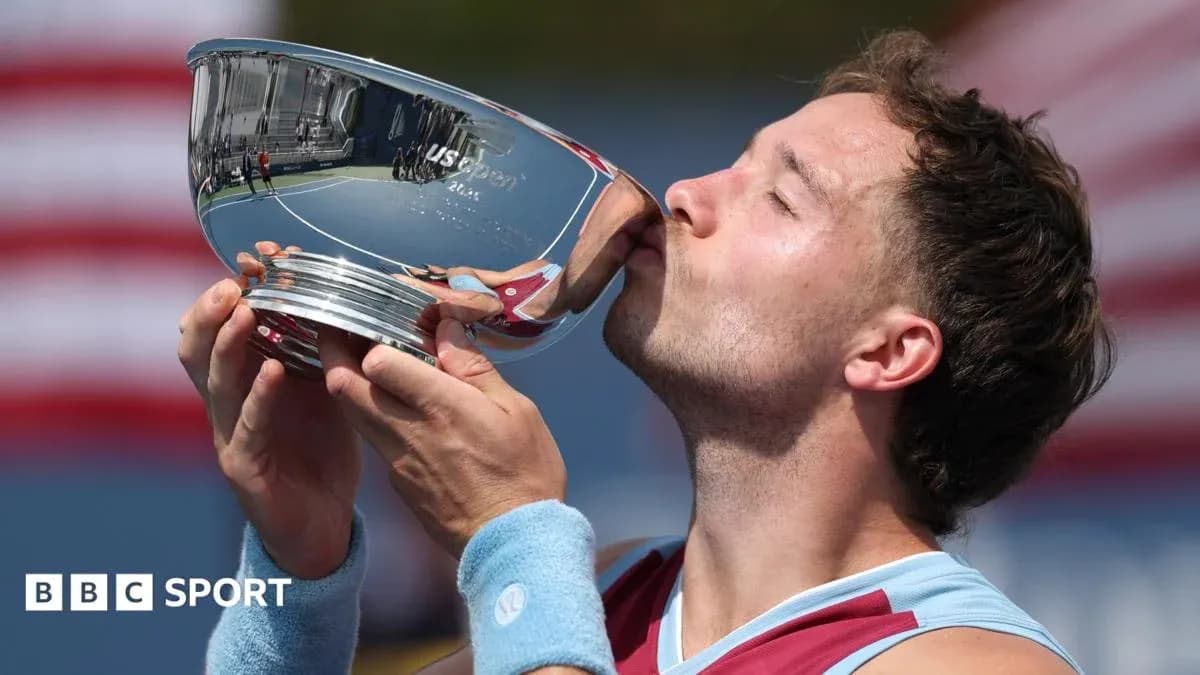
He leaves Flushing Meadows with something far heavier than baggage: a fifth US Open men’s wheelchair singles title, an 11th Grand Slam singles crown, and the satisfaction of stopping the sport’s dominant force in full stride.
The 28-year-old Briton crushed Oda 6-0 7-6 (7-5), adding the singles trophy to the doubles title he lifted with Gordon Reid on Friday. The win halts Oda’s run of six consecutive major singles titles and slams the door on his bid for a clean sweep of all four Slams in 2026.
From “a shell of myself” to possessed
This was not just a tactical adjustment or a good day at the office. Hewett has been open about how badly that Wimbledon defeat cut him. Only two games on Centre Court against a rival who seemed to have solved him completely.
He admitted that loss forced a reckoning. He “looked in the mirror”, as he put it, and realised he had drifted away from the player who built his career on defiance in the tightest moments. He wanted to “be a little bit more like me” again: fearless, brave, courageous when the pressure bites.
In New York, that version of Alfie Hewett showed up from the very first ball.
The opening game set the tone. Hewett faced a break point immediately, stared it down, and held. From there, he tore through the set like a man unburdened. His description of that first set as “possessed” did not feel like hyperbole. He bullied Oda with depth and angle, pinned him into corners, and stepped in on anything short.
The set finished 6-0, sealed with a stunning backhand return winner that fizzed past the top seed. Oda, usually so composed, looked rattled. The player who had dominated the year suddenly had no answers.
Oda responds, Hewett refuses to yield
Champions do not fold, and Oda is already that. The second set swung sharply in his favour. He found his length, tightened his patterns, and twice broke Hewett to move into a commanding position.
At double-break down, the match felt as if it might revert to the familiar script: Oda adjusting, Oda solving, Oda suffocating.
Hewett tore that script up.
He clawed back one break, then another. He dug in on defence, turned points around with bold changes of direction, and refused to let the set drift away. The noise around the court grew with every game he retrieved. This was the version of Hewett he had been searching for since Wimbledon – loud in his body language, aggressive in his choices, fully present in the fight.
Oda still carved out three set points, three chances to level the match and reset the contest. Each time, Hewett shut the door. No panic, no retreat into safety. He hit his way out of trouble, then dragged the set into a tie-break.
The breaker crackled with tension. Oda pushed, Hewett pushed back. At 7-5, with the title on his racket, Hewett finished the job and let out the release of six weeks of pent-up frustration and work.
Oda’s dream denied
For Oda, this was supposed to be the final piece. Australian Open, French Open, Wimbledon: tick, tick, tick. New York was meant to complete a calendar-year Grand Slam that would have underlined his rapid rise to the top of the sport.
“Definitely I was trying to get the calendar year [Grand Slam] this year,” he said on court. “This was the last part of it so it's really tough for me, but I think Alfie deserved it today.”
There was no argument. On this day, Hewett’s level, and his resolve, were too strong.
A rivalry reignited
This result does more than fill another line on Hewett’s glittering résumé. It changes the temperature of the rivalry.
Oda had beaten him in the last three majors, including that brutal Wimbledon final where Hewett won just two games. The Japanese star looked as though he had seized control of the era. Hewett’s response in New York sends a different message: this is not a one-man show.
He leaves the US Open with both singles and doubles titles, his confidence restored and his identity as a big-moment player reaffirmed. Oda departs with three majors in his pocket this year, but also with a reminder that the man he dethroned is not done yet.
The calendar Slam is gone. The duel at the top is very much alive.