Alexandra Eala: A History-Maker in Tennis
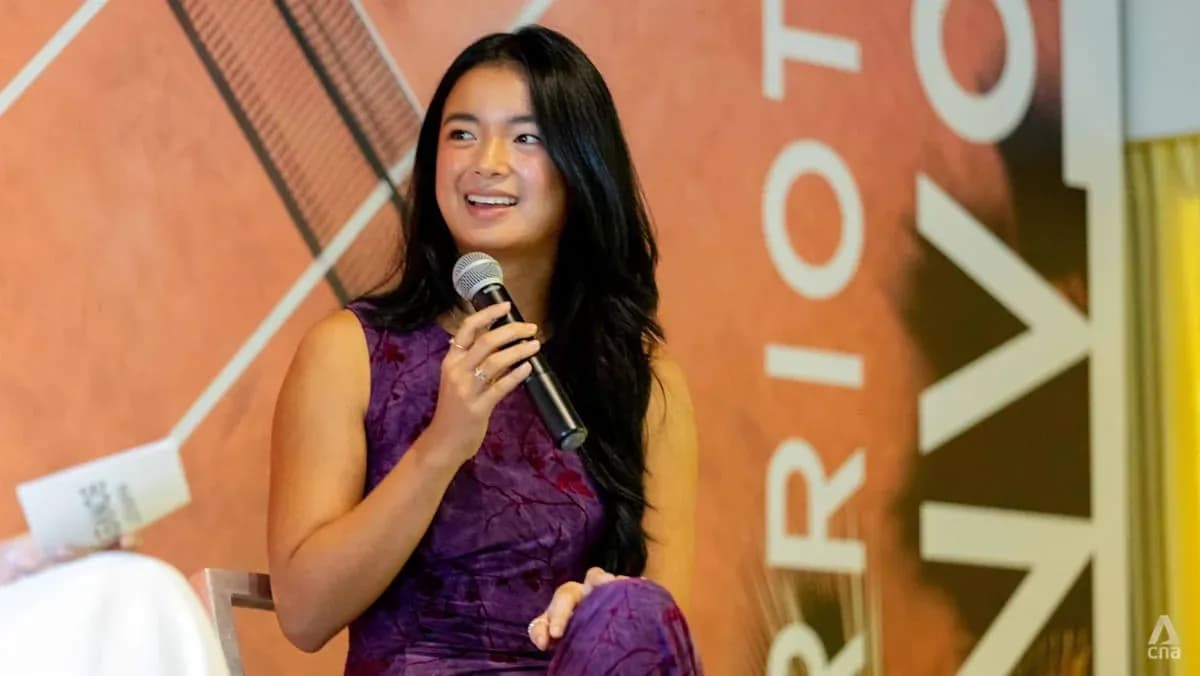
Alexandra Eala steps into the arrivals hall in Singapore with the easy stride of a player used to big stages and bright lights. This time, though, she walks in as something more than a rising prospect.
She walks in as a history-maker.
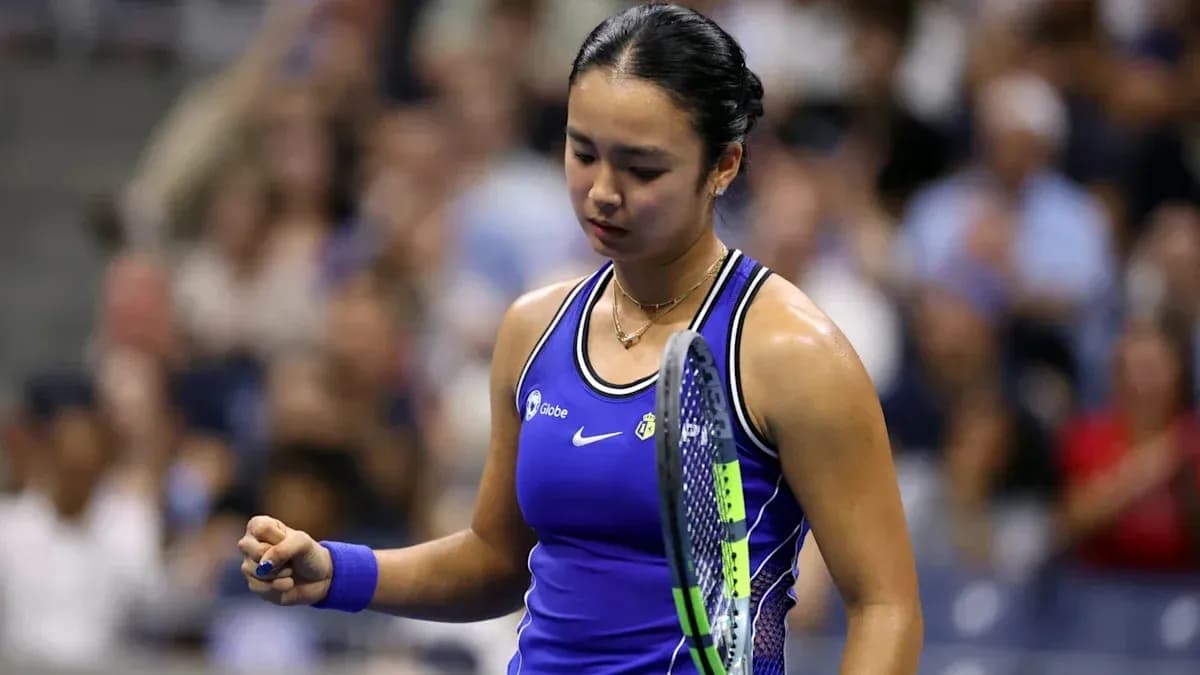
In the span of a few months, the 21-year-old Filipino has rewritten what’s possible for tennis in her country and for Southeast Asia. A career-high world No 18. A stunning victory over world No 3 Jessica Pegula to win the Washington Open – her first WTA Tour singles title and the first ever by a Filipino. A fearless run at Wimbledon, where she toppled defending champion Iga Swiatek and reached the fourth round, becoming the first Filipino to reach the second week of a Grand Slam singles tournament in the Open Era.
Now, Singapore is her next stop.
She is back in the city ahead of the Singapore Tennis Open, upgraded this year to a WTA 500 event and staged from Sep 21 to 27 at the OCBC Arena at The Kallang. The stakes are higher, the field is stronger, and Eala arrives not as a curiosity, but as a contender.
On Friday, at The NCO Club in JW Marriott Hotel Singapore South Beach, the Marriott Bonvoy brand ambassador sat down for an extended conversation, then a media Q&A. Away from the baseline and the bright TV lights, she peeled back the curtain on what it actually feels like to grow up in public at 21, to juggle expectations, and to carry the hopes of Filipino and Asian fans who now see themselves in her.
Learning to live with the spotlight
The trophies and rankings tell one story. The rest of 2026 has been about something far less visible.
"I've had to rediscover my relationship with so many things this year because of the extra exposure and just becoming a more public figure," she said, matter-of-factly.
The adjustment hasn’t been about forehands or fitness. It has been about boundaries. With media. With fans. With people who feel like they know her because they’ve watched her on a screen. With the endless, unfiltered commentary that follows any athlete who dares to succeed in the social media age.
"I'm learning a lot about myself and about what works best for me," she said. "I'm still 21, so at the end of the day, you have to recognise that I'm still growing and I'm still growing into myself."
That growth includes accepting that she will not always have the perfect response, the perfect posture, the perfect answer.
"For not knowing how to do things, it's very normal," she said. "But at the same time, I just kind of face these things head-on. You have to be confident. You have to be yourself and just be genuine."
The online world is another battleground. She sees a "good chunk" of what’s written about her. She reads, she processes, but she has learned that not every opinion deserves equal weight.
"I definitely appreciate criticism. At times, I think it is very helpful. But I can't value too much an opinion where they don't know the whole story, or if it's unsolicited."
When the noise swells, she leans into empathy. Especially with fans whose excitement can spill over.
"I've learned the importance of compartmentalising; I'm also now familiar with what keeps me sane and what keeps me happy and healthy, so I focus on that," she said.
The message is clear: she is learning to protect the person behind the player.
Singapore, and the comfort of many “homes”
For a professional tennis player, travel is a given. Airports, hotels, practice courts, repeat. The romance of the road fades quickly when the road never ends.
"I do travel a lot because of what I do, so it's become a part of my life," Eala said. "And now, I have so many 'homes' around the world."
The word “home” means something different to her now. It’s less about a single address and more about pockets of familiarity where she can exhale, reset, and feel grounded before stepping back into competition.
Singapore is one of those pockets.
She first competed here as a youngster at the WTA Future Stars event in 2016 and 2017. At 11, she was presented with the Li Na Inspiration Award, a sportsmanship honour that hinted at the path she might one day walk.
"I love Singapore. I used to compete here very often as a kid because this was one of the hubs for tennis in Southeast Asia," she told CNA Lifestyle. "There's also obviously a very huge Filipino community here. I do have close relatives here that, whenever I was in town, I'd go see."
The sense of belonging stretches beyond the Filipino diaspora. It is rooted in something broader, something distinctly Southeast Asian.
"Southeast Asian culture in general is very close-knit, and I think we find that sense of community in each other," she said.
On tour, she gravitates towards fellow Southeast Asian women. Shared references like the SEA Games. Shared humour. Shared shorthand that other players simply don’t have.
"We can relate on things like SEA Games, and we know that doesn't happen for all the other players," she said.
That’s why being back in the region feels different. Warmer. Closer.
Even the light-hearted questions carry a regional flavour. When asked to pick between balut – the iconic Filipino street food – and durian, the king of fruits, Eala paused, laughed, and chose durian.
It was a small moment, but one that underlined how deeply she identifies with the region she represents.
The weight and power of representation
On court, Eala’s idols are clear. Serena Williams is her GOAT. Maria Sharapova is someone she has admired since childhood. But one of the most important figures in her journey is Li Na, the Chinese trailblazer who became the first Asian player to win a Grand Slam singles title.
Eala knows exactly what it means to see someone from your part of the world break through.
"There's a huge power when you see people from where you come from, and knowing they're successful," she said.
Now, the roles are reversing. More and more, she is the one young fans are watching, the one they point to when they say, “She’s like me.”
Supporters tell her what it means to watch a Filipino woman go toe-to-toe with the best on some of the sport’s grandest stages.
"Being able to connect with them is a part of my job and a part of my life – that is really very sentimental," she said. "It's opened my eyes to the power of representation and what it can do for people, how it can inspire and how it can touch.
"I look back at myself as a young girl; I know that I went through that same inspiration with Li Na and other Asian tennis players."
With that visibility comes pressure. She doesn’t deny it.
"I'm not gonna say that it doesn't weigh at all," she said. "But I see it as an opportunity for me to grow, to develop my character, to become more brave, to be more self-confident."
"More than pressure, I see it as an opportunity for me to improve myself and to do my little part in giving back to the community through inspiration."
Her success, she knows, sits on a foundation built by others. From pioneers who fought for equal prize money to those who chipped away at stereotypes, every generation has moved the sport forward.
"I'm so grateful to everyone who has paved the way before me," she said. "Every single woman who has played tennis has contributed to its history and to the progression of the sport.
"I hope to, in my own little way, whatever it is, leave tennis better than I found it."
Showing up for those who show up for her
Wherever she plays now, Filipino flags appear in the stands. So do Southeast Asian fans who may not share her passport but share her pride.
"It means so much, and it adds so much meaning to an already very meaningful job and an already meaningful sport," she said. "They really do show up for me, and I do my best to show up and give back to them. So every chance I can, I want to say thank you."
In Singapore this week, those fans will file into the OCBC Arena to watch a 21-year-old who has already made history but insists she is still “growing into” herself.
The ranking, the titles, the giant-killing wins – they all matter. Yet the real story might be this: a young woman learning, in real time, how to carry a region’s hopes without losing sight of the person she wants to be.
The next chapter starts on a hard court in Kallang. How far it runs from here is no longer a distant dream for Southeast Asia. It is an open question that Alexandra Eala is now good enough – and bold enough – to answer.