Alexander Zverev: From Heartbreak to US Open Champion
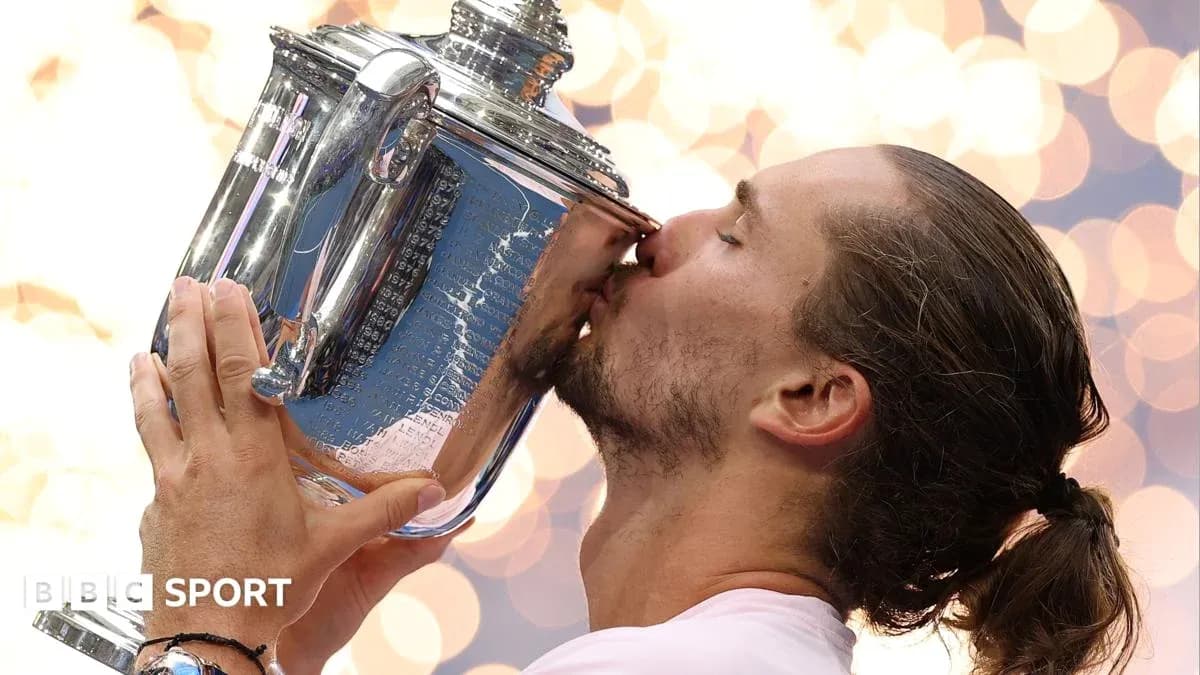
Alexander Zverev walked to the baseline with a ghost at his shoulder.
Six years earlier on this same court, serving for the US Open title, he had crumbled. Two sets up on Dominic Thiem in 2020, then serving for the match in the fifth, he watched the trophy slip through his fingers. The image of a shattered 23-year-old, in tears during the trophy presentation, promising he would one day “bring the trophy home” became part of his story.
On this night in New York, that story finally changed.
From heartbreak to hard edge
This was not the fragile, haunted Zverev of 2020. This was a Grand Slam champion, the man who lifted the French Open trophy in June, now back on one of tennis’ loudest stages with a hardened edge and a body built to last.
Across the net stood Ben Shelton, the explosive American left-hander with a cannon for a serve and 24,000 people roaring for him. The atmosphere was heavy, partisan, and perfect for an upset.
Zverev never let it become one.
He subdued the crowd early with a 6-3 opening set, then survived the noise and the firepower in a tight second-set tie-break, taking it 7-2. Shelton, feeding off the stands, punched back to steal the third 7-5, but the match never truly left Zverev’s grip. The German reasserted control in the fourth, closing out a 6-3 7-6 (7-2) 5-7 6-2 victory with the kind of authority that used to desert him on nights like this.
The most telling moment came after the final point. Zverev landed another unreturnable serve, turned calmly, walked back to the baseline and settled into his routine, ready to serve again.
Only then did his team shout the news: it was over. He was the US Open champion.
“In that moment I was in the zone a lot. I didn't hear noise at all,” he said later. “It's funny – tennis teachers always tell you to just play the next point and forget about the score. At that moment I forgot about the score and it helped me.”
The realisation broke across his face slowly, almost awkwardly. A broad, slightly stunned smile, arms finally raised above his head. No collapse, no tears. Just a man who had spent six years chasing down one ghost and had finally caught it.
A 30-year wait ends with a surge
For German tennis, Zverev’s year has redrawn the landscape. “We went 30 years without winning a Grand Slam title and now we've won two in three months,” he said, a nod to the barren decades since the glory years of Boris Becker and Steffi Graf.
“2026 is the outcome of all the years that happened before,” he added, framing this breakthrough season as the product of a long, often painful climb.
The climb has not been purely sporting. Diagnosed with type 1 diabetes as a child, Zverev has spoken often of the doubts that surrounded his future. On this night he turned the spotlight on his mother.
“When doctors tell you that life and sports will be very limited for that child, it takes a very strong mother to say: ‘my son will be whatever he wants to be’,” he said. “My mother is the most important and strongest person I know.”
His parents were absent from his 2020 final in Flushing Meadows. This time, his father and coach, Alexander senior, watched from the sidelines as his son finally conquered the same court that once broke him.
Built to last
World number two Zverev has put together the finest season of his career. Semi-finals at the Australian Open. Final at Wimbledon. Titles at Roland Garros and now the US Open. His presence at the business end of majors has become a habit, not a surprise.
Yes, injuries to Jannik Sinner and Carlos Alcaraz, who had dominated the majors over the past two seasons, have opened doors. But Zverev has still had to walk through them. A sharpened mentality and a relentless commitment to fitness have turned him into one of the sport’s most formidable athletes.
“There is no-one as fit as Zverev, he is right up there,” said former Wimbledon champion Marion Bartoli on BBC Radio 5 Live. “You can argue about Alcaraz and Sinner, and Novak [Djokovic] and Rafa [Nadal] when they were in their prime physically, but Zverev is right up there as one of the best athletes to play the sport.”
The numbers back up the grind. He was dragged to five sets in each of his first two matches in New York, both finishing in the small hours. In the opening round he stood two points from defeat. He survived, played himself into rhythm, and did not drop a set from the third round until Shelton took that defiant third in the final.
The pressure mounted, the crowd howled, and still he stayed inside his bubble.
Zen in the storm
Against Shelton, Zverev faced exactly the kind of emotional storm that once would have rattled him. A partisan crowd. A charismatic opponent feeding off their energy. A lost third set that might have invited doubt.
He gave it nothing.
He kept his celebrations muted, his body language steady. No theatrics, no arguments, no visible cracks. Just the same routine, the same tempo, the same heavy, deep hitting that slowly smothered Shelton’s resistance.
“I'm so admiring of his strength of character and the zen-like state he's been in since the very beginning of the match,” said former British number one Annabel Croft. “The most extraordinary thing was – and I don't think I've ever witnessed it – was that he didn't realise he had won. It was so bizarre, but it was like he was in a trance-like state while he was playing.”
That trance, that refusal to look back or forward, is what separated this final from 2020. Then, Zverev watched the moment swallow him. Here, he played as if the moment did not exist at all.
Only when it was over did he allow himself to feel it.
He left Arthur Ashe Stadium not as the nearly man of his generation, but as a two-time major champion with the most complete season of his career behind him and the sport’s next era suddenly within reach.