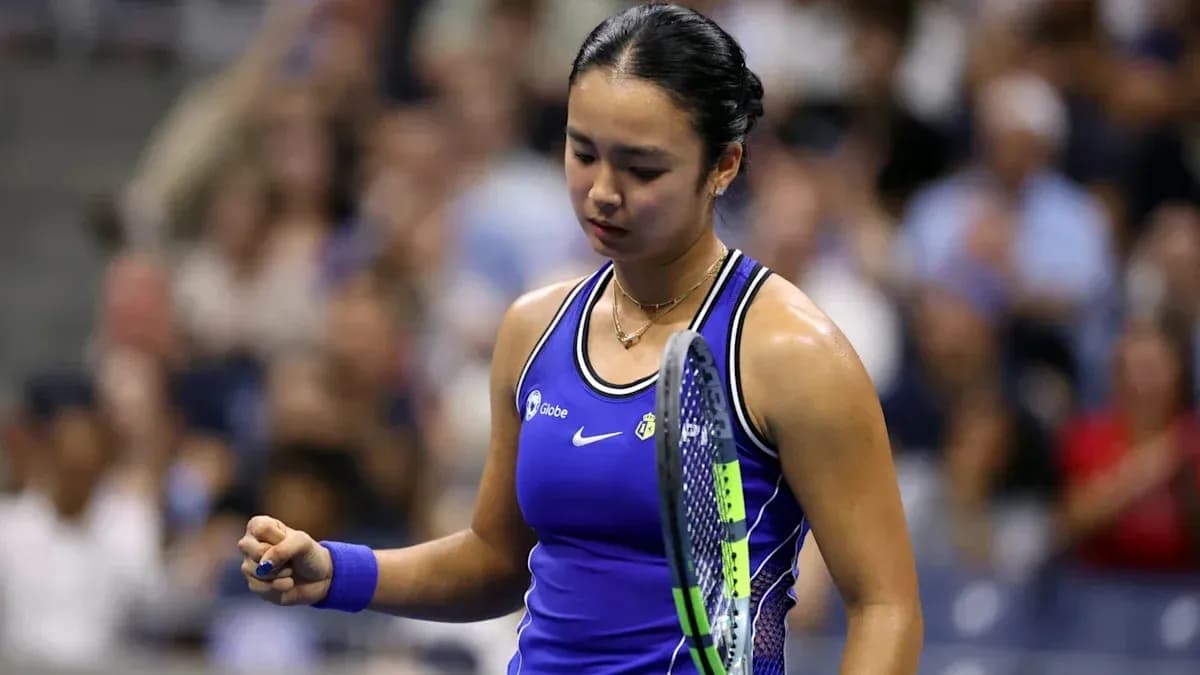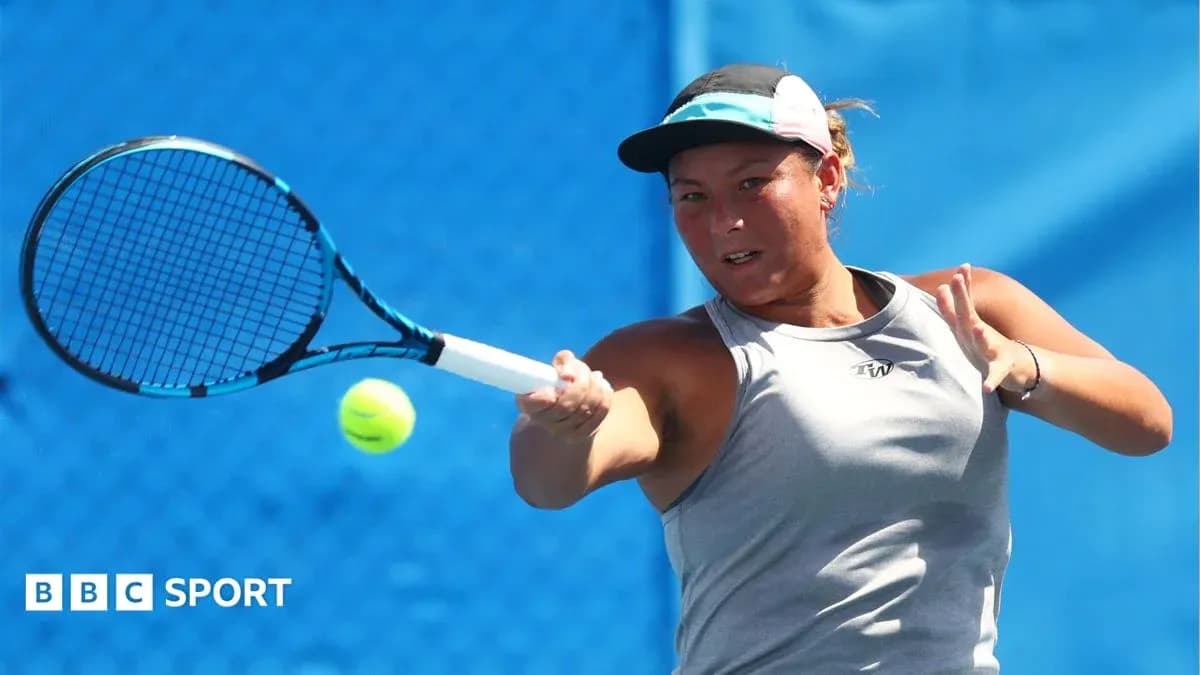
Alex Eala's Viral Serve Nickname: Balancing Love and Discomfort
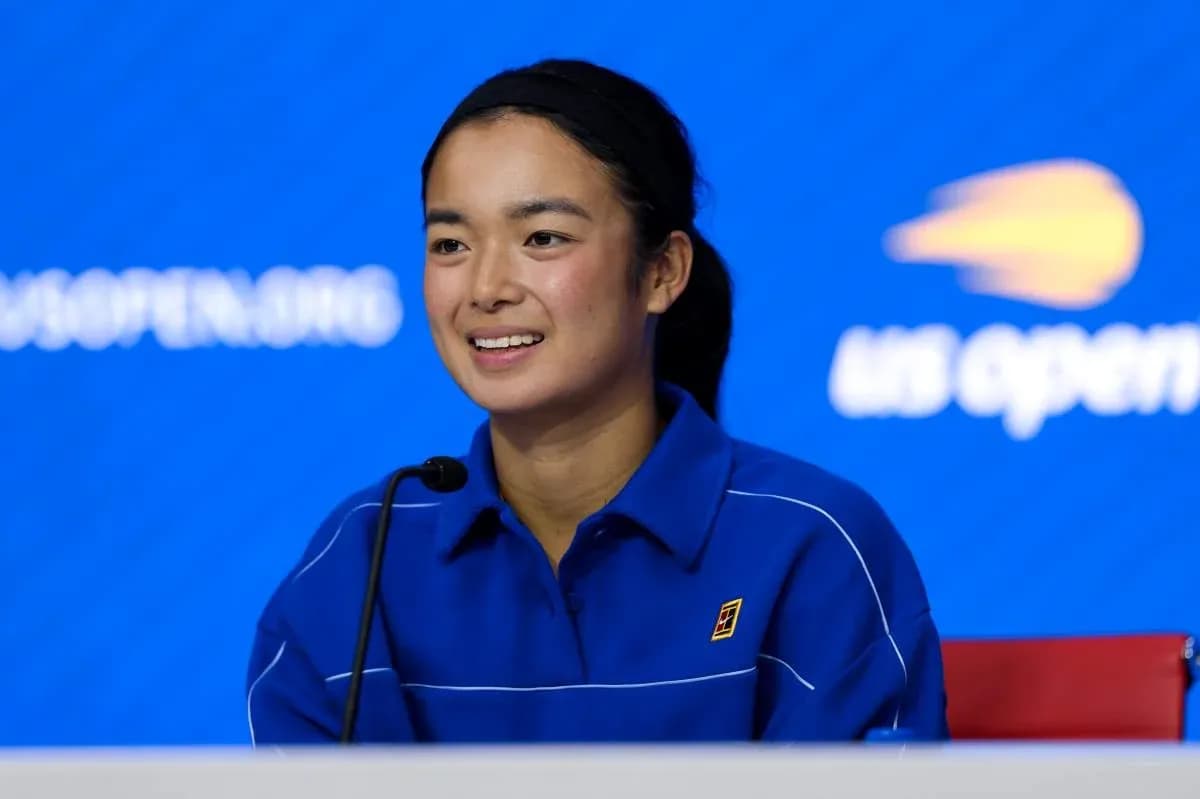
Alex Eala knows the joke. She just doesn’t love the punchline.
On US Open media day, the 19-year-old Filipino star found herself fielding a question not about Iga Swiatek, not about her seeding, not about a potential deep run in New York—but about a nickname for her second serve that has gone viral back home and spilled into the wider tennis world.
“Fookelya.”
It’s irreverent, rooted in Filipino gay slang, and carries a vulgar reference to female genitalia. Filipino fans, though, have repurposed it into something else: a meme, a rallying cry, a way to turn what many see as a technical weakness into a cult weapon.
They’ve printed it on shirts. They’ve traded it on social media. They’ve pushed it so hard that the term has now reached international podcasts and mainstream discussion.
Eala understands the love. She just wishes it sounded a little kinder.
A Joke That Cuts Close
When a Filipino reporter brought up the term in the press room, Eala laughed first, then asked for a full explanation. She switched into Filipino to make her feelings clear.
“Hindi siya masyadong positibong salita ’yon,” she said. Not exactly a positive word.
Later, she admitted she didn’t quite know how to feel about it. The term lands in a sensitive place for a player who has spent years wrestling with that very serve, reshaping it, rebuilding confidence in it, and absorbing criticism about it.
“Hindi ko alam kung ano ’yung pakiramdam ko sa salitang ’yon kasi it’s not a very positive term,” she added.
In English, she laid out the emotional weight behind it. That second serve isn’t a meme to her. It’s a product of struggle, hours of repetition, and a constant mental battle.
“And I love my serve,” she said.
That line mattered. It wasn’t defiance. It was ownership.
From Niche Meme to Global Talking Point
The “Fookelya” tag didn’t start in New York. Filipino fans had been trading clips and jokes about Eala’s slower, looping second serve long before she arrived at Flushing Meadows. The idea was simple: if everyone else mocked it, they would embrace it. What others called a liability, they would claim as a secret weapon.
The meme eventually broke containment.
Broadcaster Blair Henley discussed it on the Love All Podcast, describing Eala’s delivery as unconventional but effective and pointing out the obvious: not every serve has to resemble Serena Williams’ thunderbolt to do damage.
The attention gave Eala a chance to address the nickname head-on. She chose nuance over outrage. No lecture. No scolding. No suggestion that her own fans meant to insult her.
“I think I would appreciate a more positive term,” she said. “But I don’t think they mean it in a bad way.”
The line walked a fine line between gratitude and discomfort. She hears the affection. She just doesn’t want the serve that has cost her so much sweat reduced to a punchline.
The “Little Brother” of Her Game
Inside her camp, the language around that serve is very different.
Her coach at the Rafa Nadal Academy, Joan Bosch, has tried to reframe the relationship between Eala and her delivery. He tells her to treat it like a younger brother—something that needs patience, guidance, and protection. In that dynamic, she’s the “ate,” the older sister.
“Like my coach says, it’s like my little brother,” Eala said. “Parang ate ako sa serve ko.”
The metaphor explains why the nickname stings. You can tease a sibling. You can laugh with them. But you don’t turn them into a running gag for the world.
Eala doesn’t see a broken serve. She sees a developing one, a shot that has already evolved and still has room to grow. She protects it because she knows what it looks like when it works.
And when it works, it drives elite returners mad.
Why a Slower Serve Still Bites
The conversation around Eala’s delivery escalated this summer because of who it bothered.
Before facing Eala in the Washington final, Jessica Pegula reportedly asked a practice partner to slow down his serve so she could adjust. The logic was pure tennis: players who feast on pace can struggle when they suddenly have to generate their own.
At Wimbledon, Iga Swiatek ran into the same problem. She said Eala began serving “slower and slower,” dragging her into a rhythm she rarely sees on tour. The ball arrived with less weight, more shape, and an awkward timing that disrupted the world No. 1’s groove.
Former world No. 1 Andy Roddick later broke it down. Eala, he argued, can “get away” with a slower serve because the delivery doesn’t have to end the point. It only has to start it on her terms.
If the returner fails to strike cleanly—if the contact is late, off-center, or too safe—Eala pounces. Her first groundstroke carries the real venom. She steps inside the baseline, takes the ball early, and redirects with pace. The serve, in that structure, becomes a lure.
Not everyone is convinced that’s enough.
The Critics and the Ceiling
Rick Macci, the renowned coach who helped shape Serena and Venus Williams, looked at Eala’s game ahead of her US Open opener and saw both promise and a hard ceiling.
He praised her movement. He praised how early she takes the ball. He did not spare the serve.
Biomechanically, he wrote, it “has to be rewired” if she wants to reach another level.
Macci also predicted something else: nerves. With her ranking rising and her fan base swelling, he expects what he called an “Eala Earthquake” around her first-round match—an atmosphere that will amplify every double fault, every tentative second serve, every brave kick that clips the line.
Roddick and Macci aren’t arguing. They’re looking at different timelines. Roddick sees why the serve works now, inside her current patterns and strengths. Macci sees what might happen if the technique catches up to her ambition.
Eala sits between those two visions, already dangerous, not yet finished.
New York Spotlight, Old Question
She arrives at the US Open at a career-high No. 18 in the world and seeded 17th in the women’s draw. The numbers no longer say “prospect.” They say “contender.”
Her first test: American qualifier Mary Stoiana, whom she beat 7-5, 6-2 at the W100 event in Landisville, Pennsylvania, earlier this year. Eala knows the matchup. Stoiana knows the ball. This time, the stakes and the stage are different.
Every serve in New York will be dissected—speed, placement, trajectory, the odd, disarming rhythm that has become her signature. Cameras will catch the toss. Analysts will freeze the follow-through. Social media will clip every double fault and every ace.
The nickname will follow her through the gates, onto practice courts, into night sessions. It will appear on signs and shirts and timelines.
Eala isn’t asking fans to stop loving her serve. She isn’t asking them to stop turning it into something uniquely Filipino, uniquely theirs.
She just wants the “little brother” of her game to carry a name that matches the affection she’s finally learned to feel for it.