Alex Eala's US Open Debut: A Night Made for a Breakthrough
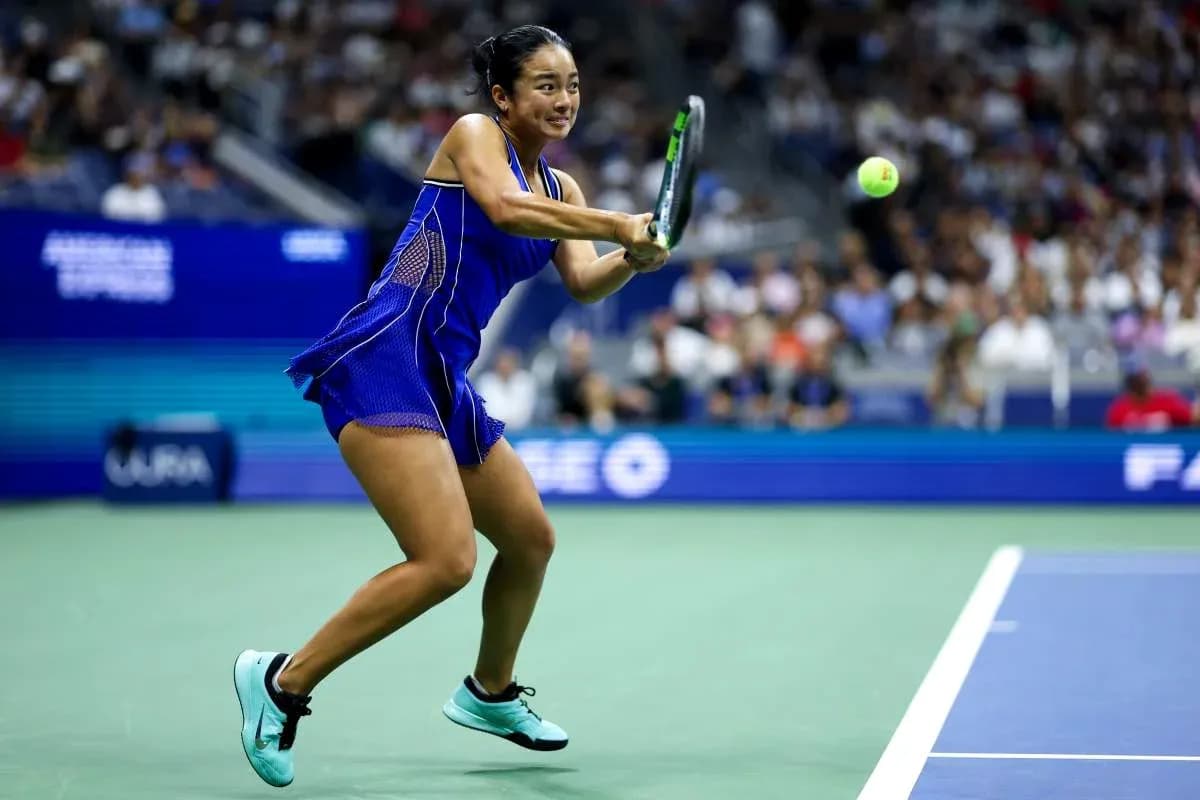
Under the lights of New York, Alex Eala finally gets the stage that fits the storm swirling around her.
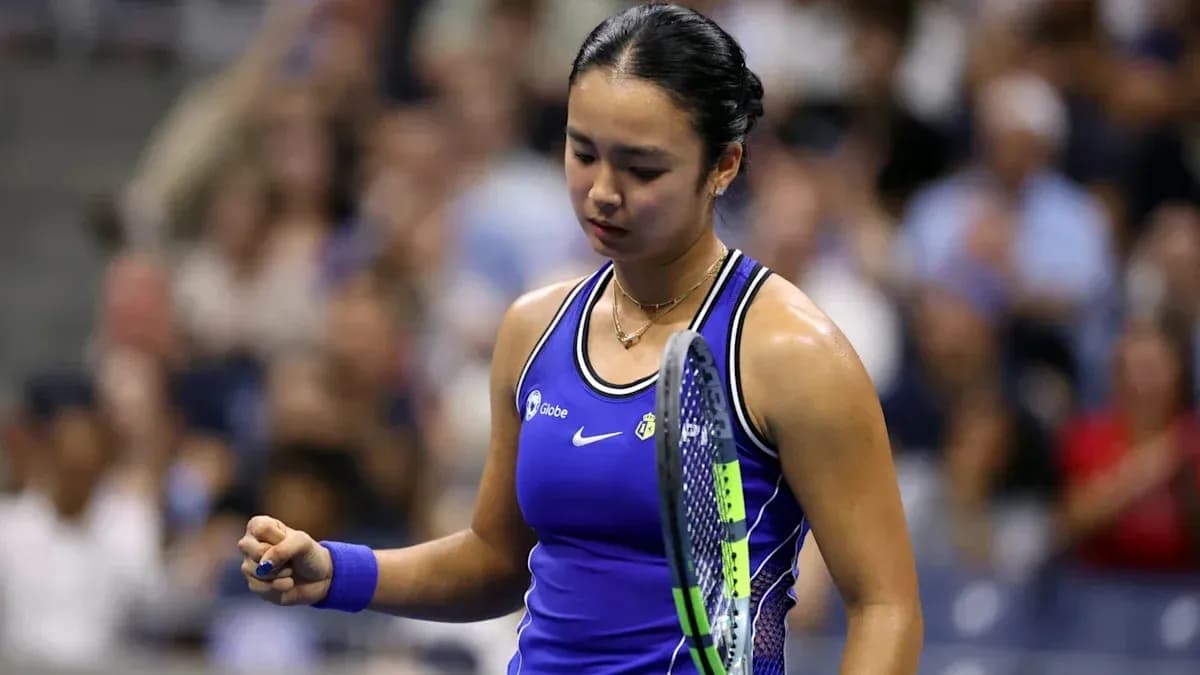
On Tuesday night, the 17th seed from the Philippines walks into Louis Armstrong Stadium for her 2026 US Open singles debut, second on the night schedule in Queens, against American qualifier Mary Stoiana. It is not Arthur Ashe, but with 14,000 seats and a roof that traps every decibel, it is more than just a court assignment. It is crowd management.
A Night Made for a Breakthrough
The evening session on Louis Armstrong opens at 7 p.m. ET with Adolfo Daniel Vallejo against Gael Monfils in a best-of-five-set clash. Only when they are done will Eala and Stoiana step into the glare. Tournament officials have not pinned down a start time beyond listing the match second on the night slate, but a ballpark estimate puts Eala’s entrance around 8:40 p.m. ET—8:40 a.m. Wednesday in the Philippines—subject to the whims of Monfils, Vallejo and however long they trade blows.
For Eala, this is the culmination of a summer that has altered her place in the sport. She arrives in New York at a career-high world No. 18, buoyed by her first WTA Tour singles title in Washington, where she tore through a draw that included Zheng Qinwen, Leylah Fernandez, Elina Svitolina, Naomi Osaka and Jessica Pegula. That week turned her from a promising story into a problem for the game’s elite.
Across the net, Stoiana brings a different kind of momentum. Ranked No. 122, the former collegiate No. 1 had to fight through three qualifying rounds to earn her place in the main draw, finishing with a gritty 6-3, 4-6, 6-4 win over Yuan Yue. She has seen Eala before: in Landisville in 2024, where the Filipina won 7-5, 6-2 at an ITF event. That result now sits in the rearview mirror. Both players have climbed since then, both now walking into a stadium that dwarfs anything from that week.
Big Court, Bigger Expectations
The decision to place Eala on Louis Armstrong did not happen in a vacuum. It landed squarely in line with a warning from Patrick McEnroe before the order of play came out.
“The USTA better make sure they put her on big courts,” the ESPN analyst said on the network’s US Open preview call, predicting New York would be “wild for her” and urging organizers not to tuck her away on a side court.
They listened. Or the crowds left them no choice.
Mary Joe Fernandez has watched the phenomenon build. The former world No. 4 called Eala’s following “off the charts,” pointing out that fans now swarm not only her matches but her practice sessions. That forecast proved accurate throughout Fan Week. Spectators ringed the practice courts, craning for a glimpse, treating warmups like main events.
Then came Arthur Ashe.
Eala took part in the ticketed Stars of the Open exhibition inside the 23,771-seat stadium, facing close friend Iva Jovic in a one-set hit that felt more like a celebration than a tune-up. Philippine flags dotted the stands, the atmosphere crackled, and while Jovic won 6-3, the score faded into the background the moment both players called their fathers onto the court for a lighthearted doubles segment. The ovation that followed said more about Eala’s place in this city than any box score could.
Her bond with New York did not start this week. Last year, more than 8,000 fans jammed into Grandstand to watch her claw back from 5-1 down in the third set to beat Clara Tauson, a comeback that made her the first Filipino in the Open Era to win a Grand Slam singles main-draw match. That night felt like a breakthrough. Twelve months later, it looks like the prelude.
From Prospect to Phenomenon
The media reaction to her arrival in Queens has matched the noise on site.
Forbes put her on its Daily Cover, dissecting her rising fame and commercial pull. Sports Illustrated splashed her across its digital cover under the headline “Pinoy Power,” calling her “tennis’s next great superstar.” The New Yorker went deeper, tracing how she has become a symbol for the Philippines, tying her ascent to cultural identity and national pride.
ESPN, which has placed her at the center of its US Open storytelling, framed her surge in a feature titled “Inside the Raucous and Rapid Rise of Alex Eala,” describing her as part Manny Pacquiao, part Maria Sharapova—a blend of fighting spirit, charisma and marketability—and positioning her as a genuine threat to make a serious run in New York.
Players without a single Grand Slam quarterfinal rarely command that kind of cross-platform attention from Forbes, Sports Illustrated, The New Yorker and ESPN at the same time. Eala does, and the reasons are everywhere: packed practices, Fan Week showcases, an enormous digital following and a presence that spills beyond tennis.
She has moved through Media Day, promotional shoots and on-site interviews as if she has lived on this stage for years. Her meeting with New York Knicks guard Jordan Clarkson, another global Filipino figure, produced one more widely shared moment, fusing sport, heritage and star power.
Queens Feels Like Home
If you were designing a borough for Eala’s rise, you might end up with Queens.
An Asian American Federation study estimated that about 94,000 Filipinos lived in New York City as of 2023, with roughly 49,500 in Queens alone—the largest concentration in any borough. Just a few miles west of the USTA Billie Jean King National Tennis Center sits Woodside’s Little Manila, a strip of Roosevelt Avenue anchored near 69th and 70th streets, lined with restaurants, bakeries, grocery stores, remittance centers and small businesses that serve as cultural lifelines.
A New York City neighborhood study suggested Filipinos make up around 16% of Woodside’s population. The city put an official stamp on that identity in 2022, co-naming the intersection of 70th Street and Roosevelt Avenue “Little Manila Avenue.”
Those numbers do not include the fans driving in from New Jersey, Long Island, Connecticut or Pennsylvania, nor the supporters flying in from the Philippines. When Eala walks into Louis Armstrong, she steps into a crowd that is at once local, regional and global—a home match in a foreign major.
The Rest of the Show
While Eala commands Louis Armstrong’s spotlight, Arthur Ashe carries its own star billing.
World No. 4 Coco Gauff leads Tuesday night’s main stage, opening at 7 p.m. against Turkey’s Zeynep Sonmez. Top seed Alexander Zverev follows against Italian veteran Lorenzo Sonego, giving Ashe the marquee names and the traditional primetime glare.
The day session in Ashe starts with Madison Keys facing Alina Korneeva, then Taylor Fritz taking on 18-year-old American wild card Darwin Blanch. On Louis Armstrong, play begins at 11 a.m. with fifth seed Flavio Cobolli against Francisco Comesana, followed by fifth seed Mirra Andreeva’s meeting with Indonesian qualifier Janice Tjen.
ESPN’s coverage runs from 11:30 a.m. ET through 6 p.m., followed by “US Open Match Point” from 6 to 7 p.m., before primetime coverage resumes at 7 p.m. on ESPN and ESPN2. Every court streams through the ESPN App for ESPN Unlimited subscribers.
So no, Eala will not step onto Arthur Ashe on Tuesday. Gauff and Zverev own that honor.
Yet the second-biggest court, the one with 14,000 seats and a roof that traps every roar, might be where the night’s real voltage gathers. If the noise from Fan Week is any indication, Louis Armstrong is about to sound less like an undercard and more like the loudest party in Queens—and Alex Eala is walking in as its headliner.