Alex Eala Seeks Revenge Against Diana Shnaider in Tokyo
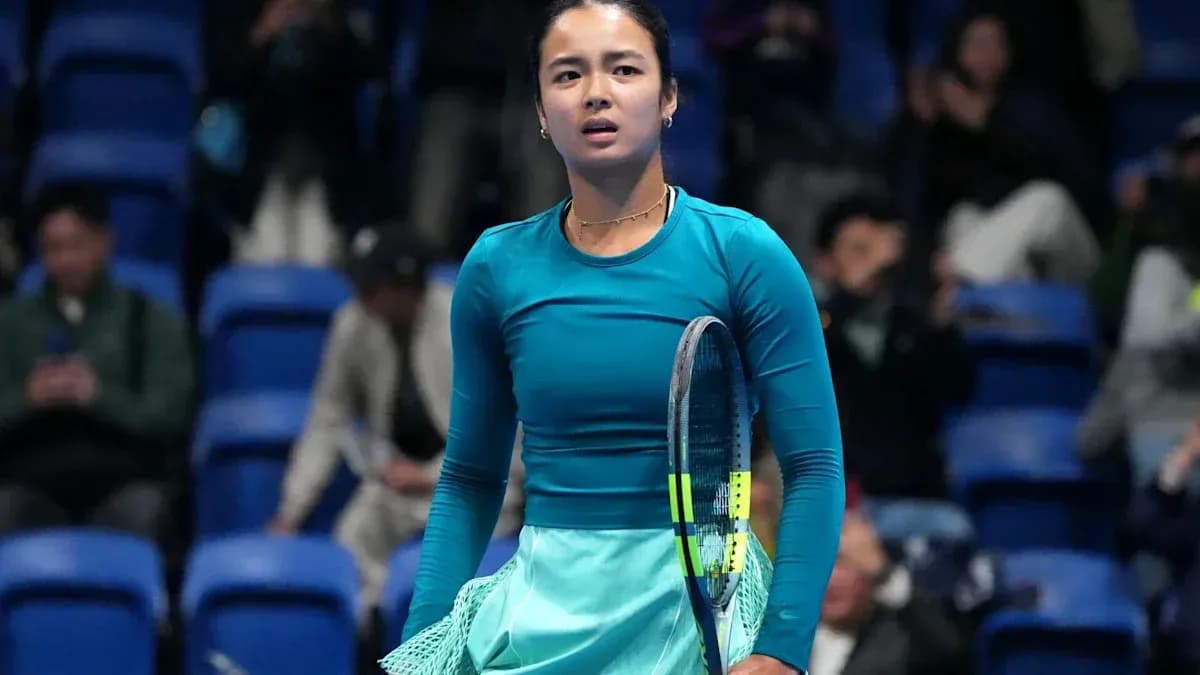
Alex Eala gets her shot at revenge in Tokyo, and she knows exactly where the battle starts: the serve.
Seven days ago in Ningbo, Diana Shnaider picked her apart there. The Russian left-hander dragged Eala into uncomfortable service games, exposed a shaky first delivery and walked away with a straight-sets win, 7-5, 6-4, in their first-ever meeting.
Now they run it back in the quarter-finals of the Tokyo Open. Same opponent. Same problem to solve. Different Eala? That’s the question hanging over this rematch.
A breakout season meets a familiar flaw
This has been the year Eala has been waiting for. A first WTA title in Washington. A charge into the fourth round at Wimbledon. A surge into the top 20. Her 2026 campaign has announced her as a genuine force on tour, not just a promising talent.
Yet through all the praise, one theme keeps circling back: the serve.
Against Shnaider in Ningbo, it cost her. Eala’s first-serve percentage hovered just above 50%, and she won only a similar share of those points. That combination is a tightrope at this level, and Shnaider happily shook it. The Russian broke her six times, punishing every dip, every tentative second serve, every short landing spot.
For a player trying to dictate with heavy, lefty patterns of her own, that kind of fragility on serve turns a match into a scramble.
A Tokyo response from the line
Tokyo has already given a glimpse of what Eala can do when the serve behaves.
She fought past Mika Stojsavljevic, then turned in a statement performance against Talia Gibson, not just in the scoreline but in the numbers that matter most ahead of this quarter-final. Against Gibson, Eala fired nine aces — her highest tally in a single match in 2026 — and backed it up with a far healthier first-serve percentage and first-serve points won than she managed in Ningbo.
That is the template.
Shnaider is a more dangerous returner than Gibson and will step in aggressively whenever she sees a look at the second serve, but Eala’s first-serve percentage itself is not dictated by who stands across the net. The ball toss, the rhythm, the commitment to the motion — those are hers alone. Tokyo has shown that when she finds that groove, the serve can be a weapon, not a liability.
The technical tweaks, the deeper mechanical changes, will almost certainly wait for the off-season. For now, it’s about repeatable patterns: hitting her spots, trusting the motion, and staying away from the streaky patches that opened the door so often in Ningbo.
The lefty puzzle
There is another layer to this rivalry, one that goes beyond a single match or a single stat sheet.
Eala is left-handed. So is Shnaider. On paper, that should neutralize some of the usual lefty advantages — the swinging wide serve on the ad side, the cross-court forehand into a right-hander’s backhand. In reality, it has exposed a curious blind spot in Eala’s record.
She has yet to beat any of the other left-handers currently ranked inside the top 100.
Shnaider fits that profile perfectly: a fierce, lefty ball-striker who takes the ball early and doesn’t let opponents settle into their patterns. Against that kind of opponent, Eala’s familiar cross-court patterns land into strength, not weakness. Rallies tilt differently. Angles that usually open the court instead feed the other player’s wheelhouse.
That makes the serve, again, central. If Eala can protect it, she can choose when to trade lefty patterns and when to break them, when to go body, when to flatten out down the T, when to change direction early in rallies instead of getting dragged into mirror-image exchanges.
If she can’t, Shnaider will drag her right back into the same uncomfortable territory that defined Ningbo.
A rematch with real weight
This is not just about revenge for a loss last week. It’s about whether Eala can quickly adjust to a specific matchup that has troubled her, in a season where almost everything else has gone right.
She has the momentum of a breakout year, the confidence of a title and a deep Slam run, and the evidence from Tokyo that her serve can reach a level Ningbo never saw.
Now she has to bring that version of herself into a quarter-final against a player who has already shown she can crack open the weakest part of her game.
Same opponent. Same stage of the draw. A serve under the microscope.
If Eala wants this season to move from breakthrough to statement, this is exactly the kind of rematch she has to solve.