Alex Eala: The Rising Filipino Tennis Star Captivating Audiences
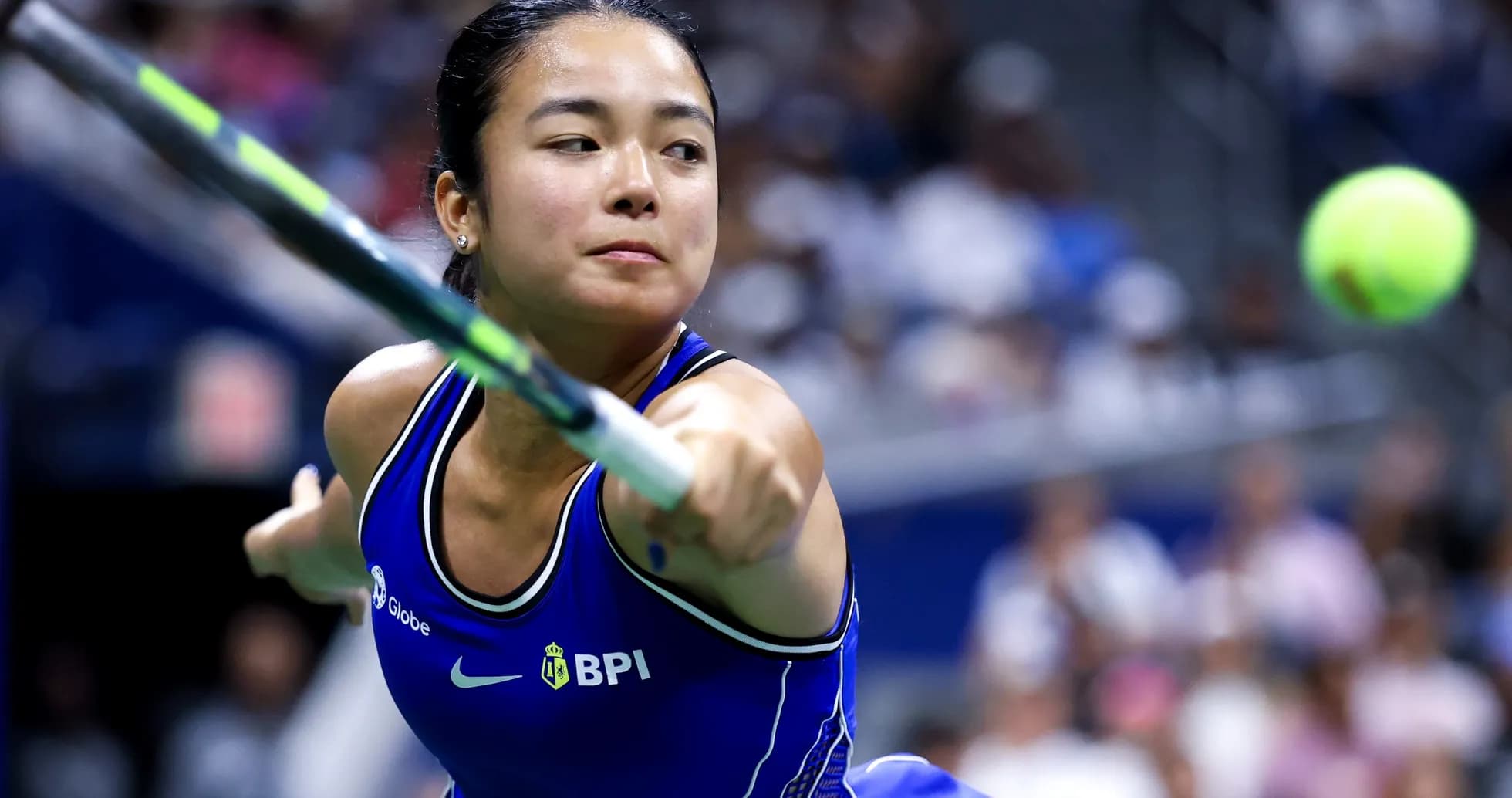
The practice courts at the U.S. Open are not supposed to feel like show courts. Players drift in, hit for an hour, drift out. Spectators wander past on their way to the big arenas.
Alex Eala has blown that script to pieces.
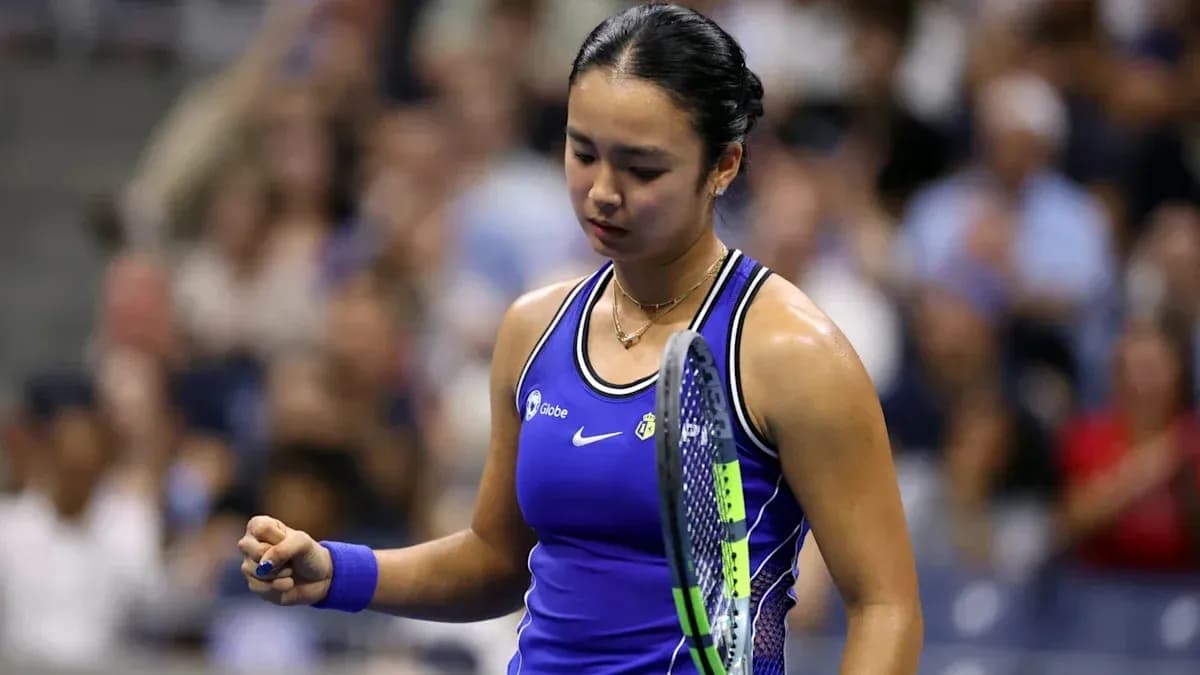
The 21-year-old from the Philippines is drawing crowds that look more like a second-week spectacle than a tune-up hit, with Filipino flags draped over railings and phones raised for every swing. Sponsors have noticed. So have tournament organizers. And now one of tennis’ most influential power brokers is putting a startling number on what all of this could mean.
Max Eisenbud, the veteran deal-maker who has steered the commercial careers of Coco Gauff, Maria Sharapova and Emma Raducanu, believes Eala is on the brink of joining sport’s financial elite.
“I feel very confident that by 2027, she will be the second-highest-paid female athlete in the world, behind Coco [Gauff],” Eisenbud told Forbes.
That is not a casual prediction. It is a marker laid down for a player whose global breakout is still in motion.
A $5 Million Signal
The money already tells a sharp story.
Forbes estimates that over the past 12 months, Eala has earned more than $5 million off the court, before taxes and management fees, alongside $1.7 million in 2026 prize money. Those are not Coco Gauff numbers yet, but they are no longer the figures of a rising prospect quietly feeling her way onto the tour.
Her endorsement roster reads like a corporate roll call across sport, telecoms, banking and consumer brands: Nike, Babolat, Globe Telecom, Bank of the Philippine Islands, Locally and Milo. Several of those relationships stretch back years, built long before she cracked the top 20.
Globe saw it first, signing her as an ambassador when she was just 8. Babolat backed her through her junior days. Nike came in back in 2019. BPI joined in 2022. Locally added her in 2025, and Milo followed in February 2026.
The investment is no longer sentimental. It is strategic.
Nike has leaned into her Filipino identity, rolling out sampaguita-inspired merchandise and apparel that taps directly into a national pride that travels. The real indicator of where her value sits now, though, is stitched onto her kit.
According to Forbes, Globe and BPI renewed on fresh four-year deals at the start of 2026, each guaranteeing more than $1 million annually just for patches on her Nike outfit. Eisenbud says seven figures is now effectively the opening bid for any brand hoping to join the queue.
That is the territory of global headliners, not fringe contenders.
From Fan Week to the Big Stage
The balance sheet only explains half of it. The rest is happening in real time in New York.
During U.S. Open Fan Week, Eala’s practices turned into destination events. Courts that usually host sleepy, mid-afternoon hit-arounds suddenly filled with Filipino supporters, their energy transforming routine drills into must-see sessions.
Then came the “Stars of the Open” exhibition at Arthur Ashe Stadium. Eala shared the sport’s biggest court with American prospect Iva Jovic and an electric crowd that roared for every point, another reminder that this is not a niche following confined to one corner of the grounds.
The U.S. Open hierarchy took note.
Her first-round match on Tuesday night against American qualifier Mary Stoiana has been slotted into Louis Armstrong Stadium, the tournament’s second-largest arena. That is a deliberate choice, not a scheduling accident. Tournament director Eric Butorac has acknowledged that organizers recognized, after Fan Week, that Eala needed a major court.
Ticket prices responded in kind. So did the secondary market.
For a player trying to convert national adoration into a global platform, that sort of stage is priceless. It is where cult followings harden into commercial muscle.
Chasing Coco
The summit she is being pointed toward remains steep.
Forbes estimated that Gauff earned $25 million off the court in 2025. Freestyle skiing star Eileen Gu followed at $23 million, with Chinese tennis standout Qinwen Zheng at $21 million. Aryna Sabalenka and Iga Swiatek were each pegged at around $15 million.
Eala is not in that bracket yet. She is, however, already No. 18 in the world rankings after a season that delivered her first WTA singles title in Washington, where she became the first Filipino to win a WTA Tour-level singles crown.
That ranking matters. Titles matter. But they do not fully capture why Eisenbud is so bullish.
What truly separates Eala is the force and focus of the audience building around her. Filipino fans have shadowed her from Washington to New York, filling practice courts, lifting exhibitions and, now, helping drive her U.S. Open debut onto one of the biggest stages in tennis.
Brands cannot manufacture that kind of connection in a boardroom. They can only try to buy into it — and the cost of admission is rising.
Former world No. 1 Andy Roddick told Forbes that Eala is bringing a massive new audience into the sport. Eisenbud has seen this movie before, with Sharapova’s crossover appeal, Gauff’s American star power and Raducanu’s post–US Open surge. He recognizes the ingredients: youth, results, personality and a fan base that behaves less like a crowd and more like a movement.
One crucial piece is still missing.
The Next Step
To reach the financial heights Eisenbud is projecting, Eala must turn this attention into sustained Grand Slam success. Deep runs in New York, Melbourne, Paris and Wimbledon remain the sport’s most powerful accelerant. They convert promise into inevitability.
If she can do that, the packed courts at this U.S. Open will be remembered not as an anomaly, but as the moment the wider sports business finally understood what Filipino fans have been insisting for years.
That Alex Eala is not just carrying a nation into tennis.
She is dragging the sport into her orbit.