Alex de Minaur's Struggles Continue After US Open Exit
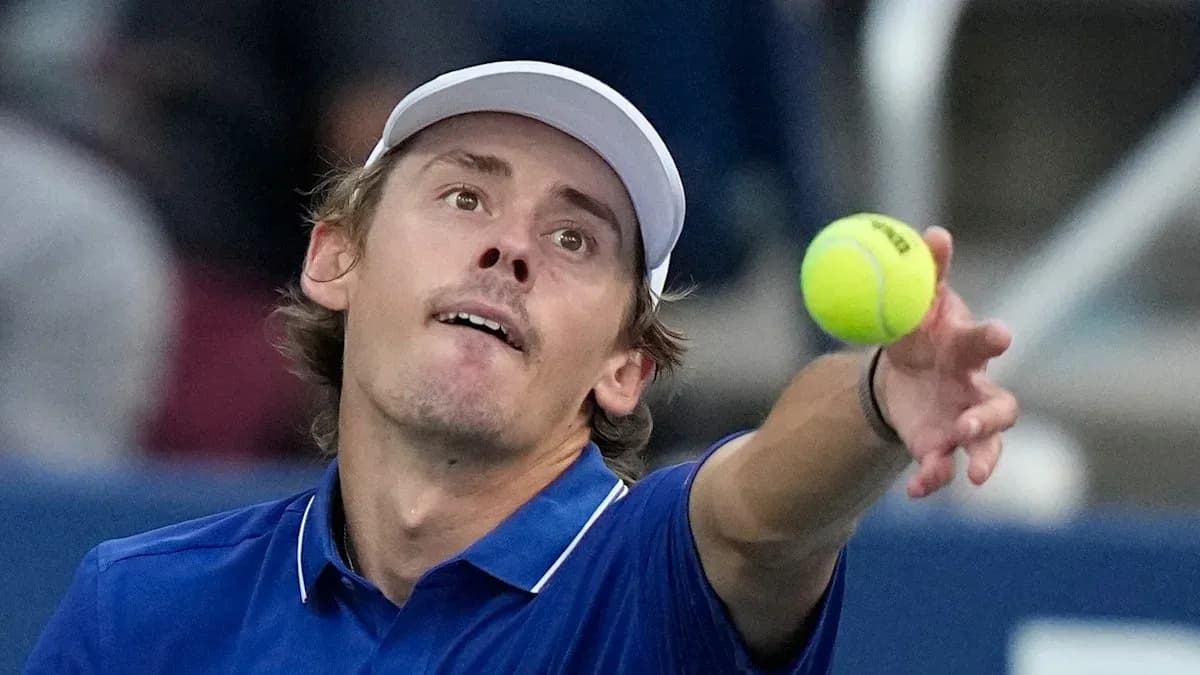
Alex de Minaur doesn’t deal in excuses. Not on this night, and not for this run of form.
Under the lights in New York, the Australian No.1 walked off Louis Armstrong Stadium with a straight-sets defeat and a brutally simple assessment of where his tennis sits right now.
His level, he said, “wasn’t good enough.”
A Familiar Opponent, A Very Different Story
Botic van de Zandschulp should have been a comfort opponent. De Minaur had beaten the Dutchman in all four of their previous meetings. He knew the patterns, the tendencies, the match-up.
None of it mattered.
Van de Zandschulp rolled him 6-4, 7-5, 6-2 in a match that never really felt like it belonged to de Minaur. The Australian had backed up just a day after a delayed first-round win over Italian qualifier Andrea Guerrieri, and the short turnaround showed. The legs were there. The fight was there. The feel was not.
The forehand, usually his metronome, went rogue. Routine balls flew long. Short balls died in the net. Potential winners sailed metres beyond the baseline. For a player who has built a career on discipline and precision, the chaos on that wing was jarring.
“I gave myself every chance by being competitive, having a good mindset, a good attitude,” he said, speaking to AAP. “But it was just one of those days where just the feeling of the ball on the strings wasn’t there.”
He kept trying to hit through the fog. It only thickened.
“I was making a lot of errors, which is not really my normal game style. I can't really explain the reasoning of it, but just it felt like the more I tried, the more intensity, the more fired up I was getting, I just kept on making unforced errors.
“When those sort of things happen and the odd chance that you have, he comes out with some good tennis – it's just a recipe for a tough day at the office.”
That recipe produced a flat, frustrated de Minaur and a composed, opportunistic van de Zandschulp, who punished every short ball and every lapse.
A Quarterfinalist Searching for His Edge
This isn’t an isolated stumble. It’s the latest in a pattern that has shadowed de Minaur across the season.
He reached a seventh career grand slam quarterfinal at the Australian Open, a landmark that underlined his status among the game’s elite. Since then, the majors have bitten back. Third round at Roland-Garros. Fourth round at Wimbledon. Now a second-round exit at the US Open.
Away from the slams, the trend has been just as unsettling. Early exits at several ATP Tour events have chipped away at confidence and invited scrutiny of everything around him, including his long-standing coaching setup.
Adolfo Gutierrez has been by his side for nearly two decades, since de Minaur moved to Spain at the age of nine. In a sport defined by short-term relationships and constant change, their partnership is an outlier.
It is also, inevitably, under the microscope.
In commentary for Nine, Jelena Dokic admitted she wasn’t surprised people were asking whether it might be time for a change, while still stressing what Gutierrez has already delivered.
“Only Alex knows what he needs … a lot of players will change coaches quickly, especially if they feel like the results are not there,” she said.
“That’s up to him to make those decisions and what he wants to do. Let’s not forget Adolfo has gotten him to such a high point in his career – to the top five in the world.”
The question isn’t whether Gutierrez has been good for him. That’s obvious. The question is whether this version of de Minaur needs something different.
The Weight of Perfection
The technical issues are visible. The emotional strain might be doing just as much damage.
Dokic pointed to de Minaur’s personality as a possible fault line. The perfectionist edge that helped drive him into the top tier of the sport now risks cutting the other way.
“We know his mindset, we know what a perfectionist he is. He wants to get to the top and maybe not doing that in the last two years has affected him,” she said.
“For him, wins have become almost a relief and not so much satisfaction and joy, and that's hard. Losses have almost been end-of-the-world type things. He's been really, really hard on himself. I think he has to give himself a bit more of a pat on the back and a bit more credit.
“Whatever he decides to do with coaching, the way that he goes about things and the mindset around it is going to have to change. It's very hard to keep this up, to constantly expect from yourself to win. That's been an issue for him.
“When you've got the constant pressure of feeling like you want to win and get to the top, and maybe that's not quite happening the way you want to, you can start to lose motivation, you can get really flat.
“I think that that’s what’s happened – he’s lost a little bit of that mojo to be out there.”
The signs have been there. After his Wimbledon exit, de Minaur looked close to tears as he spoke about his form. The joy of competing, once so obvious in his relentless retrieving and chest-beating roars, has at times been replaced by a tight, anxious edge.
When every win feels like a narrow escape and every loss feels catastrophic, the margins shrink. So does the fun.
Calm Words, Turbulent Underneath
Publicly, de Minaur stayed composed in New York. No outburst. No blame. No dramatic declarations.
“Obviously would have loved to do better, as any competitor would, but it’s what happens in this sort of sport. Everyone loses matches,” he said.
“Everyone is losing matches that maybe they would love to have back.
“… It’s one I would love to have back, but we move forward and it’s not the end of the world.”
The words were measured. The context is not. A top-five player, a grand slam quarterfinalist earlier this year, is now fighting a dip that stretches across surfaces, continents and months.
Dokic also floated another practical fix: the schedule. For a player who thrives on intensity, playing too often can turn that strength into a drain. A trimmed calendar, more targeted peaks, and space to reset might be as important as any tactical tweak.
A Lone Aussie and a Lingering Question
De Minaur’s departure leaves Dane Sweeny as the last Australian standing in either singles draw, after Sweeny stunned No.13 seed Lorenzo Musetti earlier in the day. It’s a symbolic passing of the baton for this fortnight, but not a permanent one.
The Australian No.1 will leave New York with a clear head about what went wrong on the night. The harder part comes now: working out what needs to change so these nights don’t keep stacking up.
Coach, schedule, mindset – nothing is off the table. The next move will say as much about where Alex de Minaur is heading as any ranking number beside his name.