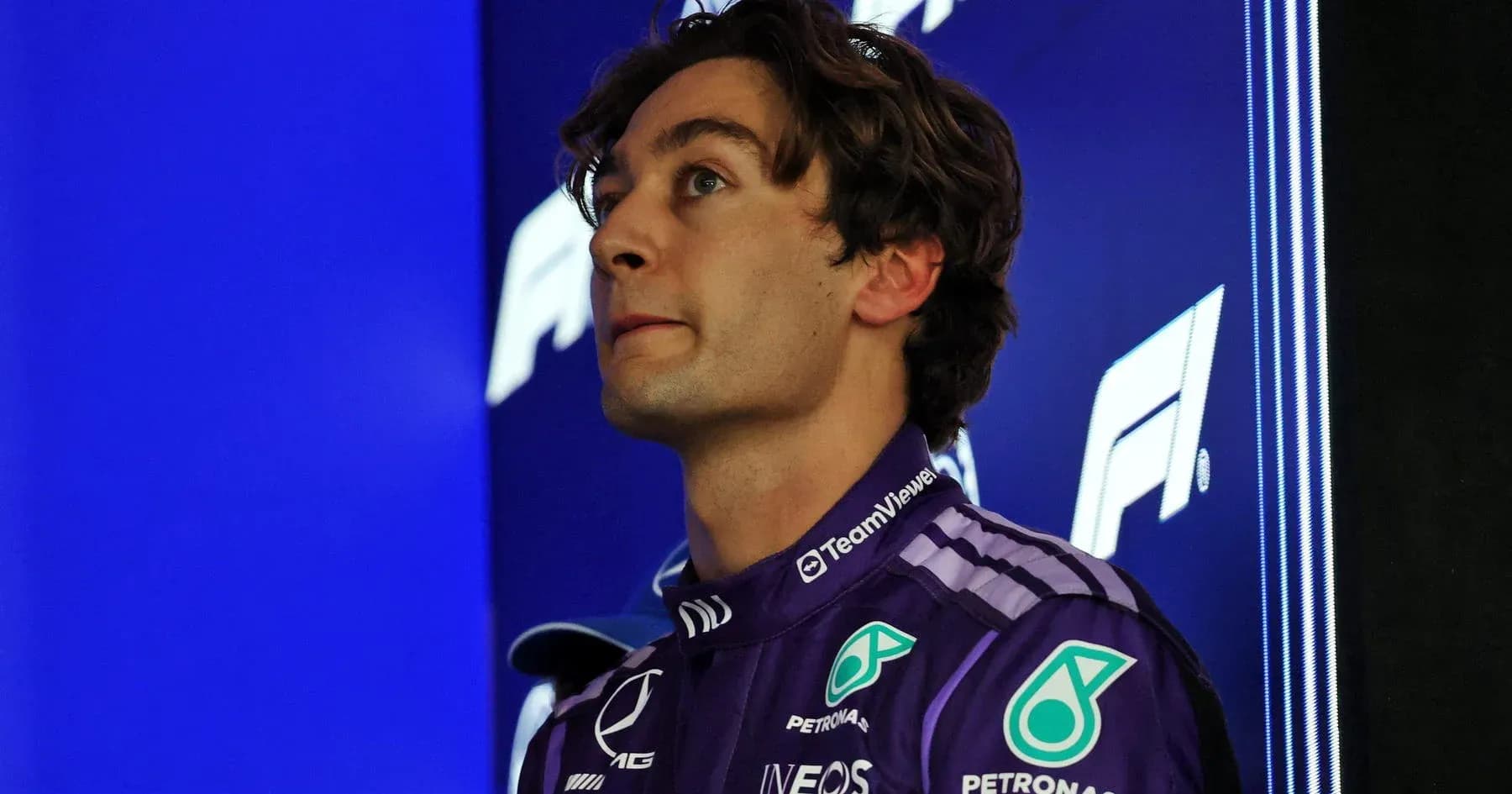
Webber and Piastri End Their Partnership: A New Era Begins
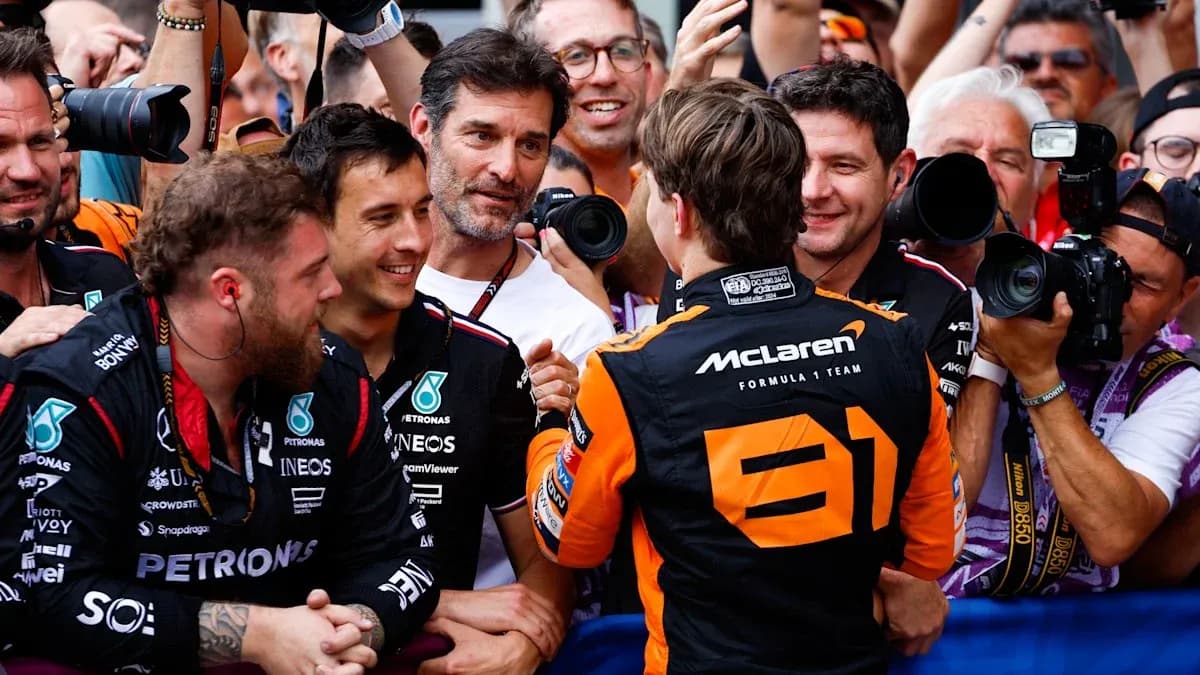
For seven years, Mark Webber has been the steady hand on Oscar Piastri’s shoulder. Now that hand is gone.
The quiet confirmation that Piastri has split from Webber’s JAM Sports Management has jolted his fanbase, not because change in Formula 1 is rare, but because this particular partnership felt almost bulletproof. It was Australian motorsport’s golden relay: one grand prix winner passing the baton to the next.
That baton has now been put down.
A Unique Alliance Comes to a Close
JAM Sports Management, founded in 2019 by Webber, his wife Ann Neal and administrator Jason Allen, has been more than a standard agency. It has been a cocoon.
Neal, the architect behind Webber’s own journey to Formula 1, transplanted the same fiercely protective, highly personal model onto Piastri. She had already spent seven years in Europe hunting for funding and seats before Webber finally reached the grid in 2002. With Piastri, she and Webber ran the same playbook from the other side of the world, shielding a precocious talent from the usual political and financial turbulence.
The results were spectacular. Piastri tore through the junior categories, winning F3 and F2 in consecutive rookie campaigns. Webber’s guidance, both on and off the track, flattened the brutal learning curve that usually confronts young drivers arriving in F1. Piastri himself has spoken often about the value of Webber’s advice in handling the pressure, the travel, the scrutiny – all the noise that comes with the “pinnacle of motorsport.”
The relationship evolved as Piastri settled into the McLaren garage. Webber had already scaled back his trackside role this season, focusing more on commercial work than race-weekend firefighting. That was the first visible sign of a shift. Now, the split is complete. Two camps that once moved in lockstep have formally gone their own ways.
New Voices in Piastri’s Ear
The vacuum around a modern F1 driver never stays empty for long.
As Webber stepped away from the pit wall, other figures moved closer. Pedro Matos, Piastri’s race engineer during his Formula 2 days, has become an increasingly central presence in shaping his race weekends. So has performance coach Emma Murray, whose résumé includes work with some of Australia’s elite athletes such as Dustin Martin, Scott McLaughlin and Cate Campbell.
This is more in line with the contemporary F1 paddock, where drivers typically lean on large, multi-layered agencies and specialist staff rather than a single former racer handling almost everything. What made the Webber-Piastri setup unusual was precisely that: a retired driver and his long-time manager running a young star’s career with such intensity and control.
With Webber’s all-encompassing role gone, Piastri’s support network is being reassembled. The structure will look more conventional. The influence, though, will be different – and so will the expectations.
A Dip in Form at a Delicate Moment
All of this is happening against a backdrop that is far from ideal.
After surging into championship contention in just his third F1 season, Piastri entered this year tipped to go one step further – to push Lando Norris for outright supremacy at McLaren and, by extension, a full-blooded title tilt. Instead, the 2026 campaign has turned into a grind.
His last win remains the 2025 Dutch Grand Prix. He has only two podiums this year, and hasn’t climbed the rostrum since Miami in May. For a driver touted as the sport’s next relentless front-runner, that’s a long time to be watching the celebrations from the wrong side of the parc fermé fence.
The numbers tell a harsher story. Piastri sits seventh in the drivers’ championship, under heavy pressure from Red Bull’s Isack Hadjar, who is closing in from behind. Across the garage, Norris has rediscovered his touch in the new engine-regulation era. His hard-fought victory in Brazil was his third of the season, and he holds sixth in the standings, just 33 points off second-placed Max Verstappen.
On paper, Piastri is only one place back. In reality, the gap is yawning: 94 points. Norris’s average finishing position in grands prix is 4.1; Piastri’s is 6.8. The head-to-head in all races stands at 16–4 in Norris’s favour. That isn’t a gentle wobble. It’s a clear deficit.
The timing of Webber’s reduced trackside involvement and Piastri’s dip in form is impossible to ignore. Correlation is not causation, but the narrative writes itself: as the mentor stepped away, the margins started to slip.
Life After Webber
What happens next will define the next phase of Piastri’s career.
He has not yet revealed his new management structure. With a McLaren contract that runs until the end of 2028, there is no immediate panic over negotiations or a looming expiry date. The security is there on paper.
The real question lies elsewhere: how he manages his time, his energy, his mental bandwidth.
One of the hallmarks of the Webber-Neal regime was its fierce protection of Piastri’s life away from the circuit. Media obligations, sponsor events, travel demands – all of it was filtered, controlled, often pushed back if it threatened to interfere with performance. McLaren sets the agenda during race weekends, but Webber’s team had a firm grip on everything in between.
A new management team will inevitably bring a different philosophy. More opportunities, perhaps. More visibility. Possibly more demands. For a driver already under pressure to close the gap to his teammate and fend off rising stars, that balance will be critical.
What is not in dispute is Webber’s impact. He helped turn a gifted youngster into a multiple grand prix winner and a genuine title contender. The foundations of Piastri’s F1 career bear Webber’s fingerprints everywhere, and the McLaren driver has never been shy in acknowledging that debt.
Now comes the first truly independent chapter. No safety net of a compatriot who has lived every political fight, every contract squeeze, every brutal Sunday. Just Piastri, a reshaped inner circle, and a long-term McLaren deal in an era where the margins at the front are razor-thin.
The partnership that got him here is over. The question now is simple: can he climb the next step without it?