Max Verstappen Salutes Robert Kubica's Remarkable Comeback
Max Verstappen knows talent when he sees it. In a paddock obsessed with youth and the next big thing, he chose to pause and salute a man whose story once looked finished.
Robert Kubica’s career should have been a straight-line ascent. Instead, a rally crash in 2011 shattered that path and almost cost him his right arm. Fourteen years on, he is a Le Mans winner, climbing back to the summit of motorsport in the #83 AF Corse Ferrari Hypercar alongside Yifei Ye and Phil Hanson.
“It’s special,” Verstappen said, summing up what many in the paddock still feel about the Pole. Kubica, he reminded everyone, was a “fantastic driver” with “an enormous amount of talent,” a man widely tipped to win far more in Formula 1 before fate intervened. Ask around the garages and you’ll hear the same refrain: he was destined for more. The accident cut that dream short, but it did not erase the driver. Le Mans has underlined that.
While Verstappen reflected on a career rebuilt, another leading light of the grid is still trying to decode his own machinery.
Norris and McLaren’s strange beast
Lando Norris has spent this season wrestling with a McLaren that, in his words, feels “different to last year by quite a long way.” The defending champion has had to relearn his own car.
“You have to adapt to that,” he said, and the adaptation has not been minor. Norris described McLaren’s cars as “odd and unique” to drive, a trait he says has been consistent throughout his time with the team. Drivers who have sampled both McLaren and rival machinery, he pointed out, have echoed that view.
This year’s car demands a different technique again. Norris admitted he has had to change plenty at the start of the season just to understand it, though he stopped short of saying whether the quirks are purely a “McLaren thing” or a broader characteristic of the current era of cars.
The team’s answer will arrive in Baku.
McLaren are rolling out what they consider their most significant upgrade package of the year at the Azerbaijan Grand Prix: a new floor, fresh aerodynamic components and, notably, the return of the rotating “Macarena” H-wing. The car has struggled in fast corners, a weakness the new floor is designed to attack. The revised H-wing, which had to be removed in Madrid because it did not suit the required downforce level, is back in a new specification, tasked with helping unlock high-speed performance.
Norris is adapting. McLaren are evolving the car around him. Baku will show whether those two lines finally intersect at the front.
Red Bull, recovery and a wrist worth protecting
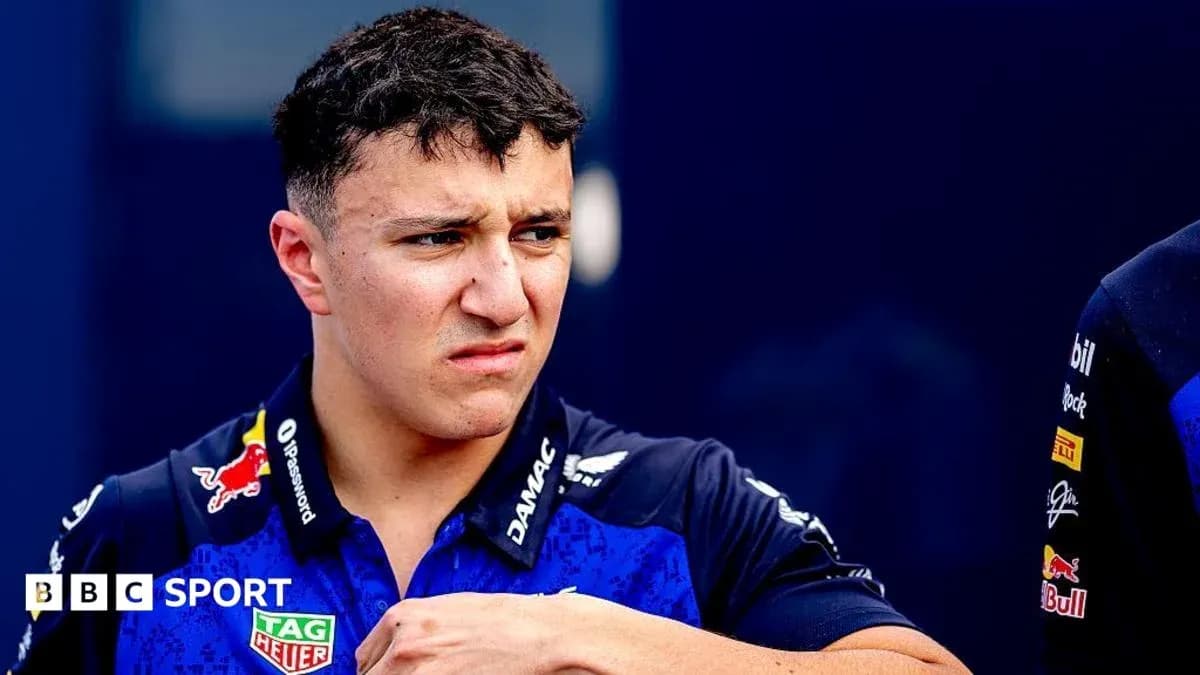
At Red Bull, the focus has been less on upgrades and more on a wrist. Specifically, Isack Hadjar’s.
Team principal Laurent Mekies drew a clear line early: there would be no rushing the Frenchman back after his injury. Red Bull have seen how badly that can go. Lance Stroll’s charge to sixth place just two weeks after breaking his wrist in pre-season testing in 2023 became a cautionary tale, the pain lingering for months, a second surgery required, a race eventually missed anyway. Heroics on Sunday, consequences on Monday.
Hadjar is at a very different stage of his career. After a strong rookie season in Formula 1, he has flourished at Red Bull, already standing on the podium and, crucially, becoming the first Verstappen team-mate in years not to crumble under the pressure of that seat. This was not the time to gamble with his long-term health.
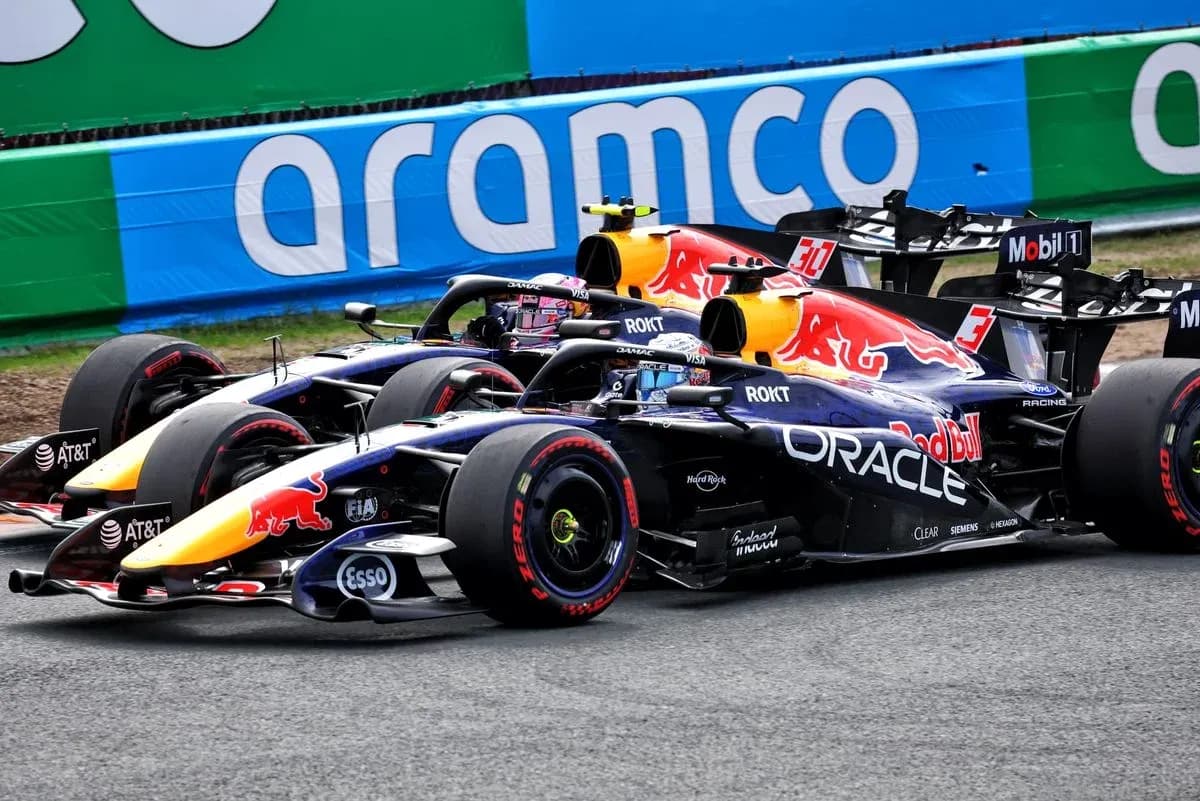
Red Bull stuck to their plan, even as their driver rotations over the last three race weekends created headaches up and down the organisation. Now they have their reward. Hadjar has been cleared to withstand the brutal loads that go through a driver’s wrist at 200mph and will be reinstated for this weekend’s Azerbaijan Grand Prix.
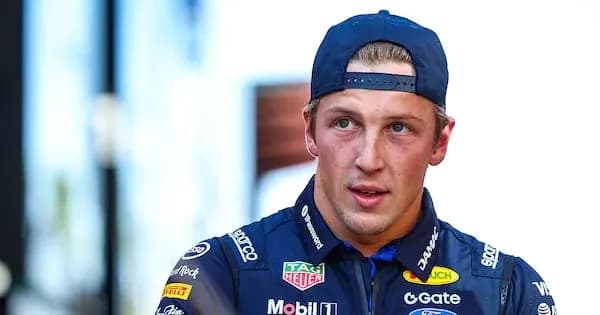
The team confirmed his return with a statement welcoming him back to the Baku City Circuit and took the time to publicly thank Liam Lawson for his stint as stand-in. Lawson, they said, stepped in under “challenging circumstances,” delivered “impressive performances” and made a “valuable contribution” before heading back to Visa Cash App Racing Bulls.
The long-term view has prevailed. Both Red Bull and Hadjar look set to benefit from that patience.
Lawson caught in the crossfire
Not everyone has been as generous in their assessment of Lawson.
Nico Rosberg, never shy with an opinion, questioned whether any of Red Bull’s potential Verstappen partners are truly at the level the team crave. Speaking to Sky F1, he said Red Bull are hunting “the next Max Verstappen and the next Sebastian Vettel,” and that “everything else is just not good enough.” Lawson, he suggested, has not yet shown he belongs in that bracket.
Mekies pushed back hard. For him, Lawson has done “a very good job” in an almost impossible scenario: jumping into a different car, with a different team, and being asked to deliver immediately.
Lawson finished sixth in Spain, bagging important points, and had produced something similar in Zandvoort. In Monza, contact with Nico Hülkenberg and the resulting front wing damage derailed his race, but the underlying performance impressed Red Bull. Mekies underlined that this version of Lawson is a very different driver to the one who appeared in the first two races of 2025 and made clear the team are “thankful and happy” with his contribution.
The debate over who is “good enough” to sit alongside Verstappen will rage on. For now, Hadjar has his seat back, Lawson has banked credibility, and Red Bull’s talent pool remains under fierce scrutiny.
F1 tears up the clock and tweaks the map
While teams fight their own battles, the sport itself is shifting under their feet.
The FIA has confirmed sweeping changes for next season after the latest F1 Commission meeting, reshaping how races are run and how cars are built.
The familiar rule that a race must fit within a maximum two-hour window, held inside a three-hour period, is being scrapped. That constraint has often forced truncated, messy conclusions when red flags or heavy rain intervened. From next year, race control will have more room to let a Grand Prix breathe when interruptions strike.
Race distance is changing too. The standard length will drop from 305km to 290km, with Monaco remaining the outlier at 260km. Behind that decision lies the reworked power unit structure for next year, itself a response to heavy criticism of the 2026 regulations. The shorter distance is expected to allow drivers to run at full throttle more often over a lap, trading endurance management for sustained aggression.
Gearbox homologation is also being removed. The Sporting Advisory Committee framed the move as a way to “preserve supplier development freedom,” opening the door for more technical innovation and potentially greater divergence in car characteristics.
So the sport heads to Baku with a driver returning from injury, a champion trying to tame a tricky McLaren, a Le Mans winner being saluted in the F1 paddock, and a rulebook already pointing to a faster, more attacking future.
The question now is simple: who adapts quickest to a landscape that refuses to stand still?