Steve Ballmer Accepts NBA’s Kawhi Leonard Penalties
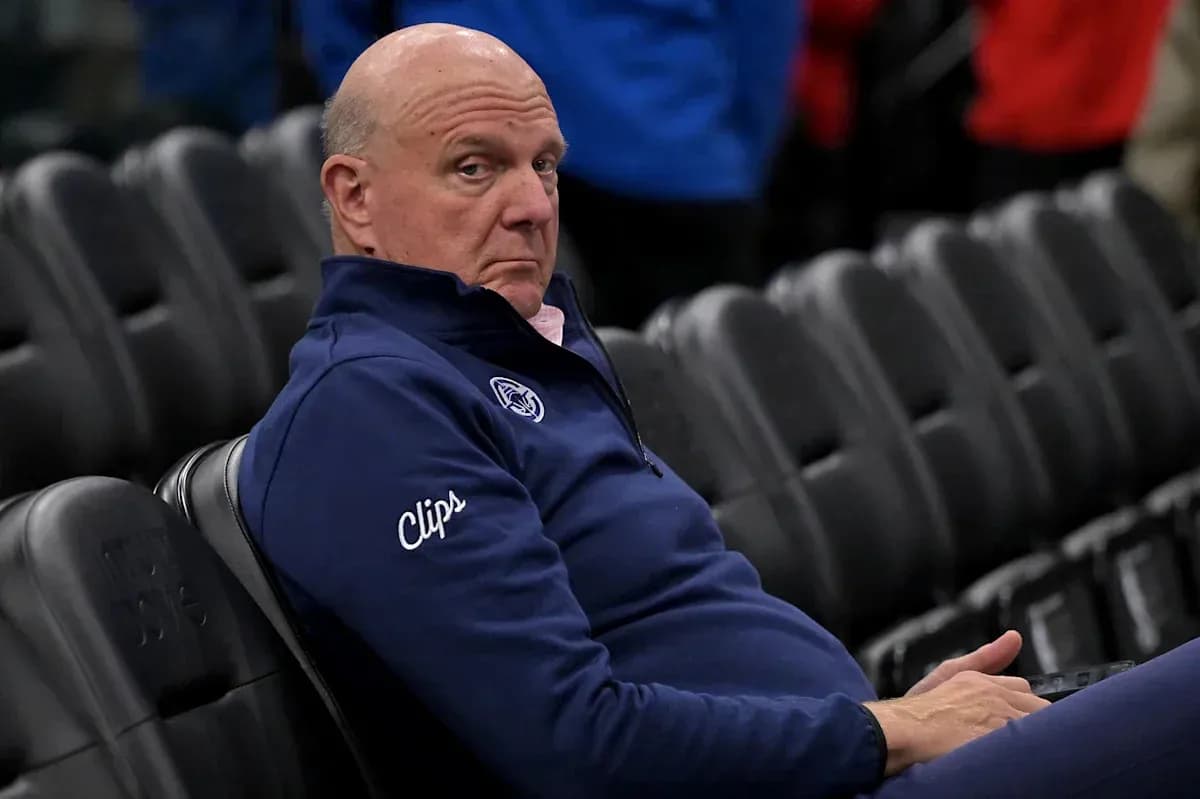
Steve Ballmer has stopped swinging.
After weeks of fury, threats and talk of a “witch hunt,” the Los Angeles Clippers owner has decided he will not fight the NBA’s hammer blow over salary-cap circumvention tied to Kawhi Leonard. The league’s sanctions stand. The fine is paid. The one-year ban begins.
And the most aggressive owner in the sport is suddenly choosing silence over war.
“This has been a very difficult time for everybody associated with the Clippers, and for that, I have sincere regrets,” Ballmer said in a statement Sunday night, as he publicly reversed course. He apologized to fans, employees and fellow owners and, crucially, said he accepts responsibility “as principal owner.”
The pivot is stark. The same organization that only days ago was accusing the league of bias and procedural misconduct is now bowing to the findings it once vowed to tear apart.
From ‘witch hunt’ to compliance
The NBA’s punishment was always going to leave a mark.
After a months-long probe — sparked by a Pulitzer Prize-winning investigation from the “Pablo Torre Finds Out” podcast — the league concluded that the Clippers and Leonard had worked around the salary cap through arrangements with third-party companies. The report detailed how the franchise allegedly helped facilitate deals between Leonard and outside vendors, and “induced the companies to enter into these agreements by offering them business from the team.”
The cost of those conclusions was severe:
- Five first-round draft picks stripped from the Clippers
- A $30 million fine for Ballmer
- A one-year ban for Ballmer from “all league and team activities”
- A $700,000 fine for Leonard
- Penalties for additional Clippers employees
The league’s 35-page report laid out what it described as extensive evidence. There was no formal appeal path. The NBA said the discipline was agreed upon with the players’ union and “final and binding on all parties.” Under the bylaws, there was no obvious door for the Clippers to walk through if they wanted to overturn it.
That didn’t stop them from trying to fight it in the court of public opinion.
The Clippers fired back with a scathing letter to commissioner Adam Silver, calling the probe “heavily biased” and branding the entire process a “witch hunt.” The letter claimed Ballmer had spent nearly $50 million funding the independent investigation run by an outside law firm, only to see his “reputation… irreparably damaged” by its conclusions.
“This investigation has been flawed from the outset,” the letter said, blasting the league for issuing the report without notice to the team or its lawyers. “This type of witch hunt flies in the face of fundamental fairness and the integrity of the league and of this sport that we all love. We are exploring every legal remedy to address this gross injustice.”
That was the tone. That was the posture.
Now, it’s over.
Why Ballmer folded
Ballmer’s statement on Sunday made clear he still does not agree with everything in the report. He referenced “disagreements concerning the findings.” But he also made just as clear that the fight is finished.
“We have communicated to the NBA that we are complying with the penalties assessed by the league, have paid the fine, and are moving forward,” he said. “While there are still disagreements concerning the findings in the report, this is not where I want to focus. Team owners should support, not distract.”
The NBA’s history may have played a part in that calculation.
In the Joe Smith cap circumvention case in 2000, the Minnesota Timberwolves initially lost five first-round picks. When ownership and executives accepted responsibility, the league later returned two of those selections. That precedent now hangs over the Clippers’ situation. By stepping back from open conflict and accepting blame at the ownership level, Ballmer may be hoping for similar leniency down the line.
The league has not indicated that any picks will be restored, but the Timberwolves’ experience is a reminder that contrition can have a tangible payoff in the NBA’s disciplinary world.
There is also the practical reality: the Clippers had almost no formal recourse. No appeal mechanism. No independent arbitrator. No internal league process left to trigger. The NBA had its report, its receipts and its agreement with the union.
With “few apparent paths forward,” as the report itself made plain, Ballmer chose to stop burning money and political capital on a battle he could not win.
Leonard’s future and a franchise in limbo
The fallout stretches beyond the owner’s box.
Leonard, hit with a $700,000 fine, sits at the center of the scandal and at the heart of the franchise’s sporting future. The league’s decision, and Ballmer’s acceptance of it, clears one potential obstacle: the Clippers can now move toward officially completing a trade to send Leonard to the Toronto Raptors.
That move, once finalized, would close a turbulent chapter in Leonard’s Clippers tenure with a mixture of on-court frustration and off-court controversy. The franchise, stripped of multiple first-round picks and without its star forward, now has to rebuild its identity under a cloud of lost assets and a suspended owner.
Ballmer, banned from all league and team activities for a year, will not be in the building as that process begins. No locker-room visits. No courtside reactions. No presence at league meetings.
He will watch from the outside as the organization he has poured billions into tries to navigate a future that suddenly looks far less flexible.
A costly reset
“The challenges ahead of us are significant, but so is our resolve,” Ballmer said, leaning hard into the idea of resilience. “We will continue to build our team and invest in our community. The confidence of our fans is our priority. With our talented roster, outstanding staff and clear vision, I am certain that we will compete at the highest level and be an organization our fans can be proud of.”
The rhetoric is familiar. The circumstances are not.
The Clippers will operate for the next several years without the full slate of draft picks that usually underpins any sustainable team-building plan. Every missed pick now hurts more. Every trade becomes more complicated. Every misstep could echo longer than it would for a franchise with a normal cupboard of assets.
Ballmer has always tried to compensate for structural disadvantages with spending, innovation and sheer energy. This time, he ran into the one opponent money can’t easily move: the league office with a closed case.
He has paid the fine. He has taken the ban. He has, at least publicly, swallowed his anger.
The Clippers now have to prove that a franchise hit this hard can still contend — and that the most expensive lesson of Ballmer’s ownership will not define it.