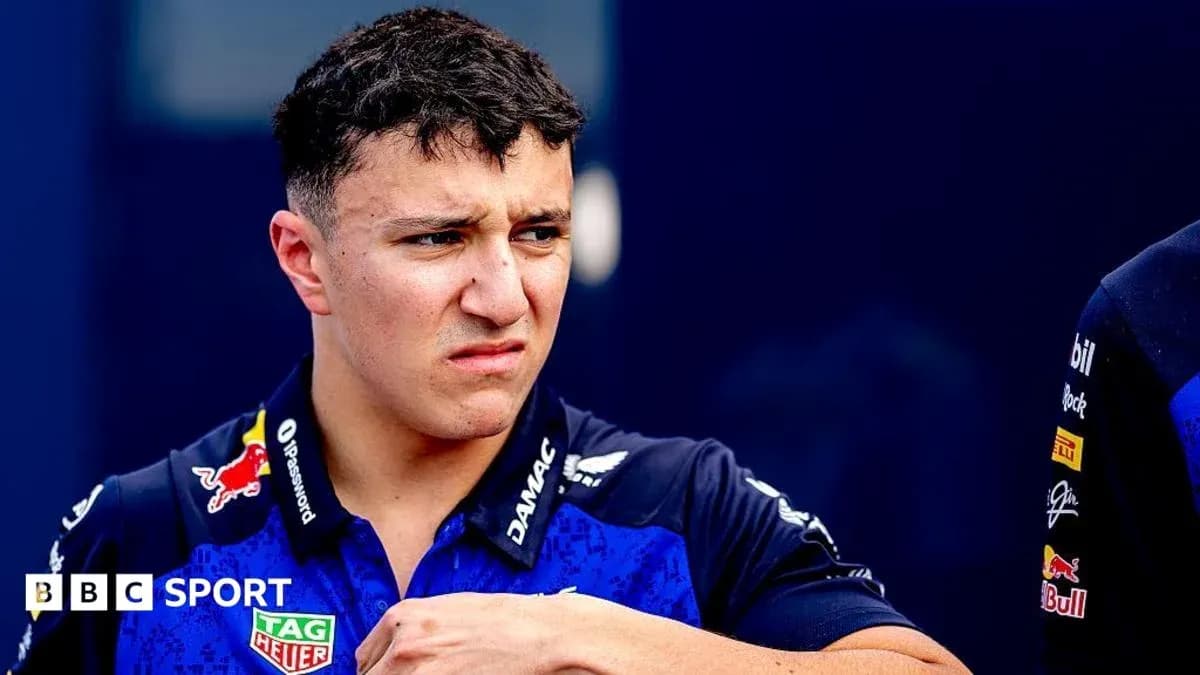
Red Bull Driver Changes in Baku: Hadjar, Lawson, and Tsunoda
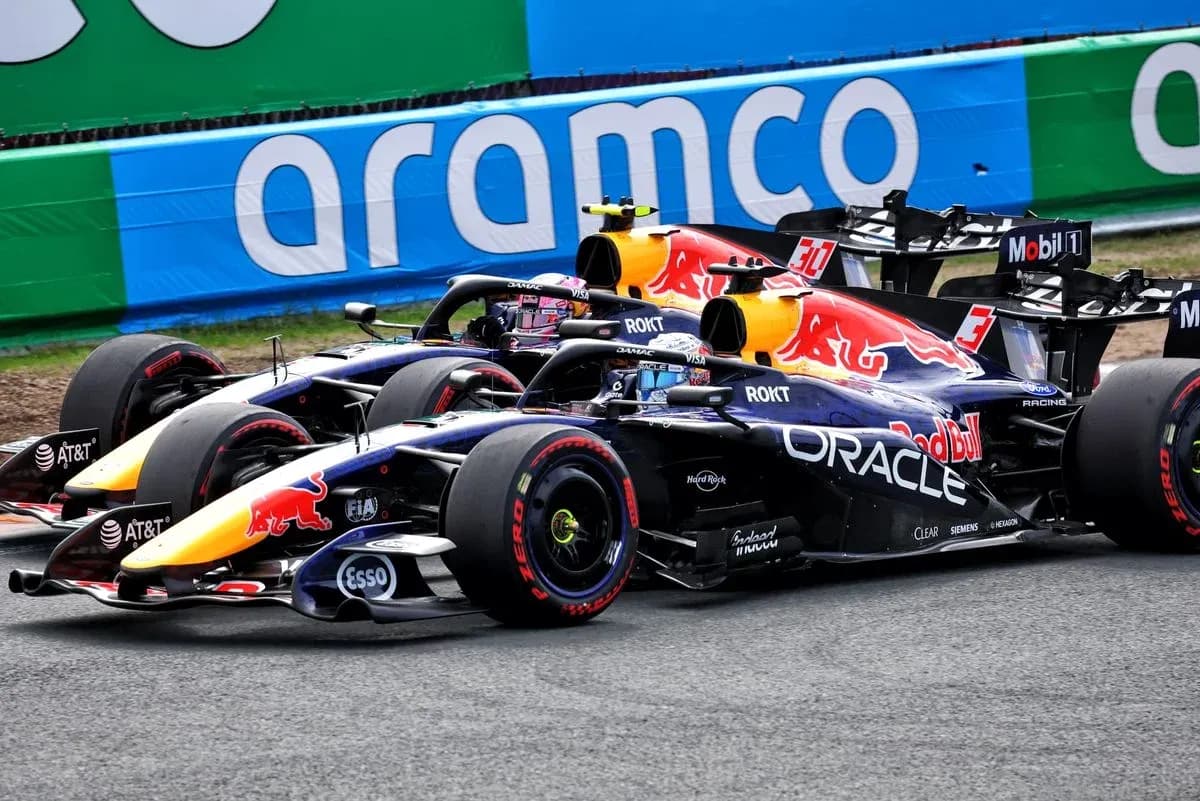
Red Bull’s driver carousel finally pauses in Baku. The senior team gets its preferred pairing back, Isack Hadjar alongside Max Verstappen, while Liam Lawson drops into his familiar Racing Bulls overalls and Yuki Tsunoda returns to the shadows as reserve. Three races, five drivers, one clear message: Red Bull’s talent pool is deep, but the water is getting hotter.
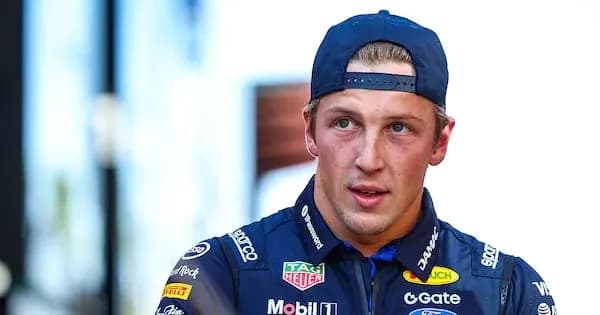
Hadjar steps back into a faster Red Bull
Hadjar returns with his seat intact and his reputation enhanced – but also with the bar raised.
Before his injury, his first 11 races had been the work of a driver quietly doing a very serious job. He averaged 6.5 points per race to Verstappen’s 9.9. Translate that: when Verstappen typically finished around fifth, Hadjar was usually only a place or two behind. For a relative newcomer in a car tailored to a triple world champion, that’s strong.
Now the landscape has shifted.
In the three races Hadjar missed, Verstappen’s average leapt to 12 points per race, even with a crash at Zandvoort on the ledger, thanks to podiums at Monza and the Madring. The car is better. The ceiling is higher. Red Bull’s peak has moved up.
Lawson, parachuted in with no prior running in this Red Bull and shuffled between teams yet again, did a respectable job. He scored points, kept the tally ticking, and never embarrassed himself. But he averaged just 4.7 points per event. That’s the gap Hadjar must now close – and then some.
The pressure is obvious. This is a triple-header, physically and mentally draining, a direct test of his rehabilitation, his sharpness, his ability to snap straight back into Verstappen’s slipstream. If he returns merely at his pre-injury level, Red Bull will feel it has left performance on the table. The team needs him to join its rising tide, not just float on it.
For Hadjar, this isn’t just about proving he’s fit. It’s about proving he belongs in a Red Bull that is clawing its way back towards the front.
Lawson shows he belongs in F1 – just not in the top seat
Lawson’s stock inside Red Bull was already solid before the summer break. He had quietly become the benchmark outside the top four teams, leading the “best of the rest” in the points for Racing Bulls. People in the garage talked about a different Lawson this year: more mature, more meticulous, more ruthless in how he extracted performance.
He doesn’t like the 2026 regulations. He made that clear. But he learned how to live with them. His engineers loved the way he dug into energy management tricks, squeezing lap time out of a package that had no right to be as competitive as it has been.
The plan was simple: keep Lawson and Arvid Lindblad together at Racing Bulls, build on a partnership that worked, and resist the urge to meddle with a line-up that wasn’t broken.
Then Red Bull called.
The unexpected second chance in the senior team offered Lawson the one thing he never really had in that bruising 2025 stint: a fair audition. This time, he settled quickly into a tricky car, handled the spotlight, and produced. Twice in the points. The only real low point came at Monza, where starting from the back with an engine penalty made it an exercise in damage limitation from the moment he rolled out of the garage.
Did he do enough to rip up Red Bull’s plans and convince the hierarchy he should be Verstappen’s full-time partner? No. Verstappen’s world is ruthless, and Hadjar still fits the long-term profile Red Bull wants to back.
But Lawson did something just as important for his own career. He proved, conclusively, that he can do the job at the top level and that Racing Bulls would be foolish to look elsewhere as it tries to top the midfield. He’s exactly the kind of steady, sharp operator a rising team needs.
Lawson might not have won the big seat. He did secure his place at the table.
Tsunoda reminds everyone what he is – and what he isn’t
Yuki Tsunoda’s three-race cameo was a reminder rather than a revelation.
Drop him into the right car and he will score points. That has been the story of his four full seasons at Red Bull’s second team, and nothing about his bruising time alongside Verstappen changes that core truth.
At Zandvoort, his first outing in the 2026 Racing Bulls, he was on it immediately. He qualified within a tenth of Lindblad. No rust, no hesitation. Just speed.
Monza brought the first point of his comeback. It should have been a cleaner weekend: a Q1 exit and some sloppy grid positioning at the start left him with more work than necessary, and Audi is still trying to have that point taken away over the grid infringement. But on the stopwatch and on Sunday, he did what he has so often done – found a way into the top 10.
Madrid was a write-off, damage in the race destroying any real chance of a repeat. Yet across the stint, Tsunoda showed why teams trust him as a stand-in. He adapts fast. He doesn’t need endless laps to get comfortable. He can deliver when the car is good enough.
What he didn’t show was the kind of shock-and-awe performance that forces a team to rip up its depth chart. There was no moment where you looked at the timing screens and thought: this guy simply cannot be left on the sidelines.
Tsunoda summed it up himself: “I gave it my all and there’s nothing to regret.” If this does prove to be the full stop on a 114-race F1 career, it’s a far more fitting final chapter than being pummelled, week in week out, by Verstappen in equal machinery.
He leaves – or pauses – as what he has always been: a reliable scorer, not a franchise driver.
Lindblad quietly shifts the balance at Racing Bulls
Arvid Lindblad arrived this season as the lone rookie on the grid, a teenager thrown into a field stacked with experience. He has not looked out of place for a single weekend.
This latest three-race stretch did more than just maintain that impression. It ticked another box: could he lead?
The Lawson–Lindblad partnership has underpinned Racing Bulls’ season. Together, they are the reason the team still sits ahead of Alpine in the constructors’ standings. But with Tsunoda stepping in for Lawson during this spell, the dynamic changed. Suddenly, Racing Bulls needed Lindblad to be the reference, the constant.
He was.
At Monza, his pace was good enough to finish ahead of an Alpine he had no business beating on paper, even accounting for Franco Colapinto’s self-inflicted chaos. At the Madring, it wasn’t perfect, but he still brought home two points – the kind of gritty, unspectacular haul that keeps a team’s season on track.
Zandvoort could have been more. A harsh in-race penalty knocked him out of the points, but even then his presence mattered. He disrupted Pierre Gasly’s race, limiting Alpine’s scoring potential and giving Tsunoda the best shot at opening his own account.
Seven consecutive Q3 appearances now sit next to Lindblad’s name. Racing Bulls still has a cushion over Alpine in the constructors’. And the bosses at Red Bull will have noticed that this is all coming from a driver who is still only 19.
The question isn’t whether Lindblad belongs in F1. That’s been answered. The real question is whether the internal balance of power at Racing Bulls has already tilted his way.
Verstappen needs Hadjar at full tilt
Max Verstappen cares deeply about who sits on the other side of the garage. Not out of sentiment, but because it shapes his own fight.
When Mercedes, Ferrari and McLaren can usually rely on both cars to be in the mix, Red Bull cannot afford to go into battle one-handed. That’s effectively what happened over these last three races. Lawson, for all his effort and the mitigating circumstances, never finished within a minute of the race winner in his Red Bull outings. Verstappen himself was the one who exited spectacularly at Zandvoort, but across the run the team rarely had two cars genuinely in the fight.
A fully fit, fully sharp Hadjar changes that equation.
If he can plug straight back into his pre-injury form – and then climb to meet the higher standard Verstappen has set over the last three rounds – Red Bull suddenly has a second car influencing strategy at the front, taking points off rivals, and dragging the team’s constructors’ challenge forward from its current fourth place.
There’s another layer to this. Hadjar has missed three races. He’s been out of the cockpit for two months. If he comes back immediately on the pace, Verstappen will see it as vindication of something he has argued all along: that F1 2026 is not as physically punishing as it should be.
For Red Bull, for Verstappen, for Hadjar himself, Baku is no gentle reintroduction. It’s the moment they find out whether this reshuffled driver pool can turn promise into points – and whether the second Red Bull can finally start punching as hard as the first.