Pierre Gasly's Unexpected Pole Position at Monza
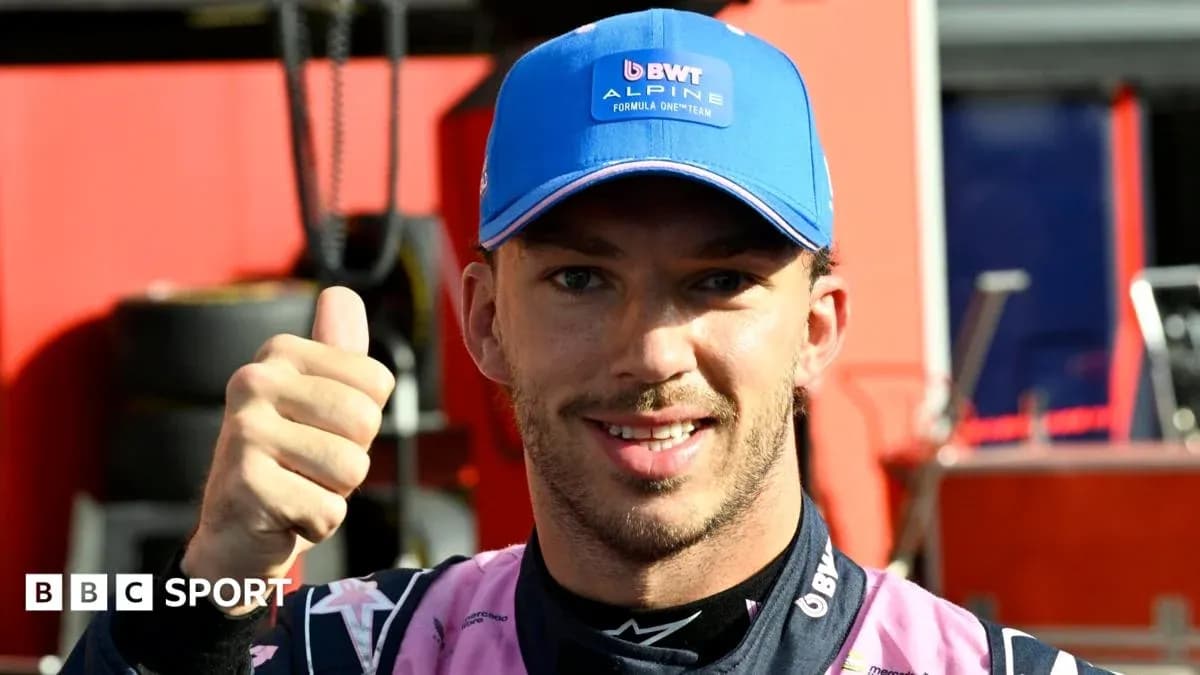
Pierre Gasly’s Saturday in Monza began with a quiet kill.
Fifteen minutes before the most improbable pole lap Formula 1 has seen in years, the Alpine driver was online, picking off George Russell’s chess pieces one by one. Russell, beaten on the board, shrugged it off. He expected to hit back where it mattered.
By the end of qualifying, Gasly had beaten him there as well.
A pole no one saw coming
No-one in the paddock – not Gasly, not Alpine, not even the most optimistic data analyst – had this on their bingo card. Monza has always been a special place for the Frenchman, the scene of his lone F1 victory six years ago in that eerie, empty, pandemic season. That win owed plenty to chaos: a red flag, a restart, Lance Stroll’s mistake, Lewis Hamilton’s penalty.
This was different. This was clean. This was earned.
The Alpine, trimmed out for the Temple of Speed, has been slippery down the straights all weekend. Its low-downforce aero philosophy, bolted to the class-leading Mercedes power unit, finally found a circuit that played to its strengths. An upgrade introduced in the Netherlands has nudged the car forward, and in Monza’s unique configuration, the package suddenly belonged near the front.
Gasly and his crew sensed something from the first timed laps.
Straight out of Q1, he was on top of the timesheets. P1. The original target was modest – just make Q3, stay realistic. Then came P4 in Q2. Then third on the first run in Q3. At that point, this stopped being a cute story and started to look like a genuine shot at pole.
He pushed for it. Through Ascari and the Parabolica the lap teetered on the edge, the car dancing on the limit of grip. When he crossed the line, he knew it was one of those laps drivers store away for years. A lap that deserved something. Pole position, though? That still felt like a stretch.
The stopwatch disagreed.
From forgotten man to Monza headline
Gasly is one of the paddock’s good guys – popular, open, well connected in the drivers’ room. Yet he has long lived in the shadows, his Monza win in 2020 remembered more as a quirk of that strange season than as a marker of elite status.
His Red Bull story is well known. Promoted in 2019, crushed alongside Max Verstappen, and sent back to the junior team before the year was half done. He rebuilt his reputation with strong drives for Toro Rosso/AlphaTauri, waited, and then jumped at the chance to join Alpine, a full factory outfit with big ambitions.
The reality since then has been more sobering. Alpine’s works project faltered. Renault’s engine programme was scrapped. The team pivoted, becoming a Mercedes customer. This season has finally shown a faint upward curve, but until this weekend, Alpine were making more noise off the track than on it.
That changed in one lap on Saturday.
Alpine’s turbulent weekend
The team arrived in Monza already embroiled in controversy. On Friday, the FIA court of appeal overturned Alpine’s successful challenge to Gasly’s pit-lane speeding penalties from Monaco, stripping him of the podium he had briefly inherited. The verdict made sense in terms of consistency – all drivers penalised in Monte Carlo stayed penalised – but left Alpine feeling hard done by, convinced their data showed Gasly had not broken the limit.
The fallout escalated quickly. Flavio Briatore, the team’s de facto boss, detonated a news conference by hinting that one of the four appeal judges had “links” with McLaren, pointing to a charity event in California in 2018 where the judge and a local McLaren garage were both involved. There was no evidence of bias, no substance beyond that flimsy connection.
Andrea Stella, McLaren’s team principal, called the insinuation “insulting” on the spot. McLaren’s anger was obvious. Within a day, the FIA court of appeal issued a rare public statement defending the independence and impartiality of its judges and knocking down any suggestion of outside influence.
Alpine, though, remained furious about the lost Monaco podium. Managing director Steve Nielsen described the emotional swing of the week – from “on the floor” to pole in Monza – as staggering. He underlined a simple point: give Gasly a competitive car and he delivers. Alpine have failed to do that too often. When they have, especially earlier this season, he has answered.
On Saturday, he answered again.
Slipstreams, gamesmanship, and a missed Mercedes plan
Qualifying at Monza is always a slipstream lottery. Gasly found the winning ticket. On his final run in Q3 he slotted into the ideal position: second last in the train, close enough to benefit from the tow, far enough to avoid dirty air.
Around him, others stumbled.
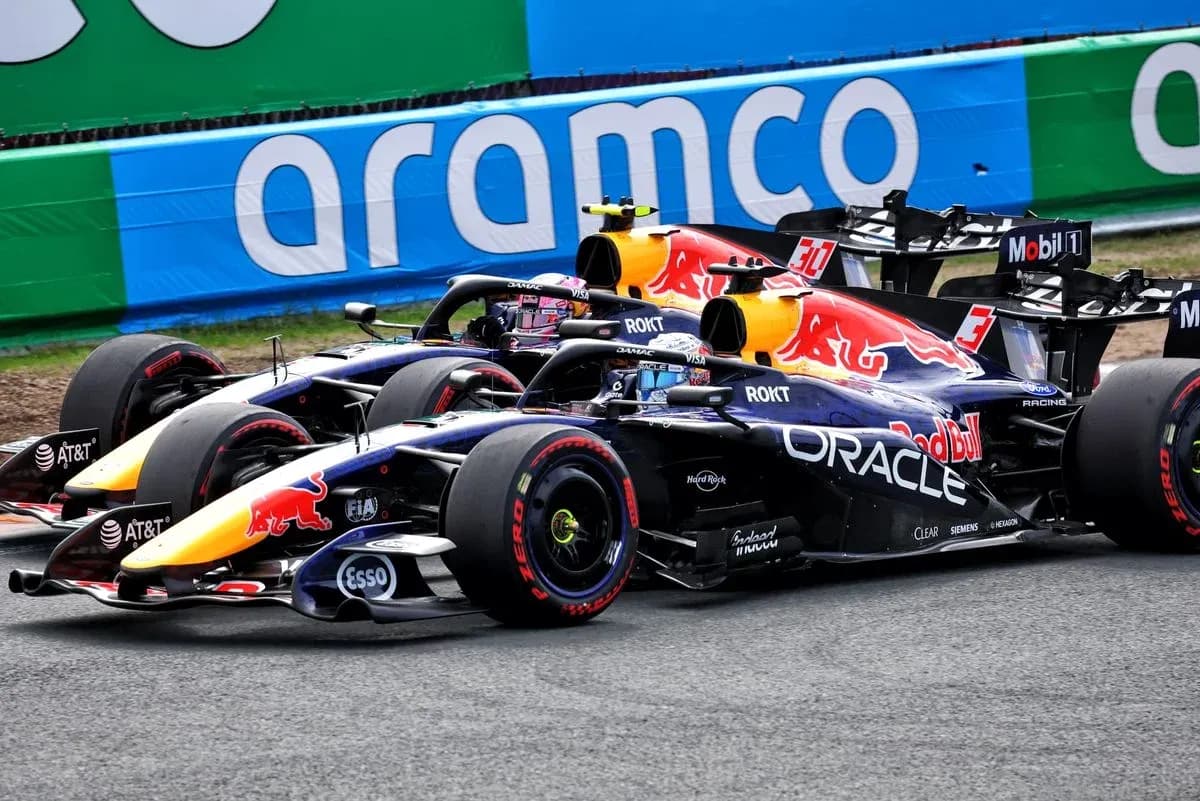
Mercedes had drawn up a plan to use Kimi Antonelli as a tow for Russell. It unravelled when Max Verstappen muscled his Red Bull between the two silver cars at the end of the out lap, hijacking the carefully arranged formation. Russell ended up starting his flying lap a second and a half behind Verstappen, an awkward gap that blunted his run.
Russell made no excuses. He pointed out that Alpine had been quick all day, fastest in Q1 and consistently near the front. He was disappointed not to take pole, but he recognised that Gasly and Alpine had simply executed better when it counted.
The Briton will still start from the front row, and that matters. His title deficit to Antonelli stands at 59 points. The Italian has dominated him for most of the season, but a grid penalty for exceeding engine allocation drops Antonelli to 20th on Sunday. The door is open.
Russell knows it. He called the win “very important” and, perhaps more tellingly, sounded relieved that his own form has sharpened since the summer break. Every lap in the top three, he noted, after a grim run earlier in the year when he couldn’t even stay in the top five.
Antonelli is expected to carve back through to the top six or thereabouts. Even so, this is Russell’s best chance in weeks to carve a chunk out of that 59-point gulf. With his own engine penalty looming in the near future, he cannot afford to waste it.
Can Gasly stay there?
Pole at Monza is one thing. Surviving 53 laps from the front is another.
Friday’s long runs suggested Alpine did not have the race pace to live with Mercedes or Ferrari over a stint. Gasly admitted as much, accepting that on pure speed he is not in the same bracket as the cars around him. The encouraging sign is that Alpine seem to have found more pace from Friday to Saturday. If that trend continues into race day, he might just have a fighting chance to hang on longer than expected.
He will need everything: a clean launch, calm tyre management, and a car that doesn’t melt its rubber under pressure from behind. Overtaking at Monza is never as straightforward as the layout suggests. Long straights help, but the DRS trains can lock the order in place. Track position still counts for plenty.
Gasly starts with that in his pocket.
Ferrari fumble again at home
Behind the front row, Ferrari’s story feels familiar.
This is the third race in succession where operational mis-steps undermined what looked like a stronger qualifying result on raw pace. At Monza of all places, with a fresh engine spec in the back of the car, the timing could hardly be worse.
Both cars flirted with elimination in Q2. In Q3, Charles Leclerc left the pits at a moment that left Lewis Hamilton sitting in the garage without wheels on his car, unable to join the slipstream queue in time. Hamilton’s final run, like Russell’s, lacked the ideal tow.
After Oscar Piastri’s three-place penalty for impeding Liam Lawson, Leclerc and Hamilton will line up third and fourth. On paper, that puts Ferrari in the fight. On the evidence of the last three Saturdays, they will still wonder how much more there might have been.
Hamilton, level with Russell in the standings and also 59 points adrift of Antonelli, hinted at the bigger picture. He talked about the need for Mercedes to work as a team to attack the championship leader, about the scale of the deficit and the urgency of coordinated strategy. He stopped short of openly demanding priority over Leclerc, but the undertone was clear: there is no room for internal charity when the benchmark car is still the fastest on the grid.
A race loaded with subplots
So Monza lines up with a pole-sitter who wasn’t supposed to be there, a title contender who must seize his moment, a home team under scrutiny for its own errors, and a championship leader starting from the back with the pace to cut through the field.
Gasly has already outplayed Russell once this weekend, quietly, on a screen, with a chessboard between them. On Sunday, 53 laps and a grid of angry heavyweights stand between him and one of the great modern Monza stories.
This time, there will be no empty grandstands to mute the noise.