Pierre Gasly Stripped of Monaco Podium After ICA Ruling
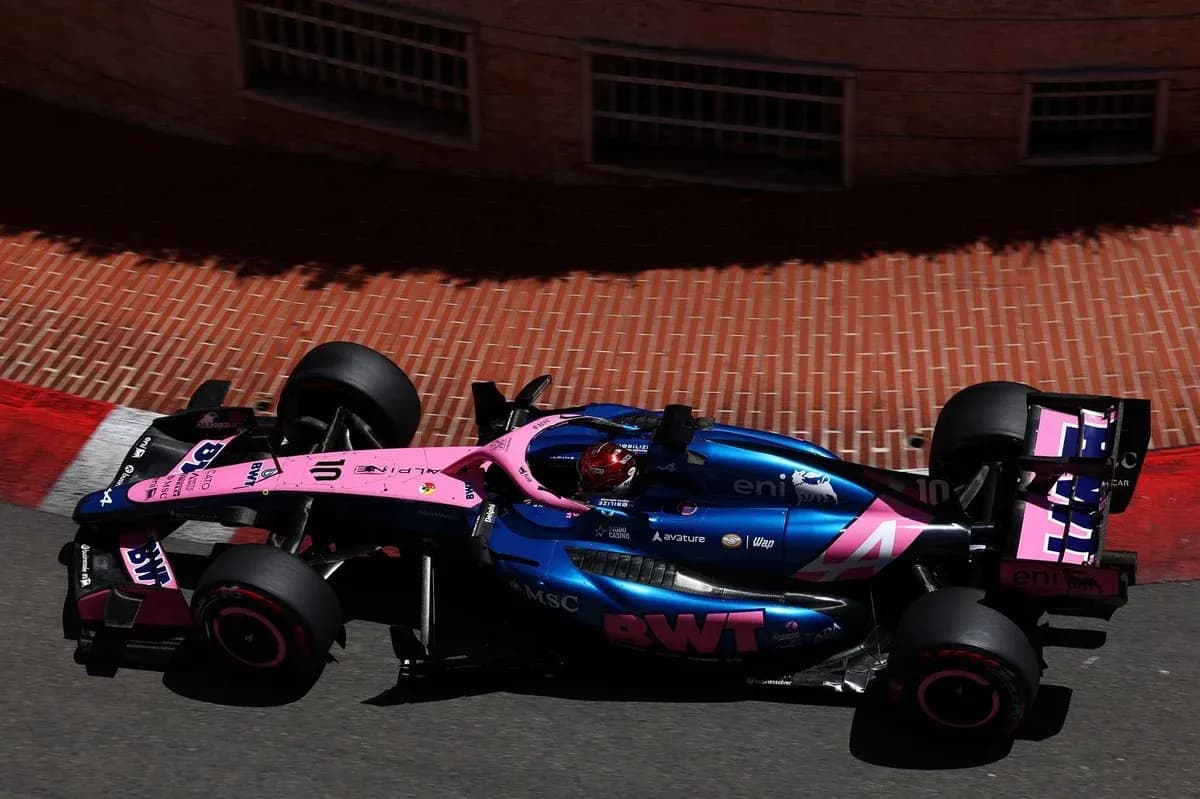
Pierre Gasly’s Monaco podium is gone again. This time, for good.
The Alpine driver has been stripped of his third place at the 2026 Monaco Grand Prix after the FIA’s International Court of Appeal (ICA) ruled that his pitlane speeding penalties must stand, ending a messy, months-long saga with a hard legal line.
From podium joy to legal maze
Gasly was one of several drivers flagged for pitlane speeding in Monte Carlo, in a race already defined by fine margins and tighter-than-usual calls. It later emerged that the pitlane timing system itself was flawed: the first two timing loops were misaligned by 77cm, a small but crucial discrepancy that triggered an unusually high number of infringements.
Oscar Piastri, George Russell and others served their penalties during the race. Russell even took an incorrect penalty, which then escalated into a drive-through. Gasly’s situation was different. His two five-second penalties were applied after the chequered flag, dropping him from a celebrated third to seventh.
That timing opened a door. Alpine used it.
With the penalties added post-race and the pitlane measurement error acknowledged, Alpine requested a right of review. On 12 June, FIA stewards accepted the argument and overturned Gasly’s sanctions, putting him back on the podium. But that ruling only applied to him. The drivers who had already served penalties on track – and had their races shaped by them – were left with no such reprieve.
Red Bull’s Isack Hadjar and McLaren’s Piastri were the biggest losers. They slipped from third and fourth to fourth and fifth in the reworked classification. Red Bull and McLaren both appealed to the ICA, backed by Racing Bulls – whose drivers also dropped a place – and Motorsport UK.
The fight moved from the streets of Monaco to the courtrooms of Paris.
Courtroom verdict: penalties stand
On Friday, the ICA delivered its answer. The penalties stay. Gasly’s podium goes.
The ruling sends Gasly back down to seventh and hands Hadjar the third place he had originally celebrated after the race. The Frenchman’s joy in Monte Carlo, restored once already, has now been torn away a second time.
Central to the ICA’s reasoning was the question of proof. Alpine argued that because of the 77cm discrepancy between the timing loops, the system had misread Gasly’s speed and unfairly penalised him. The Court was not convinced.
Alpine, the ICA said, could not prove “with full certainty” that Gasly had actually travelled a longer distance in the pitlane than the system recorded. His shorter time between the timing loops, the Court noted, could be down to “a shorter path, greater speed, or a combination of both.” In other words: the data didn’t clear him beyond doubt.
On another key point, the ICA drew a sharp line between Gasly’s case and that of the others. The fact that some drivers had already served their penalties during the race “cannot be an obstacle to the cancellation of an illegitimate sanction,” it stated, because those penalties were taken “at the discretion and choice of the team.”
To argue that Gasly’s penalty must stand simply to avoid “sporting unfairness” to others, the Court said, would itself be “inconsistent with sporting fairness.”
The law, in the ICA’s eyes, had to be applied cleanly. Even if the outcome felt harsh.
Alpine furious but resigned
Alpine’s reaction was swift and stinging.
In a team statement, it spoke of “disappointment and frustration” with the Court’s decision and stood firm on its belief that Gasly had not broken the pitlane speed limit at any point.
“While we disagree with the decision, and still fully maintain that Car #10 did not exceed the Pit Lane speed limit at any point during the race, the team acknowledges the decision of the judging panel from the recent hearing in Paris,” the statement read.
The team called the punishment “unjust” but accepted there is nowhere left to go. No further appeal. No more legal escape routes. Only the championship table, now corrected again, and the task ahead.
“While the result is not what we had hoped for, as we feel that we have been unjustly punished, the team is firmly focused on continuing to improve its performance on track and remains in a close and very competitive Championship fight.
This outcome will not deter the team’s efforts and motivation in achieving its objectives by the end of the season.”
The words carry the tone of a team trying to move on, even as it feels the sport’s system has failed one of its drivers.
FIA promises a hard look in the mirror
The FIA, for its part, sought to protect its stewards while accepting that the structure around them needs work.
In its own statement, the federation noted the ICA’s decision, which “upholds the appeals of McLaren F1 Team and Red Bull Racing against the decisions of the stewards contained in document 99 of the Monaco Grand Prix, effectively overturning those decisions.”
The governing body stressed that stewards operate in a very different environment from the Court. At a race weekend, decisions are made under intense time pressure, with limited legal input and a need to keep the event moving. The ICA, by contrast, can draw on extensive legal counsel, detailed arguments and deeper evidence.
Even so, the FIA acknowledged that Monaco had exposed weaknesses.
“The FIA is reviewing the methodology and operation of the current Formula 1 timing system and the related regulatory matters. It will also be reviewing other judicial procedures and operations including the right of review and the appeal processes.
The FIA is fully supportive of the Stewarding process and the independence and objectivity of the diverse panels of Stewards who are an integral part of global motorsport.
“Stewards’ decisions are taken in a different environment to that of the Court, whereas the Court has access to extensive and additional legal counsel input, arguments and evidence.
The FIA Stewards constantly review their processes and take part in extensive professional development. Every decision of the ICA is carefully examined by FIA Stewards ensuring a process of continuous improvement.”
The message is clear: the stewards are not being hung out to dry, but the system around them cannot stay as it is.
A podium that wouldn’t sit still
In the end, the 2026 Monaco Grand Prix will be remembered as much for its paperwork as its racing lines.
Gasly stood on the podium. Then he didn’t. Then he did again. Now, officially, he doesn’t. Hadjar, who originally celebrated third on the day, regains that result months later, this time not with champagne on the balcony but with a line on a revised classification sheet.
For Alpine and Gasly, it is a brutal lesson in how thin the margins are in modern Formula 1 – not just on track, but in the regulations, the timing loops and the courtrooms that sit above the sport.
The FIA promises change. Teams will demand it. The next time a race turns on a few centimetres of timing error, the paddock will remember Monaco and ask a simple question: has the sport really learned enough from this?