Pierre Gasly's Monaco Grand Prix Podium Stripped Again
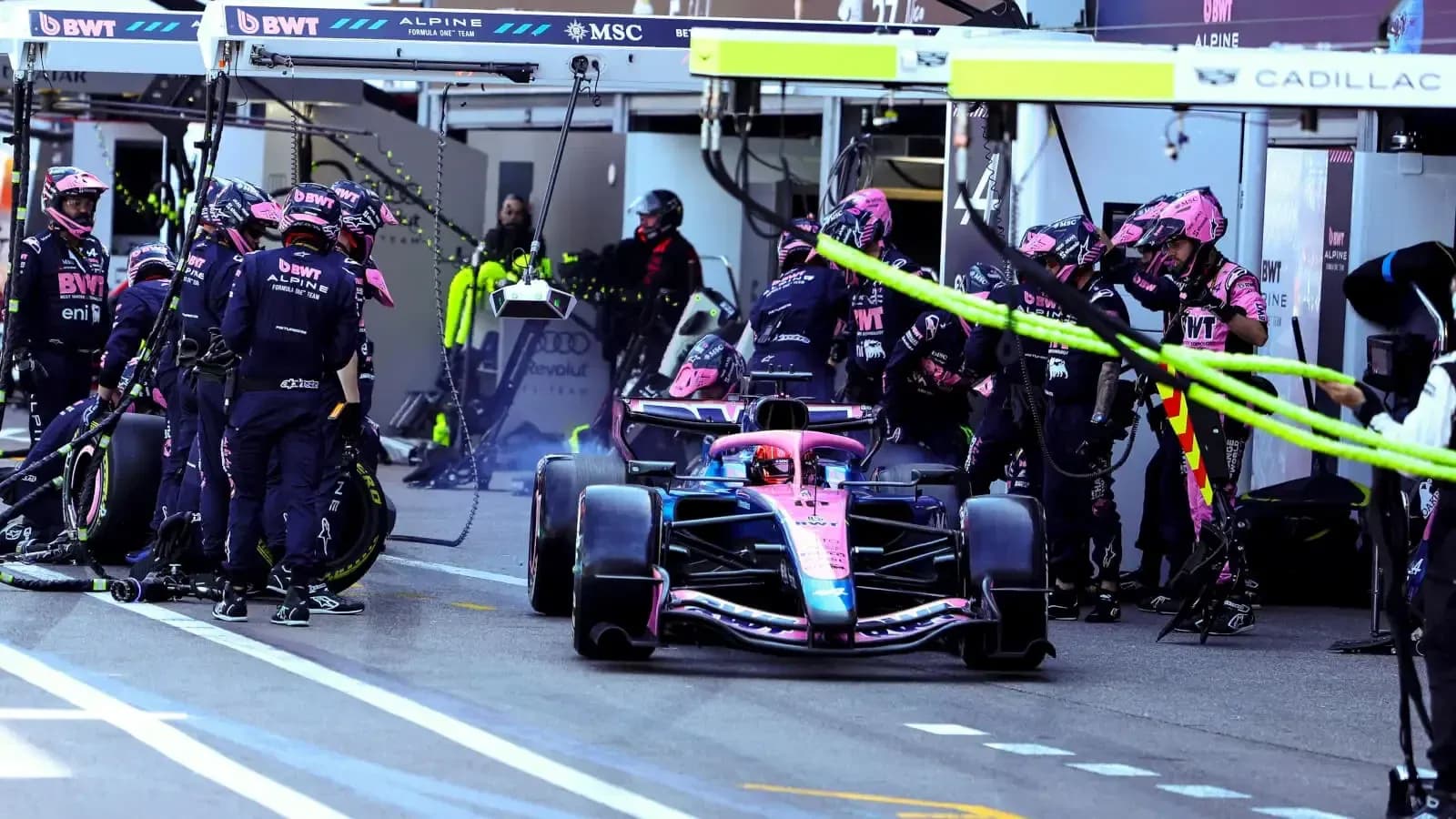
Pierre Gasly has lost his Monaco Grand Prix podium – again.
Three months after the Alpine driver stood on the rostrum in Monte Carlo, and weeks after he thought he had won his legal fight to keep that third place, the FIA’s International Court of Appeal has put him back down to seventh. Red Bull’s Isack Hadjar is restored to the podium, and a long, messy argument over a few centimetres of pitlane and a handful of tenths has finally swung the other way.
From street glory to legal labyrinth
On the road in June, Gasly finished third in Monaco. Two five‑second penalties for separate pitlane speeding infringements initially dropped him to seventh once the chequered flag fell.
Alpine fought back. The team argued that the stewards could not actually prove Gasly had exceeded the 60 km/h limit because of uncertainty over the timing beams and the distance used in the official calculation. With the penalties served only after the race, Alpine secured a right of review and convinced the stewards to rescind both sanctions. Gasly’s podium was reinstated.
That, though, lit the fuse.
McLaren and Red Bull, whose drivers had taken and served similar penalties in-race based on the same timing system, appealed to the International Court of Appeal in Paris. Their case was simple: the stewards had been wrong to overturn their original decision and wrong to treat Alpine differently to everyone else.
On Friday at Monza, the Court sided with them. The two five‑second penalties returned, Gasly slid back to seventh, and Hadjar moved back into third.
The challenge: one benchmark for all
McLaren and Red Bull framed the issue as one of sporting fairness and equal treatment.
Six drivers had been flagged for pitlane speeding in Monaco. Five took their penalties during the race. Gasly’s were deferred until the end, which gave Alpine the window to challenge. The two teams argued that all competitors had raced under the same official timing system, calibrated by FOM and used by the FIA stewards to police the pitlane limit. That system, they said, had to be the authoritative benchmark.
The timing worked on an average speed between two loops at the start and end of the pitlane, not an instantaneous speed trap. The distance used in the system was 2692 cm. Teams set their pit limiters and strategies around that figure.
Alpine’s successful review before the stewards had hinged on a different reading of the rules: the regulations did not explicitly state that the official timekeeper’s method was the only way to determine whether a driver exceeded 60 km/h. If the governing documents didn’t lock in the timing system as the sole arbiter, Alpine argued, the question became a pure factual one – did Gasly actually go over 60 km/h? With doubt over the distance used, the stewards had decided the answer could not be proven and threw the penalties out.
McLaren and Red Bull pushed back hard. They argued that letting one team overturn penalties after the event by presenting an alternative calculation, when others had already accepted and served theirs, tore at the consistency of safety rules and the reliability of the FIA’s processes.
Motorsport UK, present as an interested third party, backed that stance, warning that if the stewards’ Monaco decision stood, it would suggest that any established, accepted measurement system could be abandoned after the fact on the basis of bespoke recalculations from a single competitor.
The message from the appellants was blunt: there has to be one official yardstick, and everyone must live with it.
Alpine’s fight: centimetres and calculations
Alpine’s counter-attack went deep into the numbers.
The team did not contest the 60 km/h limit itself. Instead, it targeted how that limit had been enforced. The regulations, Alpine argued, did not explicitly bind the FIA to one method of measurement via the official timekeeper. And crucially, evidence had already shown that the 2692 cm distance used in the timing system was not the shortest possible path through the pitlane.
So Alpine set out to rebuild the pitlane.
The team used three methods to challenge the official distance:
- FOM’s GNSS data
- Its own Leica laser measurements
- An independent survey by Ridge & Partners LLP
FOM’s data suggested the relevant minimum distance was 2615 cm, not 2692 cm. Using that shorter distance, Gasly’s recorded times in the pitlane would have put his average speed under 60 km/h. On that basis, Alpine insisted the penalties were illegitimate and had to go.
The team also argued that correcting what it saw as a wrong penalty did not undermine safety, that other teams were not treated unequally simply because they had not sought a right of review, and that the stewards had enough evidence to be satisfied their driver had not broken the rule.
How the Court pulled the plug
The International Court of Appeal narrowed its gaze to one core issue: the benchmark used to measure and adjudicate the speed limit.
The Court accepted that the official timekeeping system used a distance parameter between the timing loops, not a physical trace of each car’s exact line. The 2692 cm figure, set by FOM, applied to every driver. Teams had calibrated their pit limiters to it. It was, in effect, the common currency of the race.
Crucially, the Court did not treat 2692 cm as a “wrong” number in the regulatory sense. It was a notional input, not a miscalculated fact. A different geometric analysis of the pitlane might well produce a shorter possible path, but that did not entitle one team to substitute a new distance after the event.
Sporting fairness and equal treatment, the Court said, demanded that the 2692 cm benchmark stand for everyone. That principle, it stressed, sits at the heart of the FIA’s approach to competition.
The judges did leave the door open for challenges to the timing system in future – but only on specific grounds such as malfunction, incorrect timing, misidentified signals or technical failures. What they rejected was the idea that a team could, after the race, replace the common calibration parameter with its own reconstruction for a single car.
The Court put it starkly: competitors cannot be required to calibrate their cars and make decisions based on one official benchmark during an event, only to see that benchmark swapped for a different methodology once the race is over.
Gasly’s own numbers underlined the problem. His times through the pitlane loops were 1.604 and 1.602 seconds. At an average of exactly 60 km/h, those times would correspond to distances of roughly 2673 cm and 2670 cm. FOM had not measured his actual trajectory and had no evidence of the precise distance he travelled.
Alpine’s reconstruction of his line, which the team itself described as its “best estimate”, could not guarantee centimetre‑level accuracy. The Court ruled that it simply did not meet the standard of proof required to show that Gasly’s path was short enough to keep him definitively under the 60 km/h limit.
In the end, the judges concluded that the stewards had erred when they set aside Gasly’s penalties on the basis of that later reconstruction. The appeals from McLaren and Red Bull were upheld, the Monaco stewards’ rescinding decisions were overturned, and the original two five‑second penalties were restored.
The FIA and Alpine were ordered to share the Court costs.
Alpine left fuming – and weighing its next move
Alpine’s reaction was swift and sour. The team made clear it still believes Gasly never exceeded the pitlane speed limit at any point in the race and feels “unjustly punished”, but it acknowledged the Court’s authority and verdict.
Behind the scenes, the frustration runs deeper. The team is now assessing its options, including a possible escalation to the Court of Arbitration for Sport, though no final decision has been announced.
On the governing side, the FIA has taken the ruling as a prompt to look in the mirror. It confirmed it is reviewing the methodology and operation of the current Formula 1 timing system, along with related regulations, and examining its judicial procedures, including the right of review and appeal processes. The federation publicly backed its stewards, while also noting that the Court operates in a different environment, with broader legal input and evidence.
For Gasly, the numbers are brutal: a podium stripped, reinstated, and stripped again. For Hadjar and Red Bull, a hard‑won third place is finally back in the books.
The bigger question now hangs over the rulebook itself. In a sport where titles can swing on thousandths and centimetres, how many more races can Formula 1 afford to run with competitors unsure where the line is drawn – and who gets to redraw it once the flag has fallen?