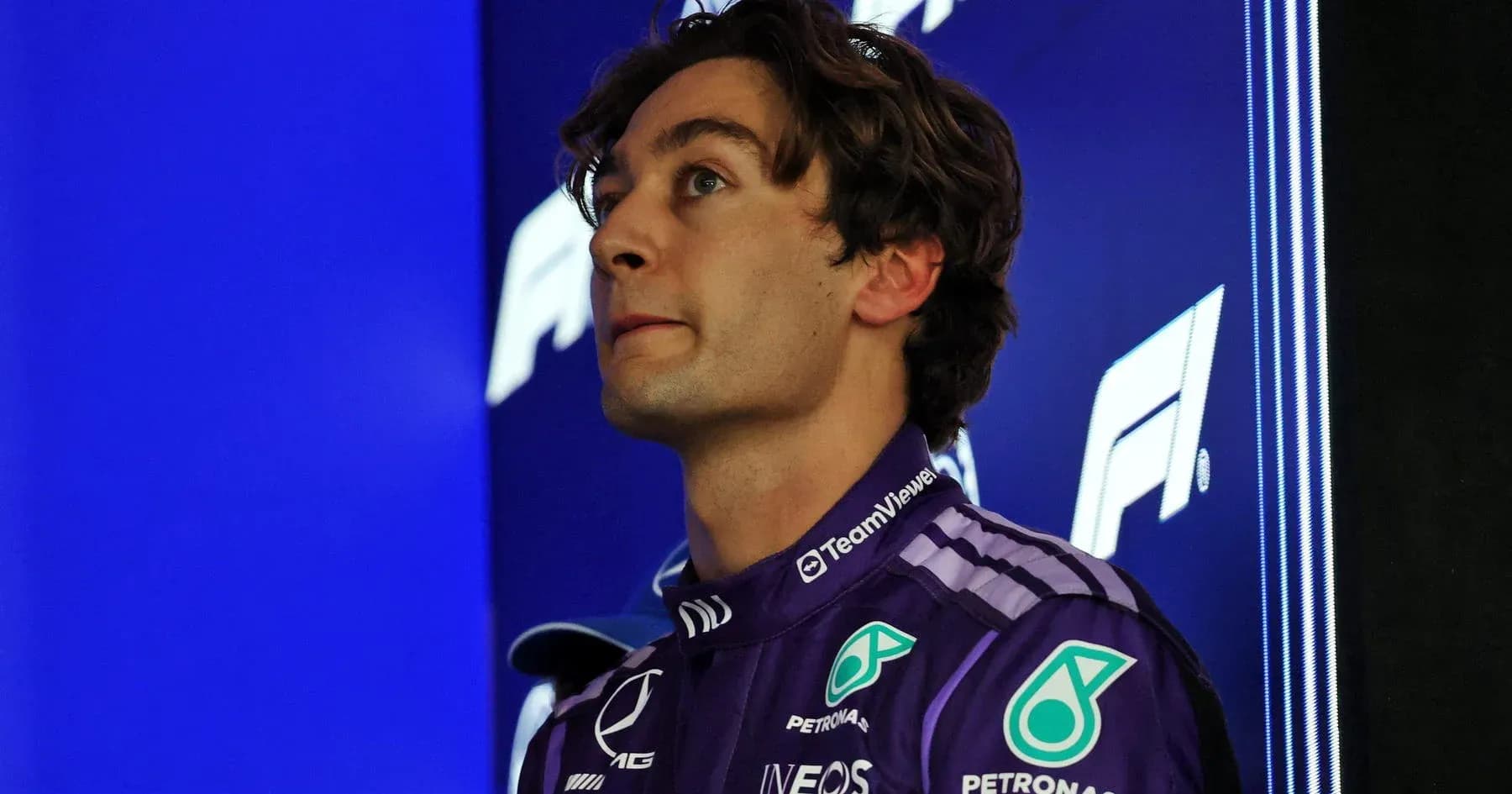
Norris Triumphs Amidst Chaos at Brazilian GP
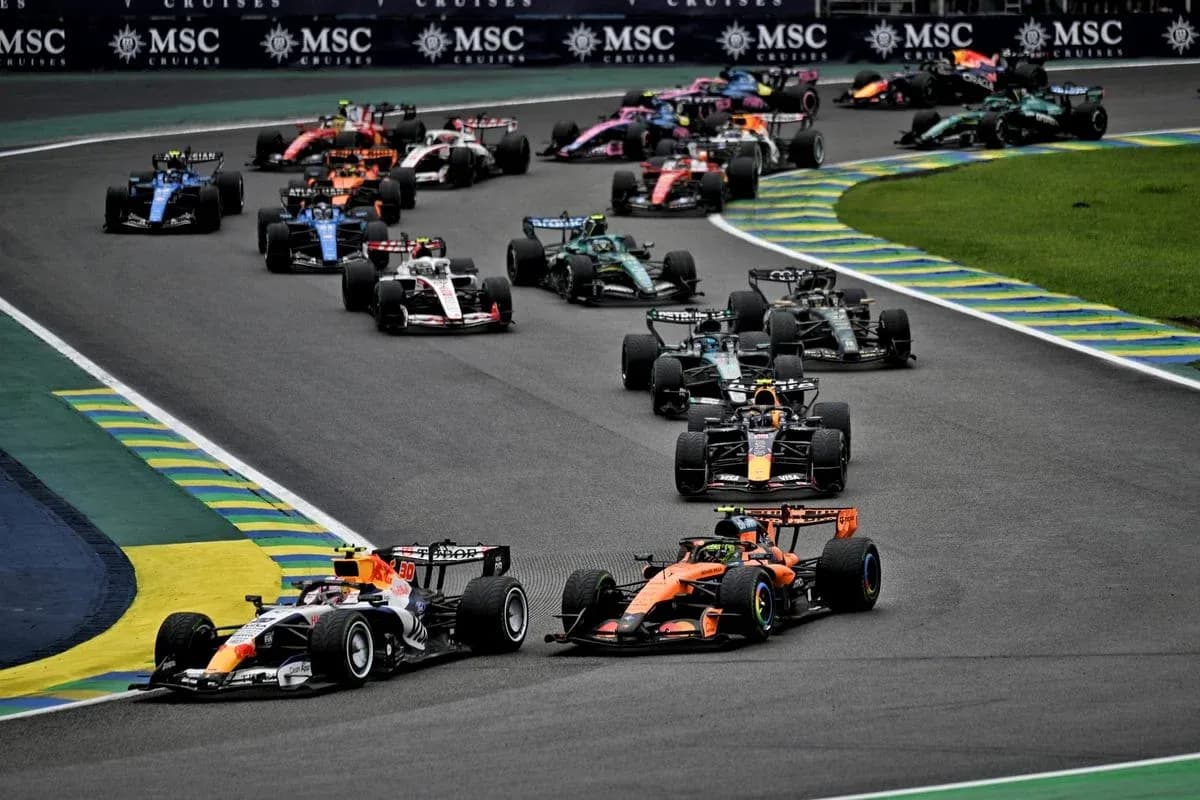
On a day when the constructors’ championship finally returned to Brackley, Mercedes won the war but lost the battle. No podiums, no control, and a race that swung like a pendulum in the São Paulo rain. Interlagos served up a Grand Prix that made champions sweat, rookies stumble and one calm, relentless Lando Norris walk away with one of the finest wins of his career.
Norris Turns Risk Into a Statement Win
Lando Norris called this one of his best victories. He was right.
He fluffed the launch, lost the lead to Kimi Antonelli on the run to Turn 1 and then got bullied out of second by Liam Lawson at Turn 2. Six laps in, the polesitter was already more than five seconds behind Antonelli and staring at a race that looked like it was slipping away.
The turning point came with the first big gamble. McLaren rolled the dice first, bringing Norris in for slicks a lap earlier than Mercedes did with Antonelli. One lap, but it was everything. On a rapidly evolving track, that extra tour on warm tyres let Norris carve huge chunks out of Antonelli’s lead and be in position to strike as soon as the Mercedes driver started to crack.
From there, Norris was ruthless. No errors, no drama, just precision in conditions that punished even the very best. Where Antonelli and others skated off the edge, Norris tiptoed on it and never fell. In a season full of strong drives, this was the one that carried the weight of a champion-in-waiting.
Antonelli’s Off-Day in a Title-Winning Afternoon
Mercedes sealed the 2026 constructors’ crown, ending a drought that stretched back to 2021. The irony? It did it with one of its scruffiest Sundays of the year.
Kimi Antonelli, the new world champion, had the race in his hands early on. He led comfortably, looked composed, and then it all unravelled. A spin from the lead, a slide down the order to fifth and a car that never felt right afterwards. Toto Wolff pointed to a likely set-up or tyre pressure miscue with big consequences, and that summed it up: not a catastrophic failure, just a small error that snowballed.
An unsafe release in the pits brought a penalty that, fittingly, didn’t cost him a position but did capture the tone of his day. Messy. On any other Sunday, this would have stung more. Instead, Antonelli ended it spraying champagne on the podium with a title-winning team, knowing full well that by his 2026 standards, Brazil was a low.
Verstappen Drags a Broken Car to Second
Max Verstappen started 21st. He finished second. That alone would have been a headline. The story underneath was even more striking.
He botched the start himself, holding the clutch incorrectly and crawling away just as the rest of the pack exploded into the first three corners. Any hope of a Hamilton-style charge from the back vanished in that opening chaos.
Once the field settled, Verstappen went to work. He picked his way through with familiar ferocity, then hit the slick-tyre phase and discovered a car that wanted to throw him off the road. Extreme oversteer in the high-speed corners, a feeling of aero loss, and a Red Bull that simply wasn’t right.
Only when he bolted intermediates back on late in the race did the car come alive again. Verstappen described the difference as night and day, convinced something had gone wrong earlier. Even so, he still dragged it to the podium from the back of the grid. It was not the dominant Red Bull of old, but the driver’s imprint was all over that result.
Russell Spins, Recovers, But Never Threatens
George Russell left Brazil talking about positives. On the soft tyre, he reckoned he had the fastest race pace. The numbers backed up at least some of that optimism: fourth place, his best result since his win in Baku five rounds ago, and a rare victory over Antonelli in their intra-team duel.
He also played his part in clinching Mercedes’ first constructors’ title since 2021. On paper, it looked solid.
On track, the defining moment was anything but. Russell’s spin exiting the pits was clumsy, the slow recovery even more painful to watch. That mistake dropped him into a low-risk, high-gamble window, from which he could roll the dice on tyres and fight back through the order.
He did that well enough, but on a day when Antonelli couldn’t convert a dominant early lead, Russell never truly looked like the man to steal the win for Mercedes. Fast in spells, flawed in the moment that mattered most.
Lawson Shines Again as His Future Hangs in the Balance
Every weekend Liam Lawson spends in this car strengthens the same argument: leaving him without a Formula 1 seat next year would be a farce.
At Interlagos, he was comfortably ahead of Racing Bulls team-mate Arvid Lindblad all weekend and launched himself into second place on the opening lap. As the track dried, reality dragged him back, but he still beat both Ferraris once Charles Leclerc’s penalty was applied and emerged on top of the midfield fight for the fifth race in a row.
His 2026 points tally alone outstrips Alpine’s, as Racing Bulls’ closest rival slumped to a fifth scoreless weekend in six. That swing has pulled Racing Bulls to the brink of a historic fifth place in the constructors’ standings, a long-held target dating back to the Franz Tost Toro Rosso era.
Lawson has been central to that charge. And yet, the team – or more accurately, Red Bull – might still cut him loose. The numbers say he deserves better. So does Brazil.
Ferrari’s Flashes of Speed Go Nowhere
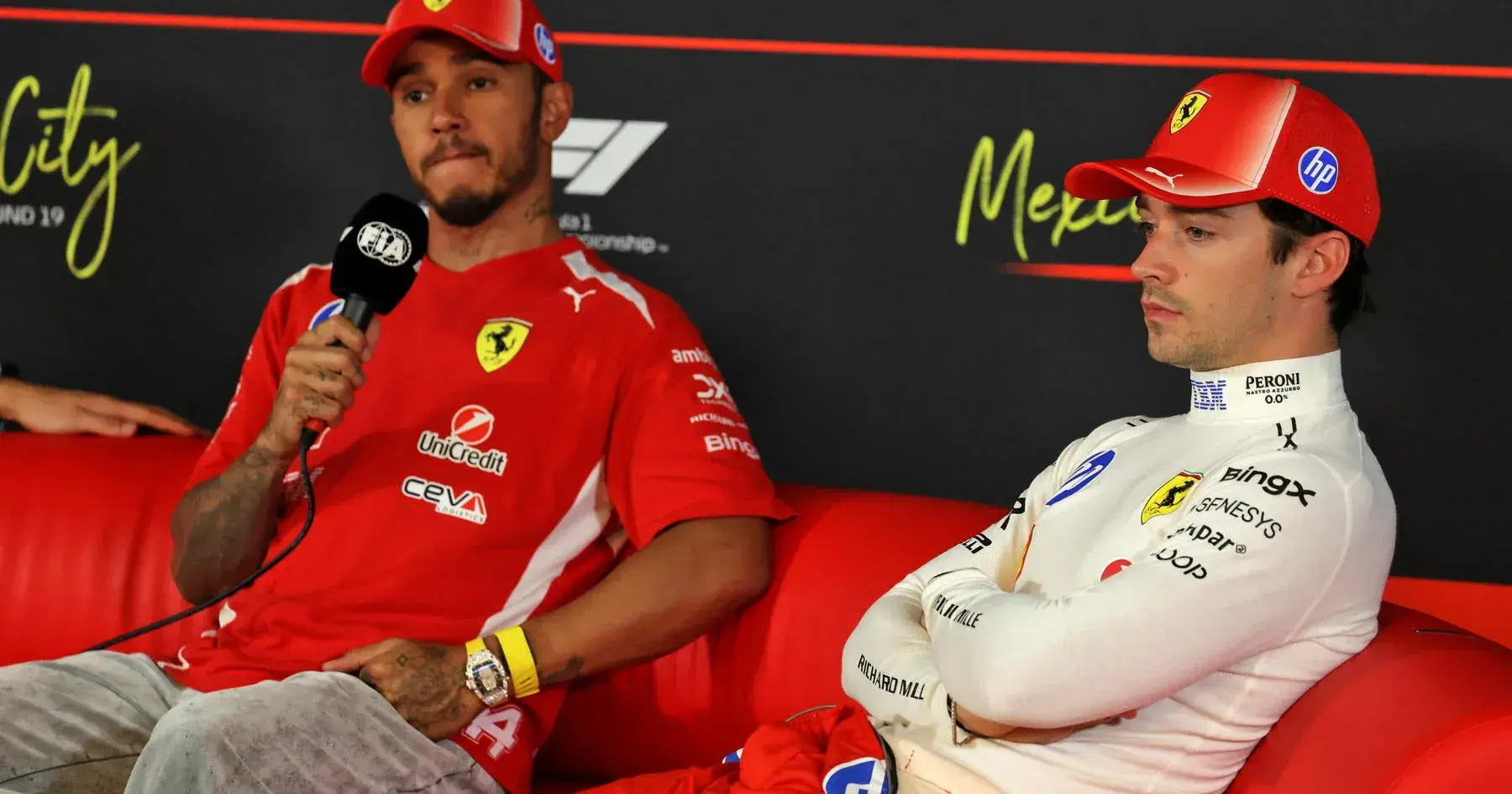
Ferrari left Brazil with six points, its worst haul of the 2026 season. The only consolation was that Charles Leclerc and Lewis Hamilton at least managed to work together cleanly.
Their cooperation counted for little in the end. Grid penalties didn’t help, but Verstappen came from behind both Ferraris to finish second, underlining how much more was possible. Each Ferrari took its turn at looking lost, then suddenly blisteringly fast. The problem was simple: the quick phases were too short, and the slow ones too costly.
Hamilton’s late spin added another layer of frustration. Leclerc’s on-track pass on Lawson for seventh briefly looked like a small salvage job, only for the stewards to hand the place back and drop him behind the Racing Bulls driver. On a day that exposed the field, Ferrari was among the most brutally shown up.
Hadjar Passes the Test for Red Bull
Isack Hadjar’s third podium for Red Bull came with more pressure, more jeopardy, and more questions than the previous two. He answered them.
The race was not straightforward. Midway through the opening stint on intermediates, Hadjar struggled badly for grip and looked vulnerable. But as the race evolved, so did he. His pace on slicks was strong, his decision-making cleaner than many of the established names around him.
The standout moment came with his move on Antonelli for the podium places, a pass set up with composure rather than desperation. Finishing that close to Verstappen will always need context when Verstappen has started last, but this was still a mature, convincing drive in treacherous conditions.
Camara’s Brutal Introduction to F1
Rafa Camara could hardly have picked a tougher set of circumstances for his Formula 1 debut. The weather swung, grip vanished and reappeared, and Interlagos showed its teeth.
He finished 20th and last of the classified runners, two laps down. A string of track limits violations earned him a black-and-white flag, including one infringement at Turn 4 immediately after leaving the pits. Haas as a whole had a miserable day, but even so, this was a weak race that didn’t reflect the promise he’d shown earlier in the weekend.
Friday had been impressive. Qualifying, too, until the crash in Q2 that cost him a place in Q3. On Sunday, he admitted to making mistakes he hadn’t expected to make. He also pointed out that they “experienced everything in just one race”. He wasn’t wrong. It was a harsh lesson, and one he’ll be judged on only if the same errors appear again.
Hulkenberg’s Single Point That Might Matter
On paper, dropping from fourth on the grid to 10th at the flag doesn’t scream success. Especially when Lawson, who started alongside him on the second row, ended up between the Ferraris.
Look closer and Nico Hulkenberg’s drive deserved its place in the winners’ column. He fought hard in the chaos, held his ground better than most of his midfield rivals and survived a race that shredded strategies and confidence.
Ollie Bearman, only two places behind him on the grid in the other Haas, plummeted to 17th after a disastrous 20-second pitstop. As Bearman bluntly put it, “when you’re stationary for 20 seconds in the pitlane, it’s game over.” Alex Albon suffered a similar slide, complaining that his Williams “destroyed the inter” and then simply lacked the pace as the track dried.
Hulkenberg picked up a penalty for cutting the track while fighting Franco Colapinto’s uncompromising Alpine, but such was the carnage around him that it didn’t change his final position. One point. It may prove crucial in Audi’s tight fight with Haas for seventh in the constructors’ standings – a battle Bearman now feels Haas is “giving away”.
Bottas’s Non-Start Sums Up the Struggle
Valtteri Bottas didn’t even make it to Turn 1. A cross-threaded wheelnut discovered on the grid jammed a wheel on, and frantic attempts to free it failed. DNS. No laps, no chance, just a sad and faintly embarrassing end to a weekend.
On a day when others found glory in chaos, Bottas never even got to join the storm.