NBA Sanctions Los Angeles Clippers for Salary Cap Violations
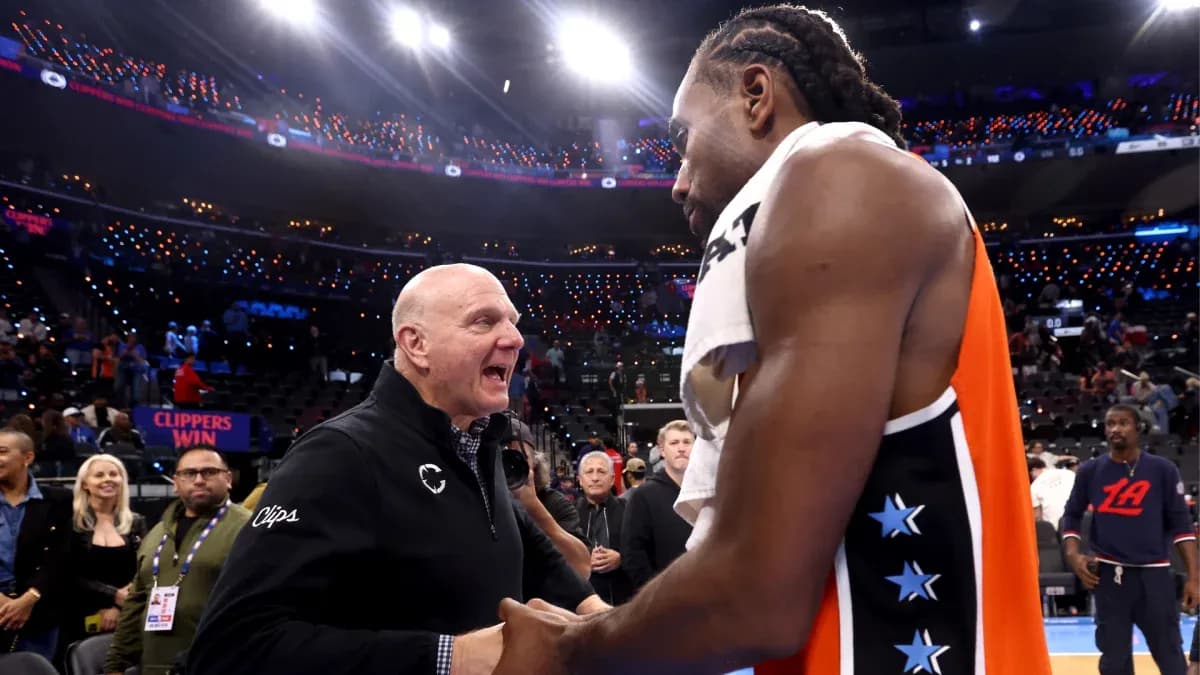
The NBA dropped a hammer on the Los Angeles Clippers on Wednesday, delivering one of the harshest sets of sanctions the league has ever levied for salary cap misconduct. Owner Steve Ballmer has been banned from all league and team activities for a year. The franchise has been fined $30 million and stripped of five future first-round picks. Kawhi Leonard, the star at the center of the storm, has been fined $700,000 but will keep his contract and avoid suspension.
This all stems from what the league called “violating the salary cap circumvention rules” after a nearly year-long investigation into the Clippers’ dealings and Leonard’s off-court endorsement arrangements.
Leonard, who is expected to be traded to the Toronto Raptors after a deal was agreed in June and then frozen while the investigation played out, now heads back to Canada with a cloud lifted but a reputation bruised.
A pattern the league could not ignore
In a blistering statement, the NBA said its investigation “found a pattern of misconduct and multiple significant rules violations by the Clippers organization, a prior offender of the salary cap circumvention rules.”
The core of the case: the Clippers, investigators found, didn’t just stumble into a few messy sponsorships. They “affirmatively initiated off-court income opportunities” and facilitated endorsement agreements for Leonard with four companies — Aspiration Partners, Boingo Wireless, Daktronics and Lockton Insurance — and then induced those companies to sign deals with Leonard by dangling team business in return.
The report also detailed how the team paid personal expenses on behalf of Leonard and his representatives and failed to report improper solicitations for off-court money made on Leonard’s behalf by his then-business manager and uncle, Dennis Robertson.
The league concluded Leonard violated the circumvention rules “through the conduct of Robertson,” saying Robertson pressured the Clippers to help secure off-court income, successfully did so, and that Leonard did not reimburse personal expenses covered by the team.
NBA commissioner Adam Silver did not soften the language.
“The NBA’s collectively bargained system for determining player compensation is a fundamental component of the basketball competition that the league oversees for the benefit of the teams and players and ultimately the fans,” Silver said. “I am deeply disappointed by the flagrant violations of our rules and by the Clippers’ institutional and leadership failures that led to this misconduct. The severity of the penalties reflects the seriousness of the violations.”
The NBA and the NBA Players Association agreed that the penalties are “final and binding on all parties.”
The penalties: sweeping and personal
The numbers are stark.
- The Clippers forfeit five first-round picks in the NBA Draft, from 2029 through 2033.
- The franchise is fined $30 million.
The league also targeted individuals:
- Steve Ballmer is suspended for one year from all league and team activities. The NBA said he “knowingly” sought to help Leonard obtain off-court income, approved a business deal he knew was a precondition for Aspiration to sign Leonard, and failed to create conditions ensuring compliance with circumvention rules.
- Gillian Zucker, president of business operations, is suspended without pay for a year for being “primarily and directly culpable” for the impermissible endorsement arrangements and for providing “false and misleading statements” to investigators.
- Lawrence Frank, president of basketball operations, is suspended without pay for six months for his involvement in the endorsement arrangements and for approving impermissible expenses for Leonard and his family.
- Kawhi Leonard must pay $700,000 to the NBA “in connection with his violations.”
- Dennis Robertson is banned for five years from conducting business or otherwise engaging with NBA teams and affiliates on behalf of any player, employee, or other league or team personnel.
The message from the league office could not be clearer: use off-court money to bend the cap, and everyone involved pays.
From podcast bombshell to full-blown scandal
This saga didn’t begin with a press release. It started with a podcast.
Last September, investigative journalist Pablo Torre released a bombshell episode alleging the Clippers had used off-court arrangements to circumvent the salary cap in their recruitment and retention of Leonard. That prompted the league to open a formal investigation.
The digging quickly unearthed a previously unknown endorsement agreement between Leonard and Aspiration, a now-bankrupt financial firm that had once raised hundreds of millions of dollars on a sustainability pitch. The deal promised Leonard large sums of money that, according to the league’s report, appeared to come with little or no meaningful return for the company.
Then came Daktronics. Last month, it was revealed Leonard had a similar endorsement agreement with the scoreboard manufacturer. Investigators later tied in Boingo Wireless and Lockton Insurance as part of the same pattern: the Clippers steering team business to companies that, in turn, funneled money to Leonard.
The league said the Clippers initiated those off-court opportunities and induced the companies into the deals by offering them business from the team.
The deeper investigators went, the more tangled the web became.
Aspiration co-founder Joe Sanberg was sentenced in June to 14 years in prison for defrauding investors. When the company collapsed, court filings showed Leonard as a creditor. Ballmer had invested $60 million into Aspiration. Dennis Wong, the Clippers’ only minority owner, invested $1.99 million just nine days before a $1.75 million payment went to Leonard. Wong’s daughter worked at Aspiration. The company even agreed to a jersey patch sponsorship with the Clippers that never came to fruition.
Then came the whistleblowers. In 2023, two former Aspiration employees filed an SEC Whistleblower Complaint accusing the company of paying Leonard “an incentivized bonus to circumvent the NBA’s salary cap, disguised as an organic marketing sponsorship agreement.” A former finance employee later appeared on Pablo Torre Finds Out and said they were told not to question Leonard’s deal because “it was to circumvent the salary cap.”
The NBA interviewed Sanberg as part of its investigation and told Judge Stephen V. Wilson in a letter that he had cooperated. Ballmer responded with a victim impact statement that attacked Sanberg’s credibility.
The league pressed on anyway.
Old whispers, new consequences
The allegations around Leonard’s free agency had been floating for years. Now, they have a different weight.
When Leonard hit free agency in 2019, multiple reports indicated Robertson approached several suitors with demands that went far beyond standard contract talks. Bruce Arthur of the Toronto Star reported that Robertson asked the Raptors for ownership stakes in both the Raptors and the Maple Leafs, plus an extra $10 million per year in sponsorship income. When Toronto officials pointed out that local companies would gladly line up to sign Leonard as an endorser, his camp allegedly replied: “We don’t want to do anything.”
The Athletic reported that Robertson made similar requests of the Los Angeles Lakers, including use of a private plane, a home, and a stake in the franchise. The Lakers declined. The NBA investigated those claims at the time and cleared the Clippers of wrongdoing.
Those earlier probes ended quietly. This one did not.
Clippers lash out, Leonard looks ahead
For months, Ballmer, Leonard, and the Clippers publicly denied any wrongdoing. On Wednesday, once the penalties became public, the organization went on the offensive.
“We vehemently reject the NBA’s findings, which are the result of a heavily biased investigation seeking to justify a predetermined narrative rather than facts and evidence,” the Clippers said in a statement. “What the league told us privately differs from what it announced today publicly, and they have not held themselves close to the standard Commissioner Silver set at the start of this investigation to ensure its fairness and accuracy.
“For the past year, we cooperated fully and in good faith and we will now fight just as hard to demonstrate our innocence. We intend to vigorously challenge these findings and penalties through every avenue available to us and look forward to an ethical and impartial arbitration process.”
Leonard’s tone was different.
In a statement released through his new agent, Harrison Gaines, Leonard said he accepts “full responsibility for lapses in judgment” by people within his “inner circle,” while insisting he had “no knowledge of any intent on anyone’s part to circumvent the salary cap.”
“Integrity and respect for this game are fundamental to who I am,” Leonard said. “I accept full responsibility for lapses in judgment by people within my inner circle and regret the distraction this situation has caused the fans and my family. I entered into my contract with the Clippers as well as the agreements in question in good faith, fully committed to fulfilling my obligations and with no knowledge of any intent on anyone’s part to circumvent the salary cap. For 15 years, my priority has been giving everything to my family, the game, and those I share the court with. As I return to Toronto, I am focused on what I can control, closing this chapter, and moving forward with a clean slate.”
A franchise already wobbling
On the court, this was supposed to be the window. The Clippers built a roster to chase a title, and they talked like contenders. The season never matched the rhetoric.
Leonard played well, but the team stumbled out of the blocks, never found a consistent gear, and finished 42–40. They slipped into the Play-In Tournament and were bounced by the Golden State Warriors. By the trade deadline, the front office had already pivoted, sending out James Harden and Ivica Zubac and quietly acknowledging that the present had given way to the future.
Now that future is tied to a draft cupboard that has just been gutted from 2029 to 2033, an owner exiled from operations for a year, and a leadership structure under suspension.
The Clippers insist they will fight the ruling. The league insists the case is closed.
The question hanging over the franchise is simple, and far more brutal than any fine: how do you rebuild trust — with the league, with players, with fans — when the system says you tried to buy an edge that the rules never allowed?