NBA's Harsh Punishment for Clippers Shakes ESPN's Credibility
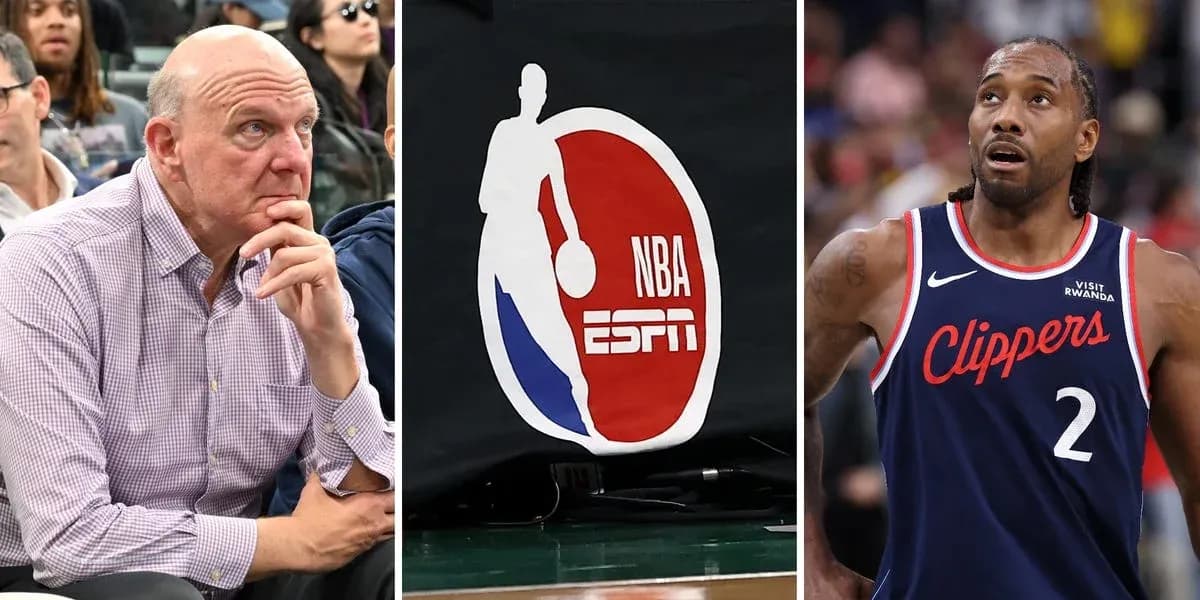
The NBA’s hammer blow to the Los Angeles Clippers hasn’t just shaken one franchise. It has dragged ESPN into an uncomfortable spotlight of its own.
A $30 million fine for the team. A $700,000 hit for Kawhi Leonard. A one-year suspension for owner Steve Ballmer. The league’s ruling on salary-cap circumvention is the harshest punishment of its kind in NBA history — and it lands squarely against the backdrop of a high-profile media split: ESPN on one side, Pablo Torre on the other.
“ESPN vs. Pablo” Becomes Reality
This started long before Adam Silver read out the penalties.
On August 17, ESPN published a story built around three unnamed sources who said the NBA had “no evidence” Ballmer funneled money through Clippers sponsors to pay Leonard. Another anonymous voice dismissed the idea that sponsorship introductions could qualify as cap circumvention, calling that argument “dead on arrival.”
The message was clear: barring a surprise, the Clippers looked likely to skate past any major sanctions.
At the same time, Pablo Torre — a former ESPN employee now at The Athletic — had spent months digging into Leonard’s ties to Clippers sponsors. His reporting, which ultimately won a Pulitzer Prize, painted a very different picture: a web of sponsorship deals closely intertwined with Leonard’s arrival and tenure in Los Angeles.
Online, the clash was quickly distilled into a slogan: “ESPN vs Pablo.” Two competing narratives. One league. One star. One owner with vast influence.
On Wednesday, the NBA made its choice.
League Ruling Vindicates Torre, Raises Questions for ESPN
After a nearly yearlong investigation, the NBA announced that the Clippers and Ballmer violated league rules by facilitating sponsorship deals with Leonard. Silver hit the franchise with the record $30 million fine, suspended Ballmer from league activities for a year, and docked Leonard $700,000.
The Clippers fired back in a statement, saying they “vehemently reject the NBA’s findings,” blasting what they called “a heavily biased investigation.” Leonard, in his own statement, said he accepts “full responsibility for lapses in judgment by people within my inner circle.”
The findings, though, did more than punish a team and a superstar. They effectively validated Torre’s reporting and framing, and they turned ESPN’s August story into a case study in how powerful sports media handles sensitive league investigations.
Public relations experts have been blunt. The problem, they argue, isn’t necessarily that ESPN’s wording was technically wrong. It’s how the piece framed the likely outcome.
“While it might be accurate in the wording, the substance of the story was very misleading,” said Brian McWilliams, VP at LA-based Spelling Communications. Fans read a story that strongly suggested the Clippers would avoid a serious penalty. Then they watched the league drop its biggest punishment ever.
That whiplash is where the damage lives.
Trust, Access, and a Streaming Future
ESPN has staked its future on direct-to-consumer streaming and on the strength of its bond with fans across TV and social media. That bond rests on a simple premise: the audience believes the network is telling them the truth, not protecting the leagues and owners it depends on.
McWilliams warned that the sports giant could “risk a lot of damage to the brand,” especially when the outcome of the investigation stands “starkly in contrast with ESPN’s reporting.”
Brand and communications consultant Sam Gauchier put it even more plainly: “The audience just needs an explanation.”
So far, they haven’t received one. An ESPN spokesperson said the company stands by its mid-August Clippers story and declined to comment further. There have been no corrections, no editor’s note, no public postmortem on how the story was sourced or framed.
That silence grows louder when paired with the league’s own public pushback. After ESPN’s August report, NBA spokesman Mike Bass posted on social media that the story contained “numerous and significant inaccuracies,” promising that those issues would “be made clear once the investigation is concluded.”
The investigation is over. The penalties are in. The league’s stance is now a matter of record.
Pablo Torre’s Omission and the Optics Problem
One detail has especially irritated media-watchers: how ESPN handled Torre himself.
The August story referenced parts of Torre’s findings but did not include a statement from him. Torre later said he had provided ESPN with a comment in which he affirmed that he stood by his reporting and was eager to see the NBA’s conclusions. That comment never appeared.
The omission may not change the facts of the case, but it sharpens the perception problem. ESPN appeared to position its own anonymous sourcing against a journalist whose work the NBA’s ruling has now effectively endorsed.
For Bradley Akubuiro, a partner at PR firm Bully Pulpit International, the task facing ESPN’s communications team is now bigger than defending one article. They have to persuade the public that the organization’s reporting practices live up to “not only the technical accuracies, but the overall expectation of truth that their readers have.”
That “expectation of truth” is harder to satisfy when the league, an outside journalist, and the final ruling all line up on one side — and ESPN’s framing sits on the other.
Shams, Scoops, and the Tightrope of Access
The fallout didn’t end with the written word.
On Thursday, top NBA newsbreaker Shams Charania went on TV and said Leonard “did not have any knowledge” of the salary cap circumvention. In the same breath, he acknowledged that Leonard “pocketed tens of millions of dollars” from Clippers sponsors.
The juxtaposition raised eyebrows. If Leonard profited so heavily from the sponsorship ecosystem at the heart of the league’s case, how far can the “no knowledge” defense really stretch in the court of public opinion?
Torre responded on X with a pointed visual: a screenshot of Leonard’s signature on what was presented as a contract with former Clippers sponsor Aspiration Partners. No caption needed.
McWilliams noted that insiders like Charania, who thrive on breaking news and maintaining relationships, walk “a very fine line between wanting to be first, wanting to be accurate, and also wanting to maintain access, which can be revoked.”
That same line runs through ESPN’s coverage. Access to leagues, teams, and owners is the lifeblood of its news operation. But access can’t come at the cost of credibility, not when fans can see the penalties, read the rulings, and compare them to what they were told just weeks earlier.
The NBA has rendered its verdict on the Clippers. The next verdict — on ESPN’s handling of the story, and on how much trust its audience is willing to extend — will come from viewers who now have more information than ever, and less patience for being steered in the wrong direction.