NBA Punishes LA Clippers for Salary Cap Violations
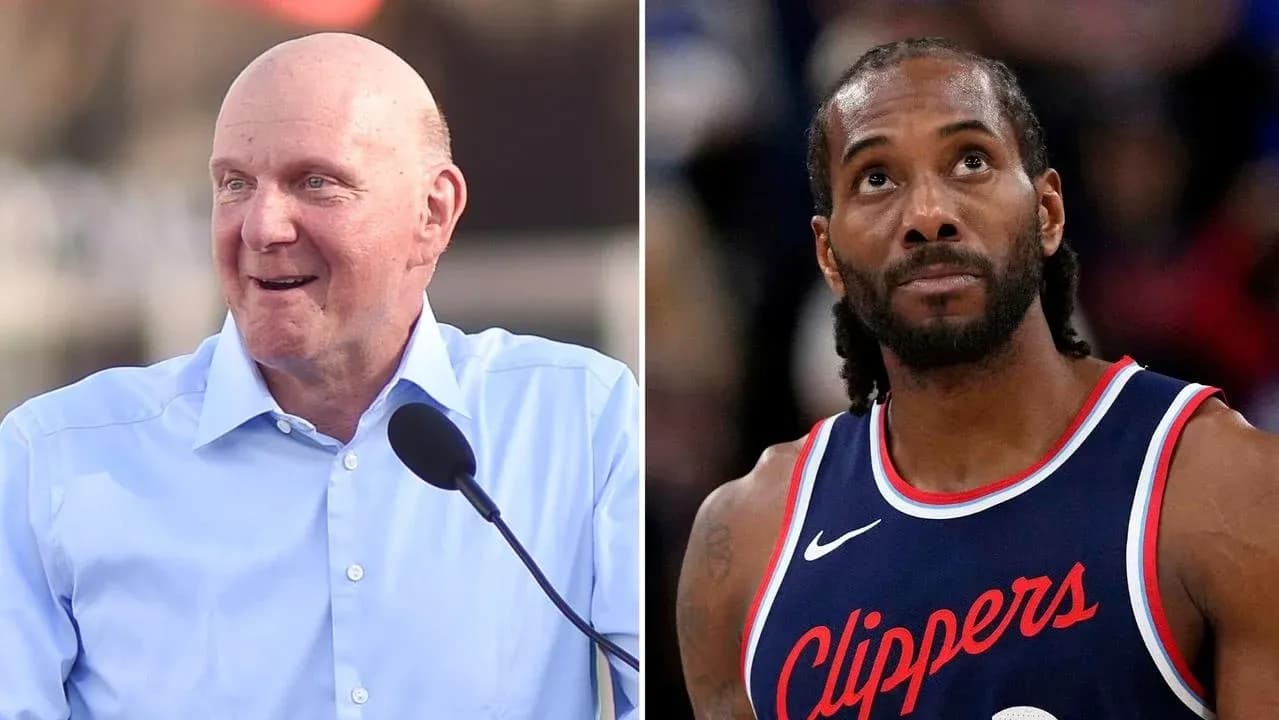
The NBA has dropped a hammer on the LA Clippers, and the echoes will be felt for years.
After a year-long investigation, the league ruled that the franchise violated salary cap circumvention rules by orchestrating off-court sponsorship deals for star forward Kawhi Leonard. The punishment is as sweeping as it is severe: five first-round draft picks forfeited, a $30 million fine, and suspensions for owner Steve Ballmer and two top executives. Leonard himself has been ordered to pay $700,000, while his uncle and former business representative, Dennis Robertson, has effectively been exiled from league business for five years.
This isn’t a routine slap on the wrist. It’s one of the stiffest integrity rulings the NBA has handed down in the modern cap era.
A Pattern, Not a One-Off
In its announcement, the league said its investigation uncovered “a pattern of misconduct and multiple significant rules violations” by the Clippers, calling the franchise a “prior offender” of salary cap circumvention rules.
At the heart of the case: off-court money.
According to a summary prepared by law firm Wachtell Lipton, the Clippers did far more than simply introduce Leonard to potential partners. The league found the organization:
- Initiated off-court income opportunities between Leonard and four companies doing business with the team: Aspiration Partners, Boingo Wireless, Daktronics, and Lockton Insurance.
- Facilitated endorsement agreements between those companies and Leonard.
- Induced those companies to sign on by offering them business from the team.
- Paid personal expenses on behalf of Leonard and his representatives.
- Failed to report improper solicitations for off-court income opportunities made on Leonard’s behalf through Robertson.
The NBA concluded that this web of deals and favors crossed a clear line: they functioned as concealed compensation tied to Leonard’s playing contract, in violation of the league’s circumvention rules.
The league didn’t stop at the organization. It said Leonard, “through the conduct of Mr. Robertson on his behalf,” violated those same rules by pressuring the Clippers to help secure off-court income, benefiting from those opportunities, and failing to reimburse personal expenses the team covered.
Heavy Penalties, Top to Bottom
The sanctions read like a checklist of everything a franchise fears.
The Clippers must forfeit one first-round pick in each of the 2029, 2030, 2031, 2032, and 2033 NBA Drafts. For a team that has already spent years trading away draft capital in the pursuit of stars, losing five more bites at the future is brutal.
On top of that, the league fined the franchise $30 million.
Ballmer, one of the most visible and hands-on owners in the sport, has been suspended from all league and team activities for one year. The NBA said he “knowingly” sought to help Leonard obtain off-court income, approved a business deal he knew was a precondition for Aspiration’s endorsement agreement with Leonard, and failed to ensure his organization followed the rules.
Gillian Zucker, the Clippers’ President of Business Operations, has been suspended without pay for one year. The league called her “primarily and directly culpable” for the impermissible endorsement arrangements and said she provided false and misleading statements to investigators.
Lawrence Frank, President of Basketball Operations, received a six-month suspension without pay for his role in the endorsement arrangements and for approving improper expenses for Leonard and his family.
The organization will now operate under a league-run compliance and monitoring program for five years.
Leonard has been ordered to pay the NBA $700,000. Robertson, the uncle who has long been a key figure in Leonard’s business dealings, is banned from conducting business or engaging with NBA teams and their affiliates on behalf of any player, employee, or league personnel for five years.
This is not just a fine and a warning. It is structural punishment, aimed at the owner’s box, the front office, the star, and his inner circle.
Leonard Accepts Responsibility, Denies Intent
Leonard responded with a carefully calibrated statement, acknowledging damage without conceding intent to cheat.
“Integrity and respect for this game are fundamental to who I am. I accept full responsibility for lapses in judgment by people within my inner circle and regret the distraction this situation has caused the fans and my family,” he said through his agent.
He stressed that he believed everything was above board when he signed.
“I entered into my contract with the Clippers as well as the agreements in question in good faith, fully committed to fulfilling my obligations and with no knowledge of any intent on anyone’s part to circumvent the salary cap.”
Leonard, now returning to Toronto, framed his next steps as a reset.
“For 15 years, my priority has been giving everything to my family, the game, and those I share the court with. As I return to Toronto, I am focused on what I can control, closing this chapter, and moving forward with a clean slate.“
The message is clear: he accepts the hit to his wallet and reputation, but he’s not accepting the idea that he knowingly engineered a cap dodge.
Clippers Come Out Swinging
If Leonard’s tone leaned toward contrition, the Clippers’ stance landed at the opposite pole.
“We vehemently reject the NBA’s findings, which are the result of a heavily biased investigation seeking to justify a predetermined narrative rather than facts and evidence,” the team said.
They went further, accusing the league of saying one thing privately and another publicly.
“What the league told us privately differs from what it announced today publicly, and they have not held themselves close to the standard Commissioner Silver set at the start of this investigation to ensure it’s fairness and accuracy.
“For the past year, we cooperated fully and in good faith and we will now fight just as hard to demonstrate our innocence.”
The organization promised a full-scale challenge.
“We intend to vigorously challenge these findings and penalties through every avenue available to us and look forward to an ethical and impartial arbitration process.”
So the Clippers are not just appealing. They are attacking the process, the motives, and the league’s integrity in one sweeping statement. That sets the stage for a prolonged, combative legal and political battle between a deep-pocketed owner and a league intent on making an example.
A Franchise at a Crossroads
Stripped of five first-round picks, with their owner barred from day-to-day operations and their top executives sidelined, the Clippers now face a future shaped as much by lawyers and compliance officers as by coaches and scouts.
The NBA has drawn a hard line on what constitutes acceptable off-court income for players tied to teams. The Clippers insist the league has overreached and misrepresented the facts.
One thing isn’t in dispute: the cost of doing business in the gray areas of the salary cap just skyrocketed.
Where this leaves the Clippers’ long-term project—and how other franchises recalibrate their own star recruitment tactics—may define the next era of player-team negotiations in the NBA.