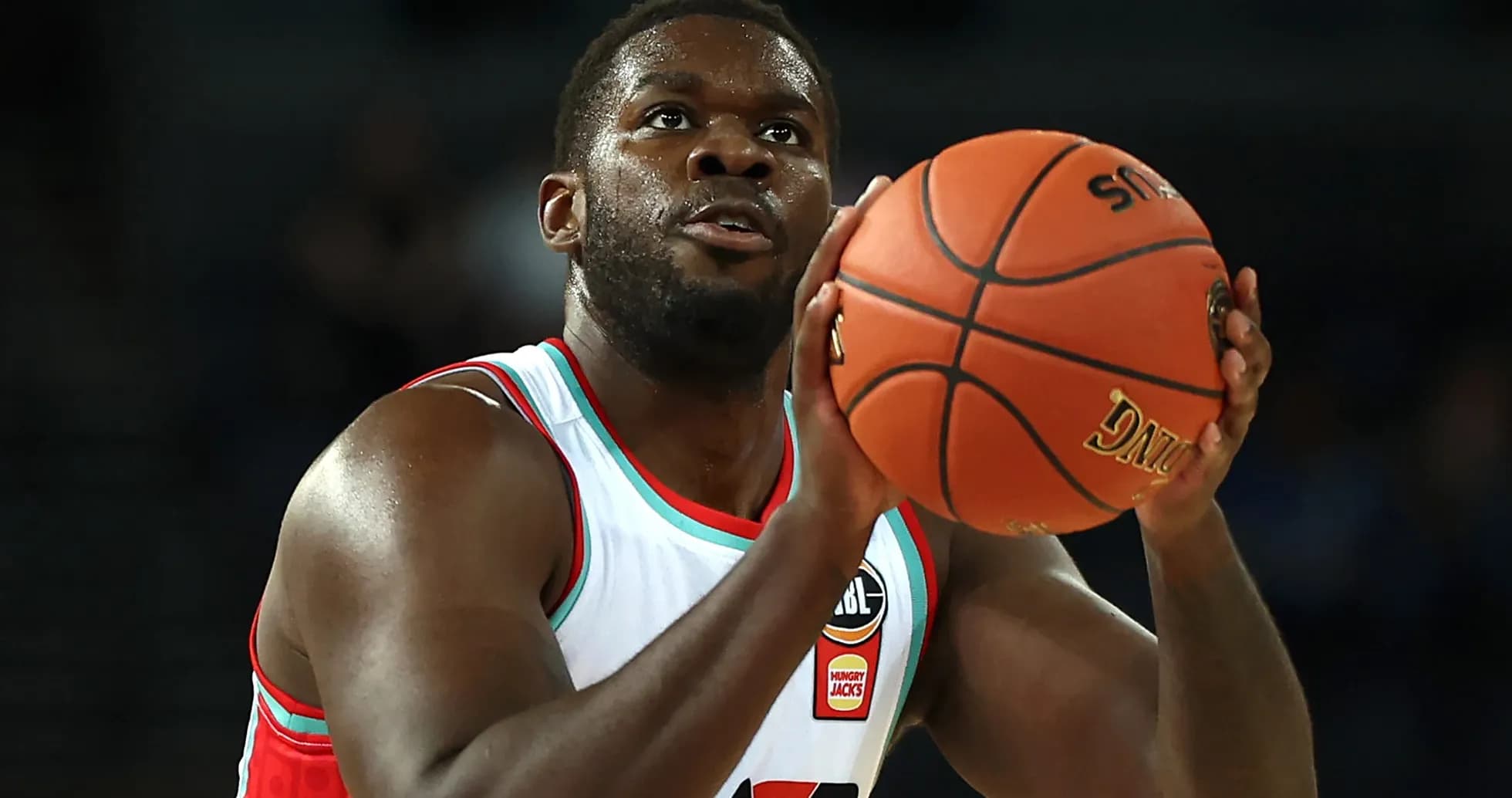
NBA Punishes LA Clippers and Kawhi Leonard for Salary Cap Violations
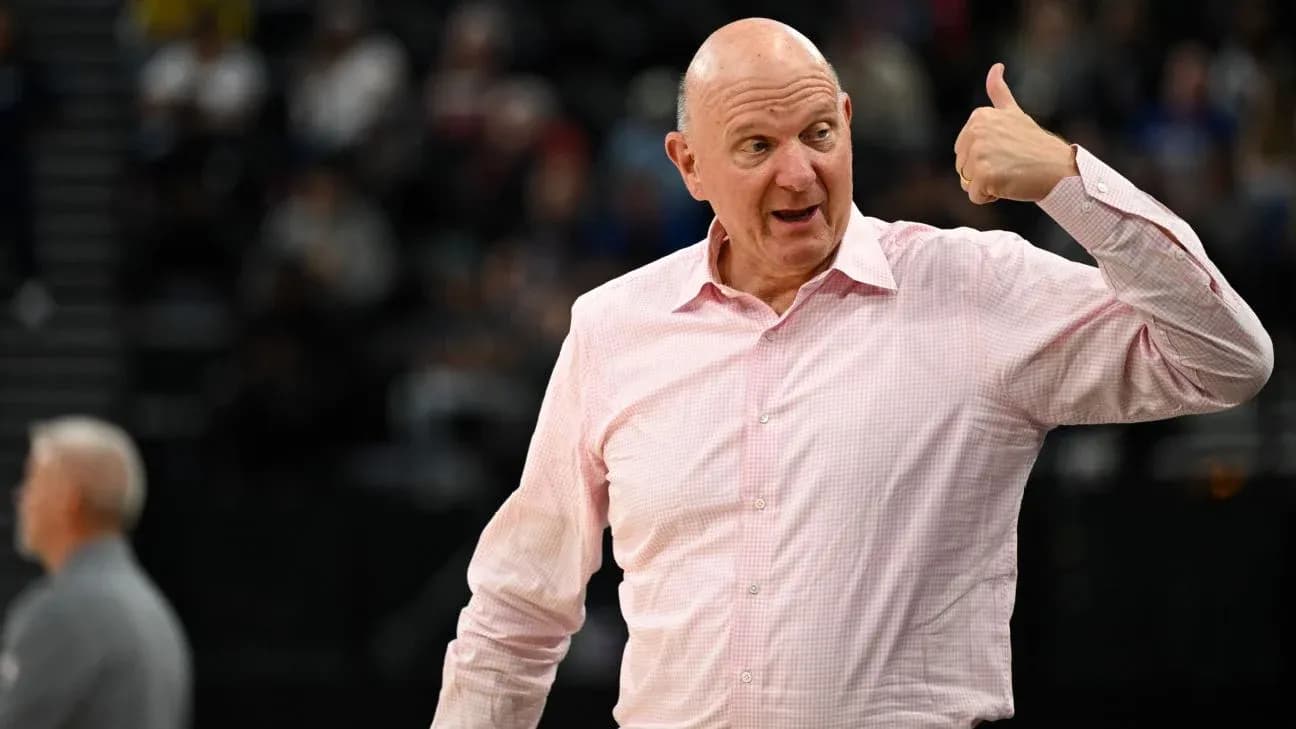
The NBA has seen scandals before. It has not seen many like this.
After a nearly yearlong investigation, the league dropped a hammer on the LA Clippers and Kawhi Leonard on Wednesday, branding the organization a serial violator of salary cap circumvention rules and stripping away a chunk of its future in the process.
A $30 million fine. A one-year suspension for owner Steve Ballmer. A year without pay for team president of business operations Gillian Zucker. Six months without pay for president of basketball operations Lawrence Frank. And the most devastating blow of all: five first-round draft picks forfeited — 2029 through 2033.
Add those to the mountain of picks already sent to Oklahoma City in 2019 to land Paul George and secure Leonard’s free-agent commitment, and the Clippers now stand as a modern cautionary tale. Ten first-rounders, all told, tied directly to the acquisition and retention of one superstar forward.
This is not just a punishment. It is a reset of an entire franchise’s trajectory.
How the case was built
The heart of the league’s case rests on a simple question: where does “helping a player with endorsements” end and “circumventing the salary cap” begin?
Investigators focused on Leonard’s off-court deals with four companies and drilled into the Clippers’ role in those arrangements. The team argued it merely acted as a connector — a middleman introducing Leonard to interested sponsors, a practice permitted under league rules.
The NBA didn’t buy it.
The Wachtell Lipton report, commissioned by the league, concluded that the Clippers went far beyond making introductions. It alleged “multiple significant rules violations,” accusing the organization of orchestrating endorsement structures that effectively funneled extra compensation to Leonard outside the cap.
Emails became a key battleground. Investigators said they showed the Clippers trying to create a paper trail that suggested compliance while, in reality, shaping deals behind the scenes. The report repeatedly rejected the team’s claim that these were “affirmative” or merely “responsive” connections.
One example leapt off the page.
In the case of Daktronics, the scoreboard manufacturer for the Clippers’ new Intuit Dome, investigators said the team steered a kickback from a massive arena scoreboard contract toward Leonard in the form of an endorsement agreement — and even helped set the terms.
In other instances, the report cited millions in “consulting” fees paid by the Clippers shortly after Leonard’s endorsement contracts were executed. The league did not spell out how it obtained every detail but pointed to interviews with executives from the involved companies and contemporaneous notes from Clippers officials.
The totality of the evidence, in the league’s view, painted a pattern: repeated, calculated attempts to get Leonard off-court money tied to his presence on the team, without counting it against the cap.
The penalty mirrored the harshest cap-circumvention case in league history: the Minnesota Timberwolves’ illegal Joe Smith agreement in 2000, which cost them five first-round picks, a record fine at the time and suspensions for ownership and the front office.
This time, the fine ballooned. The NBA hit the Clippers with the maximum $7.5 million circumvention penalty for each of the four companies it found to be part of the scheme, stacking them to reach $30 million.
Why the league hit so hard
The NBA’s report is blunt about Ballmer’s role, even as it stops short of tying him directly to specific transactions.
The league’s investigators accused Ballmer of failing to “create conditions under which his organization abided by the NBA's circumvention rules” and said he “knowingly sought to help [Kawhi] Leonard obtain off-court income opportunities and, in at least one instance, engaged in a significant act of team facilitation.”
There is no smoking-gun email or contract with Ballmer’s signature on it in the report. Instead, the case against him leans on context, internal notes and the behavior of his lieutenants.
Among the most striking details: notes from Lawrence Frank, who appears to have received leniency for cooperating. According to investigators, Frank’s notes say Leonard’s uncle and adviser, Dennis Robertson, complained to Ballmer that Zucker was arranging “introductions” for “bulls--- deals,” adding, “I have to get paid.”
Those same notes, the report says, show Ballmer telling Robertson that Clippers staff were “collective workers to try and help [Leonard] achieve his financial goals.”
The league tied that mindset to a broader pattern. The Clippers had already been fined $250,000 in 2015 over a DeAndre Jordan pitch that crossed the line. They were investigated again in 2019 over Leonard’s original signing — cleared then, but warned and put through a seminar on the rules.
This time, the NBA decided the club had not learned its lesson.
Even so, the punishment could have been worse. In the Joe Smith case, the league voided the player’s contract and stripped his Bird rights. Leonard will keep his deal, his Bird rights remain intact, and he will not be suspended. His personal hit is a $700,000 fine.
The Clippers, and the Toronto Raptors, are also allowed to proceed with their agreed blockbuster trade involving Leonard, a deal that would send two first-round picks back to LA.
The cost of keeping their star on the floor, though, has rarely been higher.
The Clippers plan to fight
The league and the NBPA have agreed to the penalties, and the NBA framed them as “final and binding.” The Clippers are not treating that as the last word.
In a statement, the franchise vowed to “vigorously challenge these findings and penalties through every avenue available to us” and said it looked forward to an “ethical and impartial arbitration process.”
Ballmer’s attorney, David Kelley, went further, calling the decision a “gross injustice” and promising to explore “every legal remedy.”
The Clippers have long insisted, publicly and privately, that they did not funnel money to Leonard through Aspiration or other partners. One source close to the team previously told ESPN that the organization would “fight that to the end,” including through arbitration.
Ballmer has the resources and the will to wage that battle. What he does not have, at least for now, is a clear path to overturning league discipline that has already been blessed by the players’ union.
A future stripped of first-round capital
On the court and in the front office, the implications are brutal.
The Clippers had just started to crawl out from under the draft debt created by the George and James Harden trades. Moving center Ivica Zubac to the Indiana Pacers last February brought back two first-round picks, including the selection that became Keaton Wagler at No. 5 in this year’s draft.
Heading into this week, LA held seven first-round picks over the next seven seasons, four of them tradable. Because of previous obligations, the team had already lost control of its own first-rounders for years — Oklahoma City holds swap rights in 2027, Philadelphia owns the 2028 pick and has swap rights in 2029 — but at least there was some flexibility.
That’s gone now.
The league’s penalty wipes out five firsts: the 2029 pick acquired from Indiana, plus the Clippers’ own first-rounders in 2030, 2031, 2032 and 2033.
What remains is a thin, immovable draft portfolio. The Clippers are left with only the less favorable of their own, Oklahoma City’s and Denver’s (if 6-30) in 2027, and a 2029 pick. None of those can be traded, boxed in by the Stepien rule that prohibits teams from leaving themselves without a first-rounder in any two consecutive future years.
There is a sliver of relief on the horizon. If the Leonard trade to Toronto is finalized, LA is set to receive unprotected first-round picks in 2031 and 2033. Even then, league rules would prevent the Clippers from flipping those picks in future deals, because their 2030 and 2032 firsts are already gone.
The franchise that once weaponized its draft capital to chase stars now finds itself in the opposite position — talent-rich but asset-poor, with little leverage left to reshape the roster around whatever remains of Leonard’s prime.
Ballmer on the sideline
Ballmer’s suspension raises another layer of uncertainty. The league has not clarified when the one-year ban begins, nor whether he can delay it via legal action.
During his suspension, Ballmer cannot be involved in team operations. The alternate governor, Dennis Wong — a longtime business associate who owns 1% of the franchise and was listed as an investor in Aspiration — stands next in line. Wong’s name did not appear in the NBA’s punishment announcement.
This is not a Donald Sterling situation. Ballmer is not being forced to sell. Sterling himself was never technically compelled to give up the Clippers; his wife, Shelly, sold the team before the Board of Governors could vote to remove him.
There is precedent for an owner sitting out a full year over cap violations. In 2000, the league suspended Timberwolves owner Glen Taylor and general manager Kevin McHale for one season in the Joe Smith affair. Other owners, like Mark Stevens and Robert Sarver, have also served yearlong bans for different types of misconduct.
Ballmer, one of the league’s most visible and energetic owners, now joins that list — a jarring turn for a figure who had become synonymous with the Clippers’ post-Sterling reinvention.
Who runs basketball ops now?
The Clippers have not accepted the punishment, and they have not officially named an interim head of basketball operations. But the logical choice is already in the building.
General manager Trent Redden, a respected veteran executive, is expected to steer the front office in the near term if Frank’s suspension stands.
Frank’s six-month ban would stretch beyond the 2027 trade deadline, a critical point for any team hoping to pivot or reload. He would, however, be back in time for the 2027 draft — when the Clippers are currently projected to have a first-round pick — and for free agency that summer, when the franchise could have up to $50 million in cap space.
That cap room, once seen as a weapon to chase more star power, now looks more like a lifeline for a team that can no longer lean on draft picks to fix its mistakes.
Gillian Zucker under fire
If the report is hard on the organization, it is unsparing with Gillian Zucker.
Zucker, who has run business operations since Ballmer bought the team, served as the point person on all four deals linking Clippers sponsors to Leonard endorsements. Investigators concluded that “when interviewed, she made misleading and false statements.”
One section of the report details her dealings with Aspiration co-founder Joseph Sanberg. When Sanberg expressed interest in an endorsement agreement with Leonard, Zucker, according to investigators, told him she would bring in a particular business agent — one already under a retention agreement with the Clippers — to help structure the deal.
The next day, the report says, Zucker contacted that agent.
Internal emails show the agent outlining proposed terms: $5 million per year to Leonard, plus $7 million in stock annually for four years, contingent on Leonard remaining with the Clippers.
Investigators concluded that Zucker improperly conveyed those proposed financial terms to the agent. The agent later told them that neither he nor his team had devised the structure. Witnesses, including Zucker, agreed that Sanberg lacked the expertise to design such an endorsement package on his own.
For the league, that chain of events was damning. It suggested not just introductions, but active engineering of an off-court deal directly tethered to Leonard’s tenure with the team.
Dennis Robertson’s long shadow
No figure outside the Clippers organization comes under more scrutiny than Dennis Robertson, Leonard’s uncle and longtime adviser.
The NBA announced a five-year ban for Robertson, barring him from “conducting business or otherwise engaging with NBA teams and their affiliates” on behalf of any player or employee.
Robertson has hovered over Leonard’s career for years, especially during the 2019 free agency saga. At that time, according to a source with direct knowledge, Robertson made improper asks of the Clippers: part ownership of the team, access to a private plane, a house and guaranteed endorsement money off the court. The Athletic and the Toronto Star reported similar demands of the Lakers and Raptors, including ownership stakes in outside companies and corporate sponsorships requiring little or no work from Leonard.
Those requests violated the spirit and letter of the collective bargaining agreement and sent ripples across the league. They also helped spur the NBA to tighten its enforcement mechanisms.
The Wachtell report notes that, “as a direct result of Mr. Robertson's conduct on behalf of Mr. Leonard and the controversy surrounding the player's signing with the Clippers,” the league launched a “rules enforcement initiative” to bolster awareness and compliance with circumvention rules. One key change: teams must now report any solicitation by a player, agent or representative for compensation or benefits not allowed under the CBA, even if the team refuses.
Leonard has already moved to formalize a different structure around his career. In July, he hired Harrison Gaines of SLASH Sports as his new agent, putting Gaines in charge of all business affairs and replacing previous agent Mitch Frankel and the informal power Robertson once held.
In his statement Wednesday, Leonard nodded to the fallout without naming his uncle directly.
“Integrity and respect for this game are fundamental to who I am,” he said. “I accept full responsibility for lapses in judgment by people within my inner circle and regret the distraction this situation has caused the fans and my family.”
Robertson, the man who once set the tone for Leonard’s dealings with teams, now finds himself on the outside of the league’s doors.
Can the Clippers ever get some of this back?
History offers a small ray of hope.
When the Timberwolves were punished in 2000, the league initially stripped them of five straight first-round picks. Three years later, the NBA restored the 2003 and 2005 selections, leaving Minnesota without picks only in 2001, 2002 and 2004.
Could the Clippers lobby for similar leniency down the line? The precedent exists, even if the path is unclear.
For now, the reality is stark. A franchise that spent a decade trying to outrun its past — the Sterling era, the “Lob City” heartbreaks, the second-round exits — must now navigate its future with its owner in exile, its executives suspended and its draft cupboard nearly bare.
They went all-in on Kawhi Leonard. The bill has arrived.