Monza's Strange Speed: F1's 2026 Regulations Impact
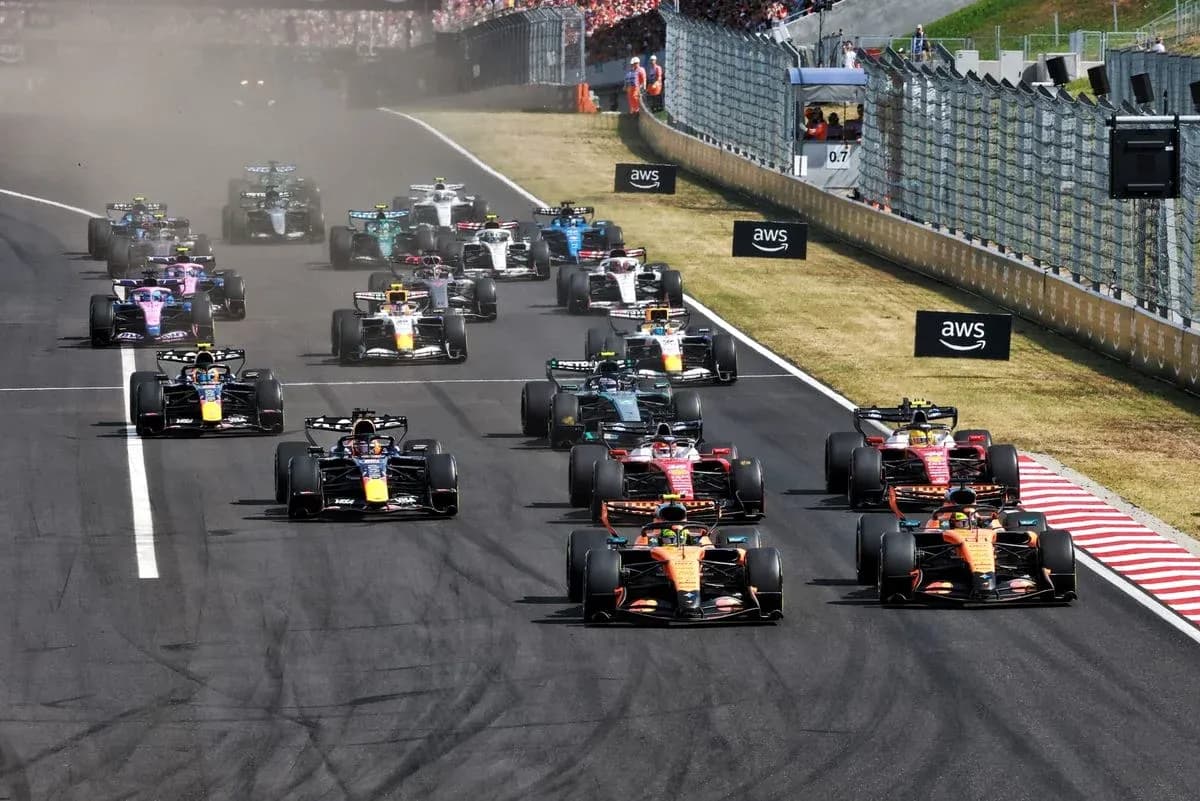
Monza is supposed to be the temple of speed. This weekend, it might feel more like a laboratory.
Formula 1’s 2026-spec machines arrive in Italy facing their sternest examination yet, and the drivers are already warning fans to expect something that looks – and feels – odd. “Weird”, “confusing”, “not fantastic”: the words coming out of the paddock hardly scream classic Monza.
The issue is simple enough. These cars are starved of energy. And nowhere exposes that like four long straights and very little time to harvest in between.
Slower than Hungary – at Monza
When teams first ran the 2026 regulations in the simulator, Monza immediately flashed red.
Early models suggested a bizarre picture: cars surging out of the chicanes, then dying halfway down the straights as the battery emptied, to the point where drivers had to change down gears before the braking zones just to keep the thing moving.
The FIA’s tweaks to energy management – trimming recharge limits and capping deployment – have changed that profile. The cars shouldn’t suffer the dramatic 30-40km/h drop-offs from the 350-360km/h peaks fans are used to. The power won’t fall off a cliff.
It just won’t climb the mountain in the first place.
Instead of the classic Monza charge, speeds will level off early and stay there, never touching the old numbers. As Racing Bulls rookie Arvid Lindblad put it: “There's just not much battery. We don't actually go slower on the straights. We just don't use any.”
That leads to one of the weekend’s strangest quirks. McLaren’s Oscar Piastri revealed that on the simulator, their car was actually faster on the main straight at the Hungaroring than at Monza.
“I think in our sim running we were actually quicker on the front straight in Hungary than we were here,” he said. “It doesn't make a whole lot of sense, but it's more that we just don't have the energy to spend.”
The most extreme fears – short-shifting halfway down the pit straight before Turn 1 – seem to have eased. But drivers still expect to be managing gears in unusual places, with sim work suggesting they may need to dip into seventh on the uphill run into Ascari. At Monza, of all places, they’ll be nursing speed, not hunting for more.
No “super clipping” spectacle killer
One nightmare scenario loomed over the build-up: super clipping everywhere.
In an ultra energy-starved configuration, drivers would be forced to harvest so aggressively on the straights that they’d bleed 30-40km/h before every braking zone. The price? Corners like the Lesmos and Ascari reduced to little more than transition points, the spectacle drained away.
The FIA’s answer was the 5MJ harvesting limit introduced for this weekend. That cap means there simply isn’t the scope to lean on super clipping all over the lap. There’s not enough energy to take back.
Piastri summed it up: “If the harvest limit was higher, we would be super clipping everywhere, probably losing 30 or 40 km/h at the end of each straight, but with the [5MJ] harvest limit, the super clipping is a normalish amount, or a reasonable amount.”
So Monza is spared a full-on clipping festival. The cars will still feel constrained, but at least the drivers won’t be crawling into every braking zone in the name of battery recovery.
No clever tricks this time
Across 2026, the grid has been learning the dark arts of energy racing. On certain tracks, the fastest way around has been to deliberately back off in corners to harvest more, then unleash that energy on the straights.
Spa-Francorchamps showcased the extreme version. Drivers found that lifting at Pouhon – one of the fastest corners in the sport – could actually pay off, as the extra harvest allowed more deployment on the Kemmel straight or elsewhere. Not using full power out of some corners turned out to be quicker over a lap.
Monza, though, is a different beast.
The layout simply doesn’t offer enough corners between the big straights to make that game worthwhile. There’s nowhere to “bank” the energy for later. Lando Norris explained it bluntly:
“The difference to Spa was that you had two big straights but you had lots of corners in-between that you could charge up and then deploy everything.
“Unfortunately here you have two long straights back-to-back, but even between them there's not really any corners. So, there's just no energy, there's just no power. You don't have an ability to charge, so it's just slow.”
In other words, the drivers can’t outsmart the circuit. They’re stuck with what the system gives them.
Painfully slow cool-down laps on the cards
Qualifying could be a strategic minefield.
To deliver a big lap at Monza this year, drivers will need to arrive at Turn 1 with the battery in the best possible state of charge. That doesn’t just affect the flying lap itself – it shapes how they approach out-laps and cool-down laps.
The rules are split. Out-laps are allowed a 9MJ recharge limit, which, on paper, should encourage drivers to keep a decent pace while also bringing tyres into the right window. There’s enough headroom to prepare without crawling.
Cool-down laps, though, are capped at 5MJ. That’s where it gets awkward.
If a team runs a push–cool–push sequence in qualifying, that middle lap risks becoming a rolling roadblock. To avoid over-charging too early and hitting the ceiling, drivers may have to coast around at a snail’s pace.
Lindblad expects it to be one of the least enjoyable parts of the weekend.
“I think the out-laps will be slow, but I don't think they'll be stupid,” he said.
“I think what won't be enjoyable is going to be cooldown laps, because the rules are different between out-laps and cool laps. So, in cool laps you'll be going very slow to try to charge the battery.”
On a track where slipstream games and traffic are already a headache, that is a recipe for chaos.
The start of the lap: where it all could go wrong
Another key battleground lies at the very start of the lap – not Turn 1, but the run out of Parabolica.
Teams and drivers must decide how much battery to spend at the end of the previous lap to launch onto the next one. Use too much exiting Parabolica to chase top speed across the line, and there’s a real risk of being short of energy later on the lap when it matters just as much.
Earlier in the year, drivers experimented with where to hit the throttle hard before the timing line, trying to game the system manually. It created an unpredictable mess: cars accelerating at different points, some almost playing chicken with the line.
The in-season tweaks brought in from Miami changed that. Teams can now program so-called ‘auto-K’, which controls when the battery deploys. The car exits Parabolica flat on the throttle, but the electrical shove only arrives at the pre-set point.
At Monza, that could create some very uncomfortable speed differences.
Lindblad is already wary of what happens when a driver on a full-bore qualifying run catches another who is just about to start their lap, still waiting for the battery to kick in.
“We saw it a bit in Zandvoort, but it was okay because of the banking,” he said.
“There was a 50-60 km/h speed delta, so you could get out of the way and let the guys through.
“Here it's even more - and it could become a bit dangerous. So, starting the lap won't be easy, to have it full, have the tyres ready.
“But even just from traffic, from safety, it's not great. We need a better battery.”
That’s the crux of it. At the temple of speed, Formula 1 arrives with cars that can’t truly stretch their legs. The question now is whether Monza’s famous drama can survive a weekend where the fastest thing on track might just be the frustration.