Monza Grand Prix: Arvid Lindblad's Eighth Place Finish
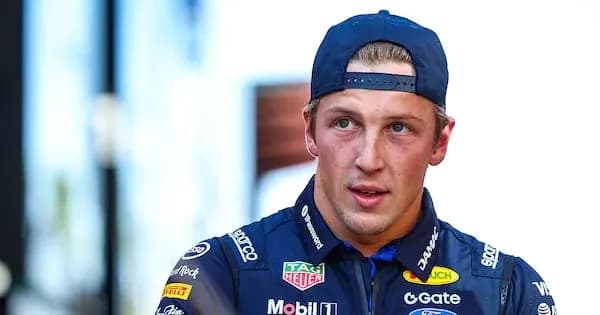
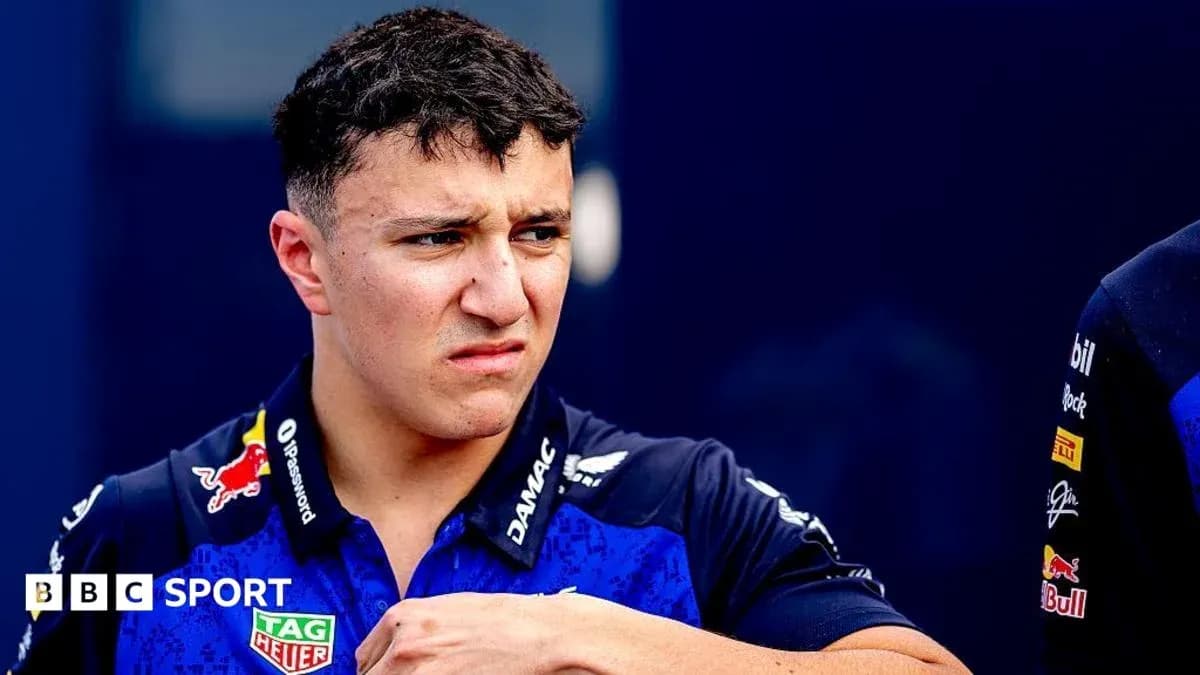
Arvid Lindblad climbed out of the car at Monza with eighth place in his pocket and a grin that didn’t quite match the lonely timing screens. The race he had just lived through felt less like a modern F1 procession and more like a junior formula brawl.
Not that he was complaining.
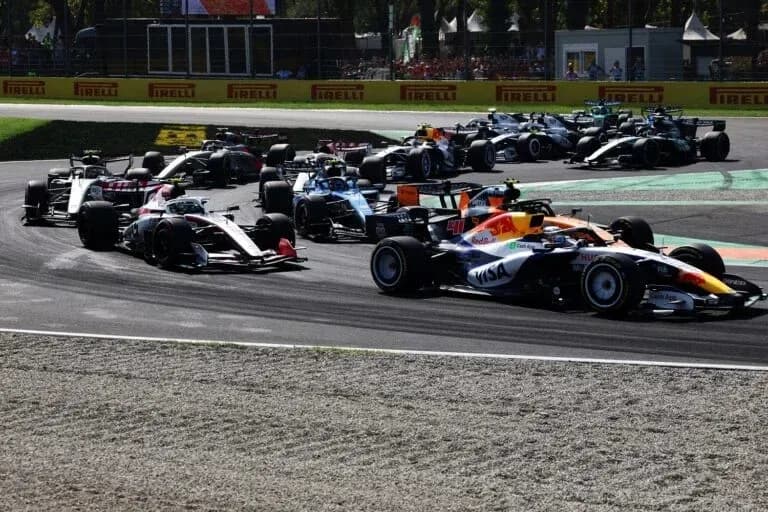
A Monza scrap straight out of F2/F3
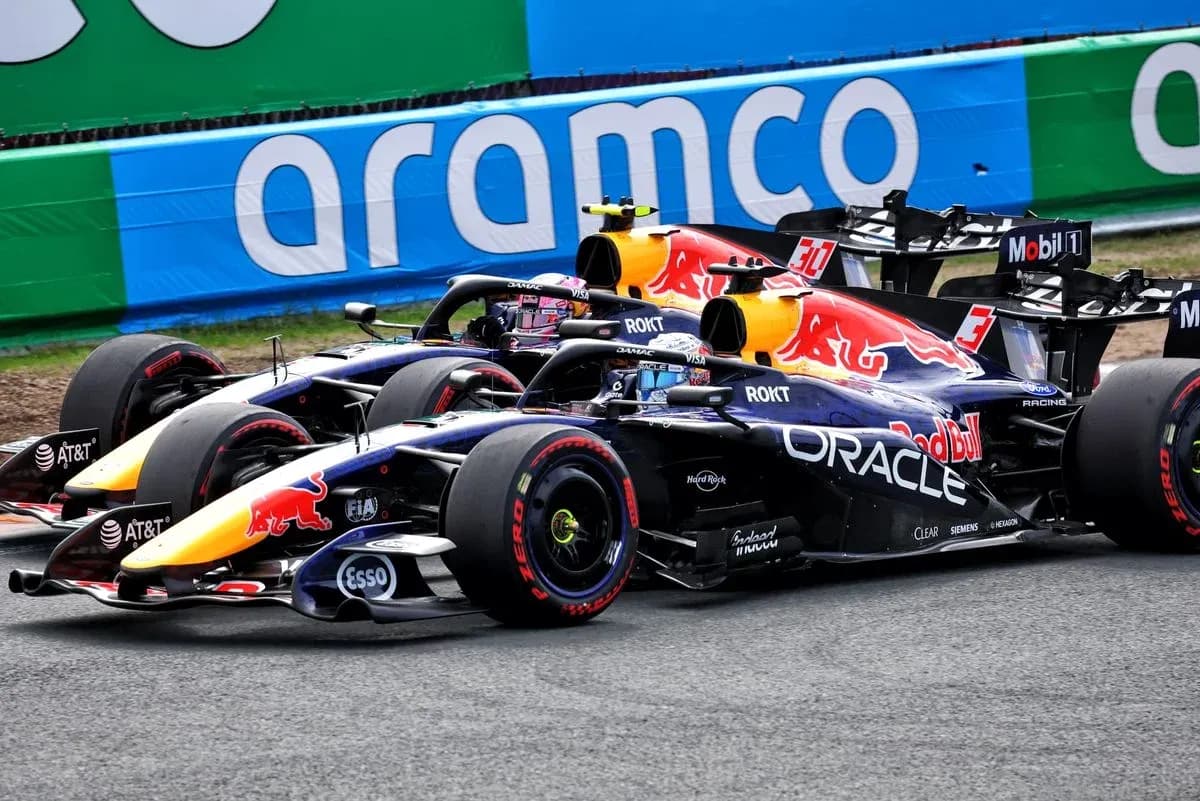
The Italian Grand Prix turned into a tug-of-war down the straights, a race built on DRS, battery deployment and nerve. Drivers hurled their cars at each other lap after lap, then reset and did it all again.
Up front, the Mercedes pair of George Russell and Andrea Kimi Antonelli traded blows, with Max Verstappen, Lewis Hamilton and Oscar Piastri all dragged into the fight. Lando Norris joined late, adding another sharp edge to a front-running pack that refused to settle.
Pierre Gasly and Franco Colapinto got their elbows out in that same group at stages, as Monza’s long straights and heavy braking zones turned the race into a rolling dog fight. It was messy at times, chaotic at others, but rarely dull.
Behind that, the midfield had its own storyline. Before the red flag, gaps ebbed and flowed. After it, they froze.
Lindblad found himself stranded in no man’s land in eighth for Racing Bulls, a sizeable gap to the Norris/Gasly scrap ahead, another cushion to the fight behind involving Colapinto, Oliver Bearman and Yuki Tsunoda. The Brit could see the chaos on the big screens. He just couldn’t join in.
Still, he knew what he’d been part of earlier in the afternoon.
He likened the Monza melee to F2 and F3 racing – the kind of constant wheel-to-wheel combat that junior series serve up every weekend. It is not, he admitted, the purest advertisement for overtaking technique in F1. But it beats a static, single-file Sunday.
“No, it was fun,” Lindblad said afterwards. For him, this is what the sport often lacks: relentless, rough-edged racing. In his eyes, a typical F1 race strings out too quickly, the field settling into formation. On this occasion, the pack refused to behave.
He welcomed it.
“I think it was good for the sport to show that,” he said. A scrap. A dog fight. The sort of race where drivers lean into the risk because that’s why they are on the grid in the first place.
Then the red flag came.
From chaos to cruise
For Lindblad, that stoppage flipped the script in the worst way. The field reset, bolted on hard tyres and, in his words, went to the end with little left to fight for.
He admitted he was “a bit sad” when the race neutralised. Once it restarted, his afternoon became a numbers exercise: 10 seconds clear ahead, 10 seconds safe behind, nothing but laps to tick off. No tow trains. No divebombs. Just mileage.
What began as a Monza street fight ended as a test session.
Yet from a team perspective, the result mattered. Eighth place brought important points in Racing Bulls’ increasingly tense duel with Alpine in the constructors’ standings.
With Tsunoda taking 10th, Gasly seventh and Colapinto ninth, Racing Bulls did enough to hang on to a seven-point advantage in the fight for fifth. It was not spectacular. It was effective.
Tsunoda’s result may still face scrutiny if Audi push ahead with their appeal, but for now the numbers stand. And Lindblad sees the weekend as a rescue mission successfully completed.
A damage-limitation job that worked
“Yeah, I think it's good,” he said of the final outcome. “In the end, it was the maximum that was possible, so we should be happy.”
He knows exactly why it felt like hard work. Alpine had the edge all weekend, especially on the straights where Monza is most unforgiving. Racing Bulls arrived with a package that simply did not suit this circuit’s brutal, low-drag demands.
“They've been way faster than us on the straights,” Lindblad noted. At a track this specialised, that kind of deficit usually leaves you exposed and empty-handed.
Instead, Racing Bulls walked away with both cars in the points and their direct rival kept at arm’s length. For a team with ambitions of winning that midfield war, that matters as much as any highlight reel overtake.
Lindblad’s confidence, though, lies beyond Monza’s slipstream lottery. He pointed to the upcoming rounds and a car that should return to circuits more aligned with its strengths. In his view, this was the hard part. The grind. The damage limitation.
If this is what Racing Bulls can salvage on a weekend where Alpine “had the upper hand,” what happens when the calendar swings back towards tracks that suit them?
The dog fight at Monza might just be a warm-up.