Mercedes' Zandvoort Performance: Points but Puzzles for Kimi Antonelli
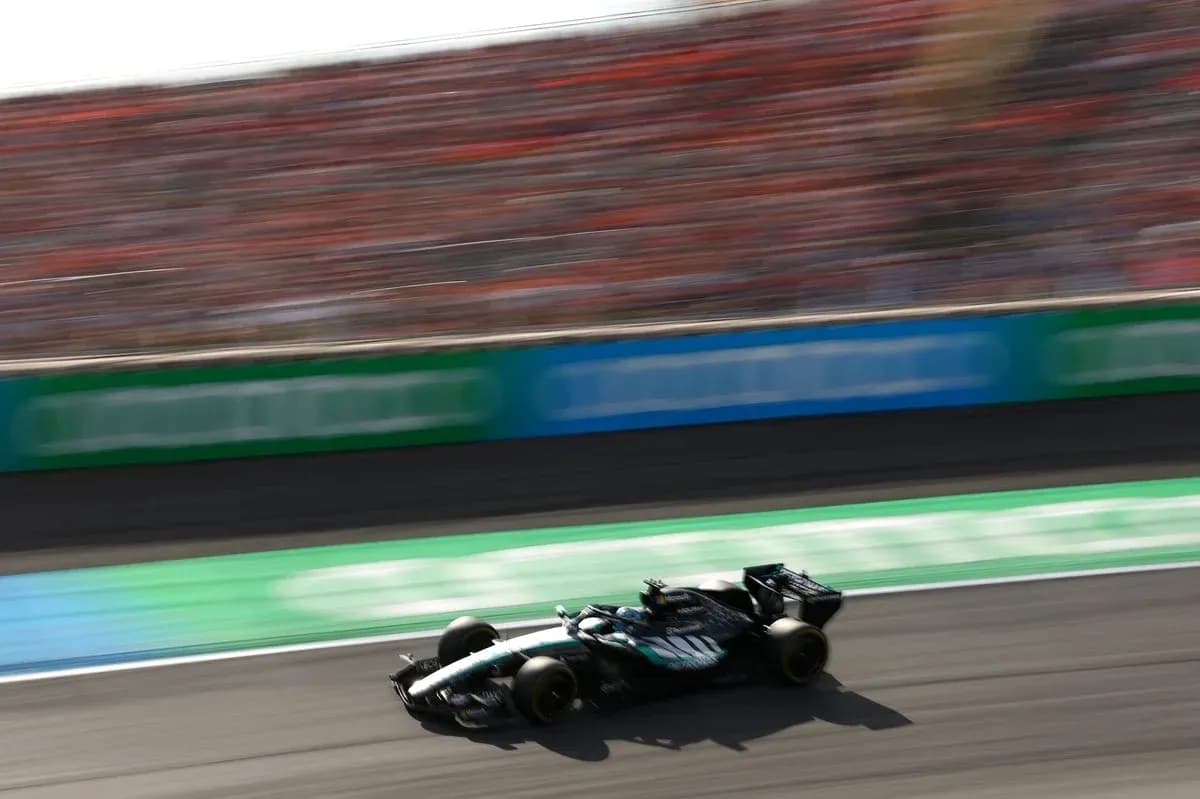
Mercedes left Zandvoort with a haul of points, a bigger championship lead for Kimi Antonelli – and a headache it can’t yet explain.
The numbers look fine. The feeling inside the garage does not.
Fast on Friday, confused by Sunday
The weekend began with the swagger of a team that had cracked Zandvoort. George Russell stuck it on pole for the sprint and converted that into victory, with Mercedes looking sharp and composed against its main rivals.
Then Sunday arrived, and Lando Norris and McLaren took control of the grand prix. Mercedes still locked out second and third on the grid and repeated that result in the race, Antonelli ahead of Russell, but the tone had shifted. The car that looked like the class of the field early on suddenly had clear weaknesses – and they were painfully obvious in the fast stuff.
Trackside engineering director Andrew Shovlin didn’t bother dressing it up.
“There were a few corners where we were pretty rubbish,” he admitted on Mercedes’ Nu Silver Arrows Radio Show, pointing straight at the high-speed sequence of Turns 7, 8 and 9.
That’s where the stopwatch told an uncomfortable story. The W15 struggled in the quicker curves, punished its left-side tyres, and never quite let its drivers attack with the same confidence as Norris.
A problem they’ve not seen before
What worries Mercedes is not just that it lost out in those corners, but that it doesn’t really know why.
“We’ve got a few things on the performance side to try and dig into,” Shovlin said. “We’re going to be getting on with that this week and see what we learn.”
The team has some working theories, but this isn’t a recurring flaw it recognises from earlier in the season. Zandvoort is not unique in having long, loaded corners in one direction; there are plenty of those on the calendar. Yet here, in the fastest of them, Mercedes was simply “off the pace”, as Shovlin put it, even though the rest of the track looked solid on the data.
That mismatch – strong in most corners, oddly weak in a key section – is exactly the kind of inconsistency that drives engineers mad.
Same car, different race
The confusion deepens when you look at the stints.
Mercedes barely touched the cars between the sprint and the grand prix. No big set-up swings. No radical experiments. During the race, changes were minimal too. Tyre compounds and tyre life varied, as always, but nothing that should produce the kind of up-and-down performance both drivers experienced.
“We didn’t change the car,” Shovlin stressed. “George’s first stint was a bit lacklustre compared to his later ones. And then with Kimi, first stint was good, and then dropped a bit on the second, dropped a bit more on the third, a bit came back on the third.”
The team wasn’t cycling through electronic modes or playing aggressively with wing flap angles. Yet Antonelli’s balance shifted noticeably from stint to stint, and not in a way that lined up neatly with tyres alone.
Normally, by the end of a race, both drivers describe roughly the same behaviour from the car. This time, they didn’t.
“George had a more understeery car, Kimi had a more oversteery car,” Shovlin explained. “If we look at how they were set up, we don’t yet know quite why we got such a big difference.”
Same machinery, same team, similar strategies – but two very different experiences behind the wheel. That’s the kind of discrepancy that suggests something deeper is at play in how the car is interacting with the track and tyres.
Points on the board, questions on the wall
Strip away the frustration and the scoreboard still flatters Mercedes. Antonelli’s run to second place over Russell extended his championship lead to 59 points. As a team, Mercedes banked 46 points across the sprint and the grand prix – its second-biggest haul of the season, behind only the 55 it took in China, another sprint weekend.
From the pitwall, the race at least delivered a jolt of adrenaline.
“It was actually good fun, sat on the pitwall and having to make decisions in a hurry,” Shovlin said. “I think the whole team enjoyed that and rose to the occasion. And it was definitely a good result, given where we were.”
Enjoyable or not, the debrief will be serious. Mercedes knows it cannot afford a car that looks like a winner on Friday and Saturday morning, then fades in key phases of the grand prix without a clear trigger.
So they leave Zandvoort with a strong result and a stack of data, but also what Shovlin called “a bit of head-scratching to do over the next few days.”
If this “rubbish” high-speed corner issue turns up again at another circuit, it won’t just be a curiosity. It will be a pattern – and in a title fight, patterns decide championships.