Madring Surgery: F1 Aims for Overtaking Drama by 2027
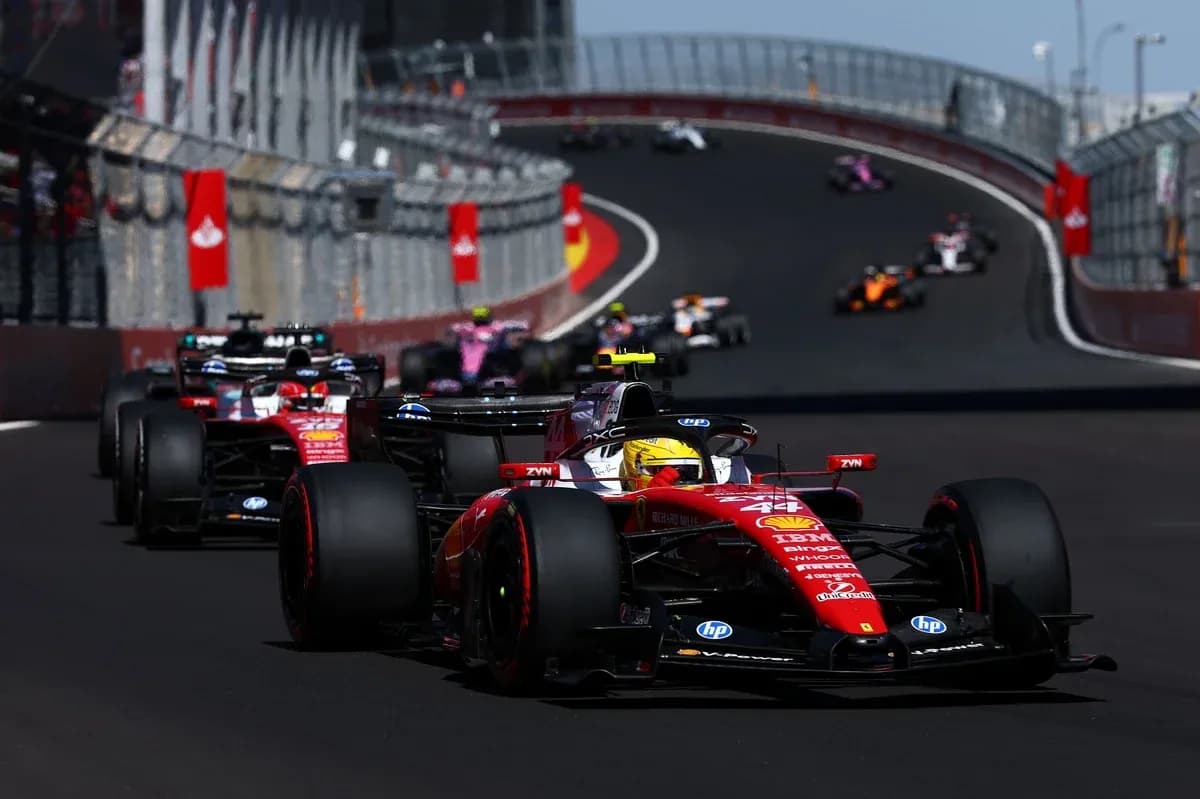
The Madring has barely hosted its first Formula 1 weekend and it is already heading back to the drawing board. Organisers of the Spanish Grand Prix in Madrid are preparing to alter the 5.4km layout around the IFEMA fairgrounds after a debut that dazzled on infrastructure and driving challenge but fell flat on wheel-to-wheel racing.
The FIA has already delivered its recommendations, with a clear brief: make it racier by 2027.
A spectacular venue, a subdued race
Across F1, F2 and F3, the story was the same. Drivers loved the commitment the circuit demanded in qualifying. The medium to high-speed sweeps punished the slightest mistake and produced a tense, high-stakes Saturday.
Sunday told a different story.
Overtaking proved painfully scarce. The main planned passing spot, the Turn 5 chicane at the end of the circuit’s longest straight, simply did not work as intended. Its awkward geometry blunted attacks rather than encouraging them, turning what should have been a prime launchpad into a defensive stronghold.
In Friday night’s drivers’ briefing, frustration spilled out. Several drivers highlighted the number of combined corner entries – sections where they had to brake and turn simultaneously. Those sequences made it too easy for the leading car to control the line and shut the door, killing any chance of a lunge.
The pitlane length didn’t help either. With such a long pitlane penalising stops, teams had little incentive to gamble on alternative strategies, stripping away another layer of jeopardy.
“We will be open” – Madrid ready to reshape
Speaking exclusively to Motorsport.com after Sunday’s race, event managing director Luis Garcia Abad made it clear Madrid is not clinging stubbornly to its first draft.
“Being honest with you, the FIA defined clearly which is the way to improve the track layout, and we will be open because we will have to reinstall the track for the next year,” Abad said.
He knows what worked.
“I really believe that the drivers enjoyed qualifying a lot. But for sure we will try to make an improvement for next year.”
This was only the opening chapter of a 10-year deal, and crucially, the northern half of the circuit sits on empty land, designed from scratch. That gives Madrid a luxury many modern venues lack: room to experiment.
“We have the space, we have a venue, we have the facilities, we have the capacity to do it,” Abad insisted. “I’m sure that FOM, FIA, and ourselves, we will try. If we can improve something, we will do it.”
The message is clear. The Madring is not a fixed monument. It is a work in progress.
Norris points to the problem corners
World champion Lando Norris did not mince his words when asked for his take after the race.
“To me, it’s not a great racetrack. It’s great in qualifying,” he said, drawing the same distinction that many in the paddock had already made.
His prescription focused on creating a genuine, high-percentage overtaking zone.
Norris suggested cutting the complexity late in the lap: “A straight line from Turn 17 straight to Turn 20 [would help], to have a much wider entry like Austin Turn 1 or Turn 10, a big hairpin. You’ll create much better opportunities for everyone and you’ll be able to enjoy the race.”
That vision is simple: fewer fiddly corners, one big stop, and a wide, inviting apex that tempts drivers into side-by-side combat.
He also pointed to the Turn 5-6-7 sequence as a key offender. “There are some simple changes and maybe some trickier ones, like Turn 5, 6, 7. It’s hard to know exactly what is the best thing. The fact you have to turn and brake [at the same time] basically defeats the whole object of racing.”
In other words, as long as drivers are managing the car on the limit of grip while braking and turning, they cannot throw it down the inside without risking disaster. The car in front just has to hit its marks.
A circuit with time – and space – on its side
The Madring’s first outing proved one thing: the foundations are strong. The paddock lauded the facilities, the organisation, and the sheer ambition of dropping a 5.4km circuit into the capital’s fairground district.
What it lacked was the chaos and theatre of hard racing.
With the FIA’s guidance already on the table, a 10-year contract in hand, and vast open land waiting to be reshaped, Madrid has the rare chance to turn a promising layout into a classic.
The next version of the Madring will not just be judged on how fast a single car can lap it on Saturday. Its real test will come when two, three, or four cars arrive side by side into a reimagined braking zone – and only one of them emerges in front.