Madring: The New Car Killer Circuit of the Spanish Grand Prix
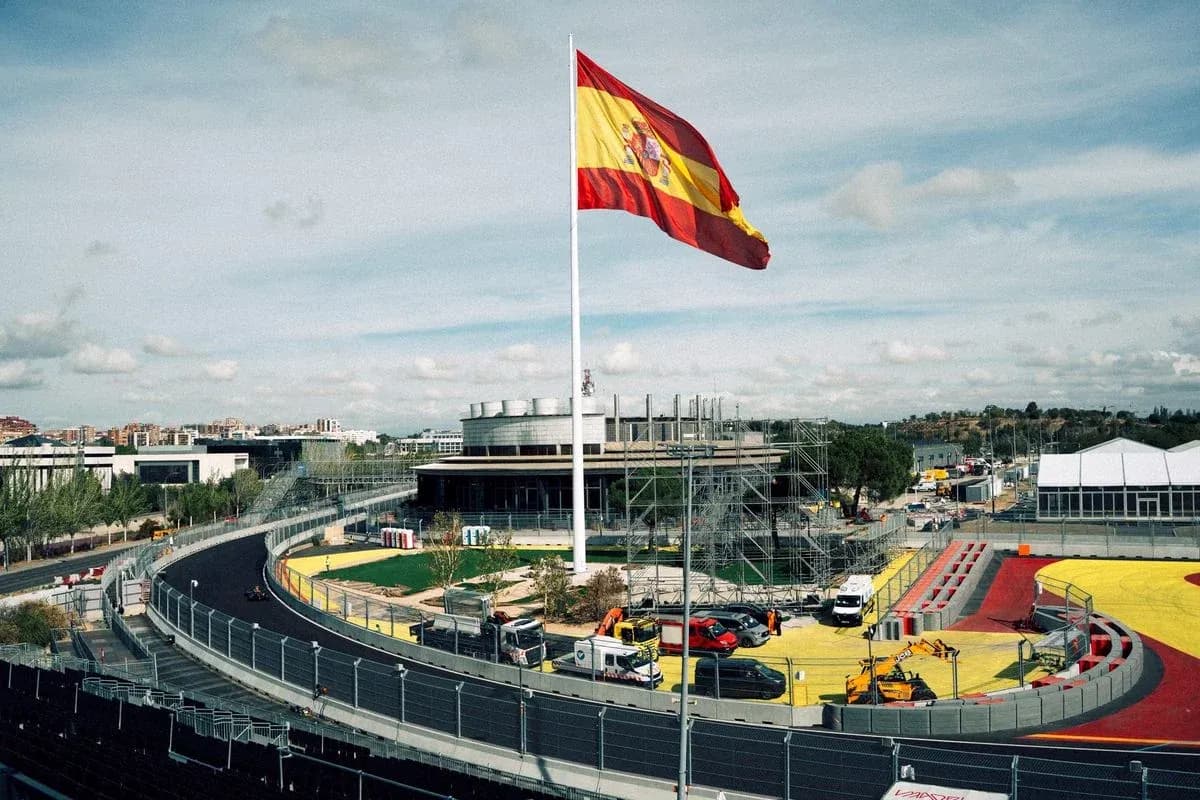
The new home of the Spanish Grand Prix has a nickname before it has a history.
“Car killer.”
Madring, the brand-new Madrid street circuit that joins the Formula 1 calendar this weekend, has already earned a reputation that would make even Monaco flinch. Drivers who’ve sampled it talk about a hybrid of Monaco, Macau and Jeddah. Tight. Unforgiving. Walls that don’t politely peel away on exit, but rush to meet you.
It looks spectacular. It might be brutal.
A circuit that bites back
The first real warning came not from F1, but from its junior category. Formula 3 spent two days testing at Madring recently. The numbers were ugly.
Nineteen red flags. Three broken chassis. A trail of smashed suspensions and bruised budgets.
“In the Formula 3 test there were 19 red flags and three broken chassis, broken suspensions…OK, they’re Formula 3 drivers, but it’s a track that kills cars,” Williams team principal James Vowles told Spanish outlet Sport.
Teams in F3 were far from thrilled. The parts list after two days looked like the aftermath of a street fight, not a test. But that test mattered. The circuit’s organisers had pushed for it, determined to avoid a Las Vegas-style embarrassment, where loose drain covers shredded Carlos Sainz’s Ferrari and shredded the event’s credibility on its debut.
This time, the chaos arrived early, in a controlled environment. And it sent a clear message up the ladder: F1, you’ve been warned.
Ferrari did sneak in an F1 filming day in July, but that was on a rougher, unfinished surface. F3’s running was the first proper stress test of the completed layout. What spooked engineers wasn’t just the volume of incidents, but where they happened. The red flags were scattered all over the lap.
No single “problem corner”. No obvious slow zone to tiptoe through. Just a succession of places where a small misjudgement can become a very big repair bill.
With teams already counting every euro under the cost cap as they plan towards 2026, nobody wants to see a carbon-fibre bonfire on a brand-new street circuit.
Why Madring is so vicious
Talk to the drivers who’ve already danced with it, and a pattern emerges.
Audi-backed F3 championship leader Freddie Slater summed it up to The Race: tight corners, no forgiveness, and walls that never really leave your peripheral vision.
“The corners that are there, they're so tight and they're not forgiving and also the walls come at you on the exit of the corners. They don't go away from you like most tracks,” he said. You’re constantly trying to drag the car away from the barrier rather than using all the road. Rhythm is hard to find. Caution is slow. And slow doesn’t cut it.
“You have to push otherwise you're slow. So I think that's why it creates so many crashes because if you don't push you're just not on the limit.”
He loves it. Calls it one of the best tracks on the calendar. Old-school. Macau vibes. A proper finale for F3.
The lap begins innocently enough with a slow chicane, visually reminiscent of Jeddah’s opening complex. From there, the cars fire flat-out through Turns 3 and 4 before arriving at the first true monster: the second chicane.
High-speed. Walls looming on exit. A corner that ate F3 cars for breakfast.
“That’s where there’s so much laptime,” Slater explained. You nail it, you gain all the way up the uphill section that follows. You miss it by a fraction, you’re in the wall. The kerbs don’t help. Hit them wrong and the car skips, bites, and suddenly you’re a passenger.
It’s essentially a nastier, modern echo of the old Singapore Sling – that infamous triple-apex chicane where the natural trajectory for anyone slightly off-line was “head-first into concrete”. The virtual laps doing the rounds online, with cars gliding over kerbs like they’re painted on, are a fantasy. Reality will be much more violent.
To make matters worse, this chicane sits at the end of one of only two “straight mode” zones on the circuit. Drivers will arrive there at around 340km/h (211mph). It is the last place you’d want a straight mode failure of the kind that’s already bitten Max Verstappen this year.
Survive that, and you dive under an underpass and begin climbing through another tricky sequence that also claimed plenty of F3 victims.
La Monumental and the blind leap
Madring’s showpiece is La Monumental, the vast banked corner that dominates the skyline and the lap. But the corners before it might be just as treacherous.
A tight chicane leads into a rapid right-left at Turns 10 and 11, where the car feels light and the margin for error shrinks again. Get greedy there and you don’t even make it to the banking.
If you do, you meet something F1 has never really seen before. La Monumental is a 24% banked corner – far steeper and more demanding than anything at Zandvoort.
Pirelli’s chief engineer Simone Berra has already called it “the most severe turn” on the calendar. In tyre terms, it’s savage: Berra estimates La Monumental will load the rubber with 20–30% more energy than Zandvoort’s banking.
Crucially, it’s grip-limited, not power-limited. Drivers won’t just be pinned on the throttle and trusting the downforce. They’ll be fighting the car, managing tyres, and committing to a line they can’t fully see the end of. The exit is completely blind.
During the F3 test, drivers experimented with multiple lines, searching for a sweet spot that might not exist yet. Slater said it felt like being in an IndyCar on an oval – almost flat in F3, but he expects F2 and F1 to face a tougher equation. Bottoming over the crest, the car wanting to drift up the banking, the wall waiting.
From there, the lap is only half done. There are still more traps, like the tight Turn 17 right-hander and a series of low-speed corners that never really let you breathe.
Monza F3 sprint winner Taito Kato put it bluntly: to find lap time, you must edge right up to the wall. The reward is big. So is the risk.
Dangerous, or just demanding?
By the time the F1 drivers arrived at Monza, word of Madring had already spread through the paddock. On the drivers’ parade, Carlos Sainz said “everyone seemed quite shocked by the track that Madrid has come up with”.
Sainz, an ambassador for the race in his home city, meant “shocked” in a positive sense – a rare modern addition to the calendar with real personality, not another anonymous, wide-open street layout.
He’s fully aware F3 has already paid a heavy price, and he’s not ruling out F1 joining the list. Sainz has said he expects safety cars, red flags and yellow flags in qualifying alone.
Audi F1 driver Gabriel Bortoleto described it as “very interesting… dangerous… but at the same time very challenging”. Sergio Perez, never shy about calling out risky venues, argued it’s “not any more dangerous than Jeddah”.
That’s hardly a comfort blanket. Jeddah has already produced its share of huge shunts, including Mick Schumacher’s 2022 qualifying crash that destroyed his Haas and ruled him out of the race.
So “no more dangerous than Jeddah” still leaves plenty of scope for Madring to be savage on machinery.
The upside? Circuits like this tend to reward bravery and precision. The layout is highly technical, packed with low-speed corners and complex sequences. It’s the sort of place where drivers talk about “feeling” the lap rather than just executing it.
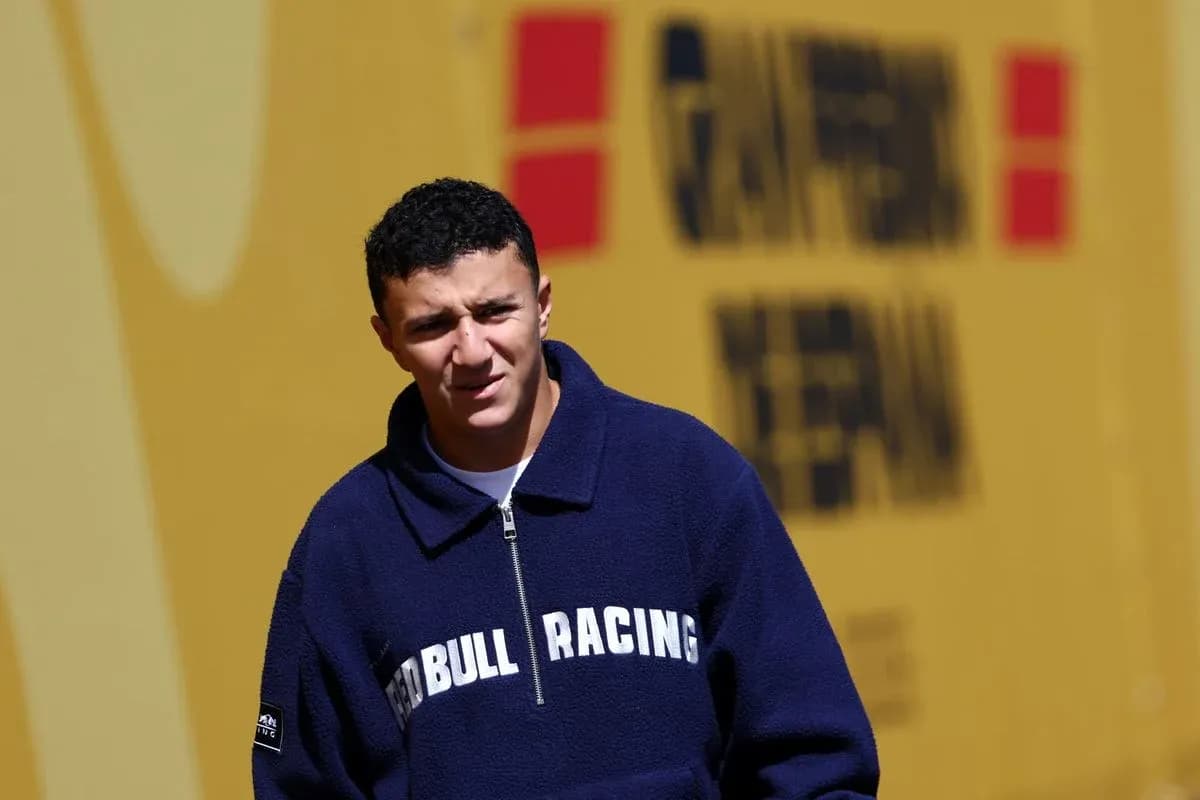
Red Bull junior Arvid Lindblad has already called it “a real drivers’ track”, and there’s a growing expectation of a qualifying session on a knife-edge – razor-thin margins, traffic nightmares, and the very real chance of a shock result if one of the big names blinks.
The same ingredients that promise a thrilling Saturday, though, are fuelling anxiety about Sunday.
Will the race actually work?
Strip away the drama of the walls and the banking, and one question keeps surfacing in engineering briefings: how do you actually overtake here?
Madring is short on long straights. It lacks heavy, clean braking zones. The corners are tight, the sequences flowing, the racing line narrow. Great for one-lap artistry. Less great for wheel-to-wheel combat.
There are decent energy-recovery opportunities, so power units won’t be stretched in the same way as at Monza, Silverstone or Spa. Strategists are already muttering that the racing might resemble Hungary more than any of the overtaking classics.
Alex Albon put it with a wry smile: “I don’t think there’s going to be any overtaking. I hope you guys got your fix in [Monza] and ignore next weekend.”
Chaos could change that picture. Safety cars and red flags tend to rip up strategy and compress the field. Madring’s layout almost invites that sort of intervention.
There’s also the undercard to consider. F2 and F3 will pound around the circuit across five races before the grand prix. F3’s title will be decided here, and that alone guarantees aggression. Young drivers, last chance to impress, a car-killing track. The ingredients are there for mayhem.
It’s hard not to think back to Baku 2016. GP2 – F2’s predecessor – had one of its wildest weekends ever, with 17 retirements across two races. When F1’s turn came, the drivers backed off the brink. The grand prix was processional, almost tame, as the field collectively decided not to repeat GP2’s demolition derby.
“The grand prix was boring, right? Yeah, I remember. I was there in 2016 in Baku,” Sainz said. He expects F1’s field to show similar restraint in Madrid.
He pointed out that F1 drivers carry a different kind of responsibility. They represent factories with a thousand people behind each car. They know spare parts can be limited. They also know their cars are faster and, if anything, easier to crash heavily.
Discipline, then, might be the watchword.
Sainz also highlighted another factor: real-time feedback. By the time FP1 is over, drivers will already be flagging problem areas to the FIA and race director – kerbs that don’t work, angles that create blind dangers, details that can be tweaked over a weekend or a winter.
“We can help the race director and the FIA learn through the weekend with us as we observe the same kind of patterns,” he said.
Madrid’s tightrope
Even with that, it feels almost inevitable that someone will get caught out. This is not a circuit with generous run-offs and gravel traps to save you. When it goes wrong here, it tends to go wrong into something solid.
Sainz has urged his colleagues not to rush to judgement. He wants a proper debrief after the race, a clear-eyed look at what worked and what needs fixing. He’s already framed Madring in the context of Miami – a venue that had what he called a “bit of a disaster” of a debut in 2022, before evolving into a strong event.
The difference is the pressure. Right now, cities all over the world are queuing up to host a grand prix. Madrid has a 10-year contract, but it will still feel the need to justify its place immediately, both to the paddock and to fans.
On paper, it has everything Liberty Media likes: a major European capital, a photogenic street circuit, a signature corner in La Monumental, and a narrative hook in its “old-school” danger.
What it doesn’t yet have is proof that it can produce a compelling race.
Qualifying looks set to be electric – cars skimming walls, tyres screaming through the banking, lap times carved out in the thinnest of margins. The circuit will almost certainly deliver drama on Saturday.
The real test comes 24 hours later.
Can Madring turn its car-killing, old-school character into a grand prix worth the scars? Or will Sunday expose a track that punishes mistakes but refuses to reward the chase?