The Madring: F1’s New Arena with Real Bite
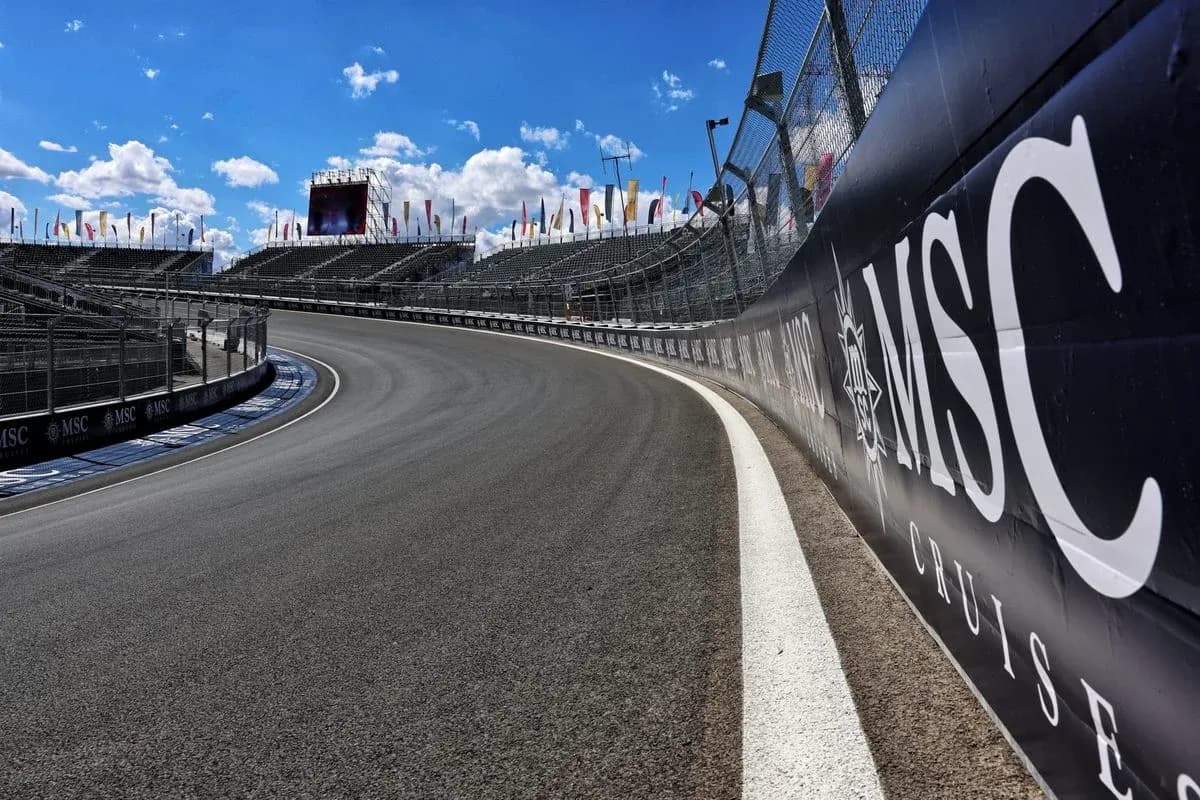
Formula 1 rolls into a fresh venue this weekend, and the Madring is no timid debutant. Wrapped around the IFEMA Exhibition Centre on the edge of Madrid’s main airport, the championship’s first new circuit since Las Vegas in 2023 looks half street track, half permanent facility – and entirely unforgiving.
From the outside it feels like a temporary build. Once you walk it, it feels anything but. The layout dives away from the exhibition halls and stretches towards its showpiece, the La Monumental banked turn, with an 8% climb between Turns 7 and 8 that hits you harder in person than any circuit map can suggest. This is not a flat, stop‑start city loop. It’s a rollercoaster built for modern ground‑effect cars.
Drivers won’t turn a wheel in anger for another day, but the place is already telling its story. It’s fast. It’s smooth. And it’s absolutely poised to punish mistakes.
La Monumental: the amphitheatre corner
Everyone in the paddock is talking about one place: La Monumental.
On paper it was already the headline act, a 550‑metre banked sweep that has had drivers, teams and Pirelli circling it in briefings for months as one of the most technically demanding corners of the season. Now the asphalt is down and the grandstands are up, the scale hits home.
The corner is wrapped in towering stands, with a vast hospitality zone carved into the inside. From track level it feels like you’re driving into an amphitheatre. The comparison with the intensity of Interlagos’ start‑finish straight isn’t lazy nostalgia; it’s the closest reference point F1 has.
The key unknown is racing lines. If the banking allows multiple approaches and exits, this could become a genuine overtaking hotspot rather than just a spectacular, single‑file commitment test. If it narrows into one preferred groove, it may turn into a high‑speed procession point where bravery outweighs opportunity.
Either way, it will define the lap – and quite possibly the weekend.
Trouble brewing at Turn 5
La Monumental may take the headlines, but the real chaos could break out much earlier in the lap.
The Madring has several corners waiting to catch out the unwary. Turn 17, a heavy‑braking right‑hander that arrives just after a rapid left kink, already looks like a place where a locked wheel will mean an instant trip down the escape road.
Yet the Turn 5/6 chicane is emerging as the true flashpoint. Formula 3 testing has already left its mark there, literally: tyre streaks still stain the asphalt and barriers, underlining how easy it is to get it wrong.
The chicane sits at the end of one of the quickest sections of the circuit, the long, flowing run from Turn 3. Drivers arrive at maximum commitment, then are forced to snap the car into a fiddly change of direction over kerbs that demand respect. The exit is the sting in the tail. The barrier angle creates a pinch point that narrows faster than a driver’s margin for error.
Get greedy with track position or throttle, and the wall will be waiting.
A street track with a silky surface
Street circuits usually come with a familiar complaint: bumps, patches, and unpredictable cambers that force engineers to raise ride heights and compromise performance. Madring breaks that pattern.
A walk around the lap reveals a surface that looks and feels remarkably smooth. The fresh asphalt should let teams keep their cars low and aggressive, without the fear of hidden ridges or nasty mid‑corner jolts unsettling the chassis.
Walls define track limits in many areas, as you’d expect from a street‑style layout. Where there is more space, the FIA has used painted kerbs and those ribbed marker lines seen in places like Jeddah, Miami and Austin to give drivers a clear visual reference for the white lines. It’s a subtle detail, but one that will matter when millimetres decide whether a qualifying lap stands or vanishes.
Grip evolution will be another story entirely. A smooth, new surface on a part‑street layout can swing wildly as rubber goes down, and teams will be scrambling to keep up with a track that may change session by session.
A paddock on a different scale
If the circuit itself is tight and technical in places, the paddock is the opposite: sprawling, fragmented and unlike anything else on the calendar.
The garages are carved into the IFEMA exhibition complex, and that has forced a radical re‑think of the usual F1 paddock spine. Instead of a neat, continuous row of team homes, there’s a 150‑metre chasm between Williams and Racing Bulls. The media and TV pen sit in that gap, turning a simple stroll into a mini expedition.
Behind the garages, the picture gets even stranger. Trucks and engineering offices are spread across contrasting environments. Some teams are tucked inside air‑conditioned halls, sheltered from the Madrid heat. Others, including McLaren and Mercedes, are camped outside, working in the glare.
The usual neighbourly order has been ripped up. Williams and Racing Bulls, normally side by side, are separated by a walk that takes more than two minutes. For crews used to darting between operations in seconds, this weekend will test logistics as much as race pace.
The pitlane that won’t end
The unconventional paddock has another consequence: a monster pitlane.
From entry to exit speed‑limiter lines, the official pitlane length stands at 562 metres. That alone makes it one of the longest on the calendar. Then comes the sting: the exit.
Instead of rejoining at Turn 1, the pitlane snakes on and feeds the cars back in at Turn 3. Drivers will accelerate hard along a channel that funnels them towards a right‑hand concrete barrier before they can blend back onto the racing line. Any hesitation here will cost time; any misjudgment could be far worse.
Pirelli’s early calculations suggest a pit stop will cost around 25 seconds, the rejoin at Turn 3 saving a little time compared to a traditional Turn 1 merge. Strategists will be chewing on that number all weekend. It’s long enough to make every stop painful, but just short enough to keep undercuts and bold strategy plays alive.
The Madring, then, is no gentle newcomer. It offers spectacle at La Monumental, risk at Turn 5, a pristine surface, and a pitlane that turns every strategy call into a high‑stakes decision. For a championship constantly searching for fresh theatre, Madrid has delivered a stage. Now it’s up to the drivers to find out how much of it bites back.