Madring’s Misfire: F1’s Latest Circuit Misses Key Design Principles
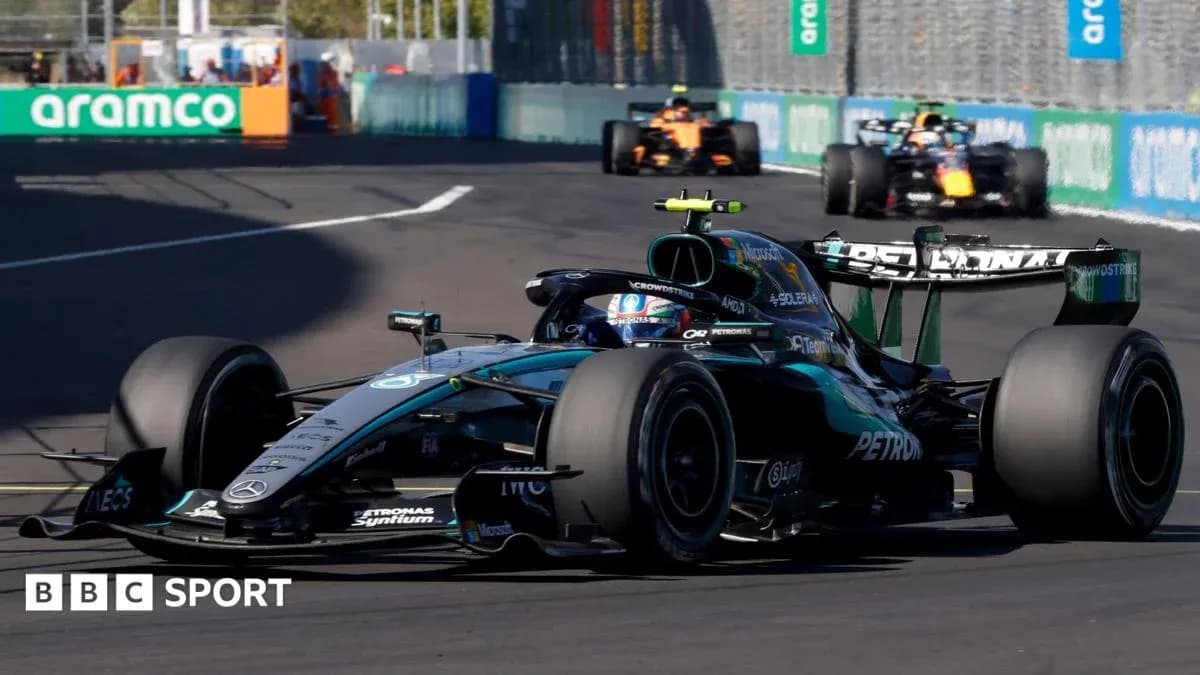
The Madring was supposed to be Formula 1’s latest showpiece. A part-street, part-purpose-built layout wrapped around Madrid’s Ifema exhibition centre, minutes from Barajas airport, sold as a futuristic hub for the sport.
Instead, it produced exactly the kind of race drivers had warned about all week: processional, cagey, and almost entirely devoid of jeopardy.
They saw it coming. Everyone did.
Lando Norris summed up the paddock’s disbelief with one brutal line after the race: “I don't know how someone looks at this design and goes: 'Mint.'”
A Track That Forgot How Racing Works
This is not some historic street layout hemmed in by city blocks and politics. Half the Madring is clean-sheet asphalt. No old town squares to tiptoe around, no listed buildings to protect. And yet the circuit has managed to miss some of the most basic principles of modern F1 race design.
The central failure? No meaningful straight into a heavy braking zone.
Without a long run where a car can tuck into the slipstream, deploy DRS and then launch a move under braking, overtaking becomes a fantasy. Madring offers no Bahrain-style Turn One, no Montreal hairpin, no classic end-of-straight showdown. Just a string of corners that bleed into each other and kill attacking intent.
On top of that, many of those corners demand that drivers brake and turn at the same time. That might look technical on a simulator. In reality, it locks the racing line to a narrow strip of tarmac. Any driver trying something different risks understeer, contact with the walls that pinch back in on exit, or simply losing too much time.
You cannot attack if the car won’t stay underneath you.
Then there’s the pit lane. It is the longest on the calendar, and that single design choice quietly strangles strategy.
The longer the pit lane, the more time lost in a stop. The more time lost, the more teams shy away from extra stops. That funnels everyone into the same one-stop plan, especially when tyre wear is high. Drivers back off, manage rubber, and run well below the limit. When everyone’s nursing tyres instead of pushing, the chances of mistakes, incidents and safety cars fall away. So does the drama.
The Madring didn’t just fail to encourage overtaking. It actively discouraged the conditions that usually create it.
The Fix Is Obvious – If F1 Wants It
The irony is that the track isn’t awful to drive. Most drivers admitted qualifying there was fun, the kind of high-commitment, knife-edge lap that rewards precision. Norris even called it “good fun to drive” and said it “can be a great race track.”
The problem is racing, not lapping.
Norris’ solution was blunt and practical. Scrap Turns 18 and 19. Draw a straight line from Turn 17 to Turn 20. Then, at the end of that new stretch, build a big, wide-entry hairpin – something in the mould of Turn One or Turn 10 at Austin.
A proper launchpad for overtakes.
That sort of corner gives drivers options: different lines, late lunges, cut-backs. It creates the kind of braking zone where a car behind can actually do something other than stare at the diffuser ahead.
He also called for “trickier changes” to the clumsy Turn Five chicane and the section that follows up to Turn Seven. That sequence currently breaks up rhythm without offering much in return. Clean it up, and you open the door to more momentum, more chances to pressure the car ahead.
Those are layout tweaks. The other headache sits off track.
A Grand Prix at the NEC
The pits and paddock at Madring are spread out and fractured, split by buildings in a way no other venue on the calendar has to deal with. The whole thing feels more like a motorsport trade show at the NEC in Birmingham than a grand prix paddock.
For teams and F1 staff, it made basic operations harder. Long walks. Disconnected working spaces. A pit lane effectively sliced in two by the site’s existing structures.
If this race is to become a long-term pillar of the calendar, that has to change as well. F1 needs a unified pit lane, a paddock that lives outside, and a footprint that works for the people who actually run the show, not just for the exhibition halls that surround it.
The good news? None of this is unsolvable. The problems are obvious. So are many of the fixes.
The question is whether the promoters and F1 are prepared to move quickly and aggressively enough to turn a “great in qualifying” layout into a circuit worthy of the calendar – or whether Madring becomes another warning about what happens when spectacle on paper trumps the fundamentals of racing.