Madrid's Grand Prix: A Race Without Overtaking
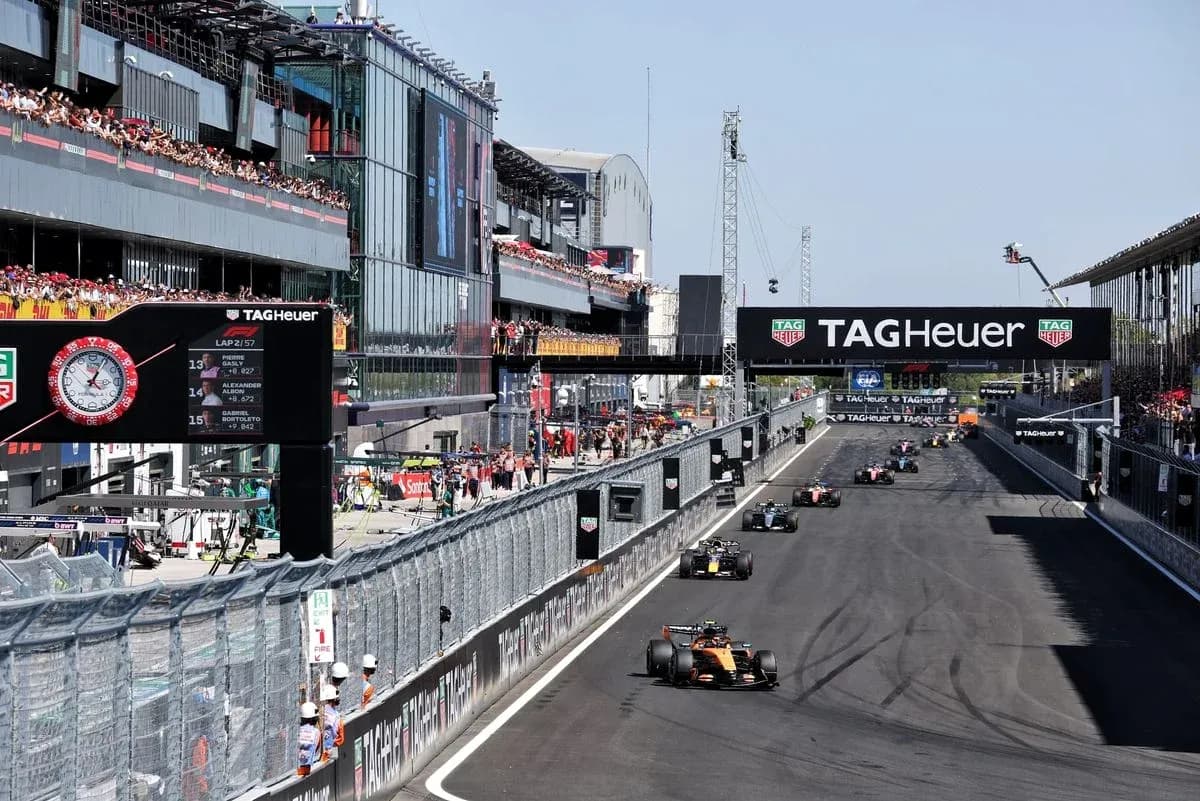
Madrid finally got its grand prix. What it didn’t get was a race.
On paper, the Madring had everything modern F1 says it wants: a new market, a glamorous city, a fresh layout that looked spectacular on a qualifying lap and threw enough at the drivers to keep them honest. In reality, Sunday exposed the one thing nobody in F1 can afford to get wrong in 2026: you simply couldn’t race on it.
A blank sheet, wasted
The most damning part? Everyone saw this coming.
A brand-new circuit is supposed to be the ultimate luxury – a blank sheet of paper on which you can sketch bold overtaking zones, big braking points, and the kind of corners that invite risk. Madrid used that freedom to build a hot-lap playground and a chaos generator for F2 and F3. For F1, it produced a procession.
There was no obvious “send it” corner. No classic long straight into a heavy, wide braking zone. Just a sequence of sections that looked good on TV and on the data traces, yet left the race itself gasping for air.
You can have the greatest fan village, flawless transport links, dramatic corners and a skyline backdrop that sells the city to the world. None of it matters if the cars can’t pass each other. Madrid proved that the hard way.
The latest chapter in a familiar story
Gary Anderson’s verdict cut straight to the core: F1 has somehow turned the art of creating circuits you can’t overtake on into a tradition.
The Madring looked fun from the cockpit. Drivers enjoyed the challenge, and the doomsday predictions of a crash-strewn weekend didn’t materialise. When Ollie Bearman hit the wall in FP3, removing the car was straightforward. Fixing the Tecpro barriers was not. Watching a couple of marshals wrestle with equipment designed to absorb the hit of a 900kg F1 car at high speed was almost slapstick, and it underlined how fragile the whole operation still is when something goes wrong.
Then came the race, and with it another familiar F1 gripe: the lottery of the VSC and safety car.
Lando Norris had done enough to win. His pace was clear, his drive strong. But when Lance Stroll slid off and triggered the VSC, the race flipped. Norris’s victory slipped away, not through strategy genius or on-track brilliance from a rival, but through timing and a regulation quirk that F1 has known about for years.
It’s not complicated to address. Yet those in charge still haven’t fixed it.
A driver’s track, not a racer’s track
From a pure driving standpoint, the Madring hit the brief.
Over a single lap, it was a test. Fast, technical, demanding. You could see why the drivers enjoyed it. It looked like a circuit designed with one central question: how do we push these guys to the limit in qualifying?
But that focus came at a cost.
The track is narrow where it should be wide, and tight where it should breathe. There aren’t enough clean, straight-line braking zones where a driver can throw a car down the inside without having to juggle heavy braking with turning. The result was inevitable: hesitation, half-moves, and long trains of cars stuck in formation.
For a street circuit, there’s no excuse. This wasn’t Monaco, bound by a century-old harbourfront. It wasn’t Macau, forced to follow a historic road layout with only a couple of genuine overtaking stretches. Madrid had freedom. It had flexibility. It had time.
And it still ended up with a layout that left F1 cars queuing.
That’s what stings. You can almost see the fixes: move a few walls, straighten a kink here, flatten a braking zone there. It feels just a handful of design tweaks away from being something special. Instead, it became another missed opportunity.
When strategy is all you’ve got
There’s a place on a 24-race calendar for circuits that don’t hand out overtakes like confetti. A few venues where strategy, tyre life and ingenuity do the heavy lifting can add variety. Street tracks with character and quirks can earn their place even if they’re not wheel-to-wheel paradises.
Madrid flirted with that idea. The event looked strong. Onboards and trackside shots revealed a layout that, at speed and in isolation, had real appeal. You could imagine it becoming a driver favourite.
But the race never caught fire.
A McLaren as quick as Norris’s should have been able to slice forward once delayed. It barely got the chance. Charles Leclerc, running a no-stop strategy for far too long, should have been under siege. He wasn’t. Too many cars sat in line, trapped in traffic that, on a better circuit or with a braver tyre choice, they would have escaped.
The tension never built. The strategic intrigue never truly bit. The flatness of the racing overpowered the positives of the event.
Maybe the solution isn’t even radical circuit surgery. A more aggressive tyre compound choice could force teams into more stops, bigger pace offsets and bolder calls. That alone might be enough to jolt the Madring into life.
Because the bones of a good venue are there. The city works. The spectacle is there on a Saturday. The drivers aren’t complaining about the challenge.
But on Sunday, when it counted, Madrid left F1 watching a race it desperately wanted to enjoy – and spending most of it, instead, wondering why nobody was actually racing.